
Por el Amor Eterno de Mariachi, For the eternal love of Mariachi
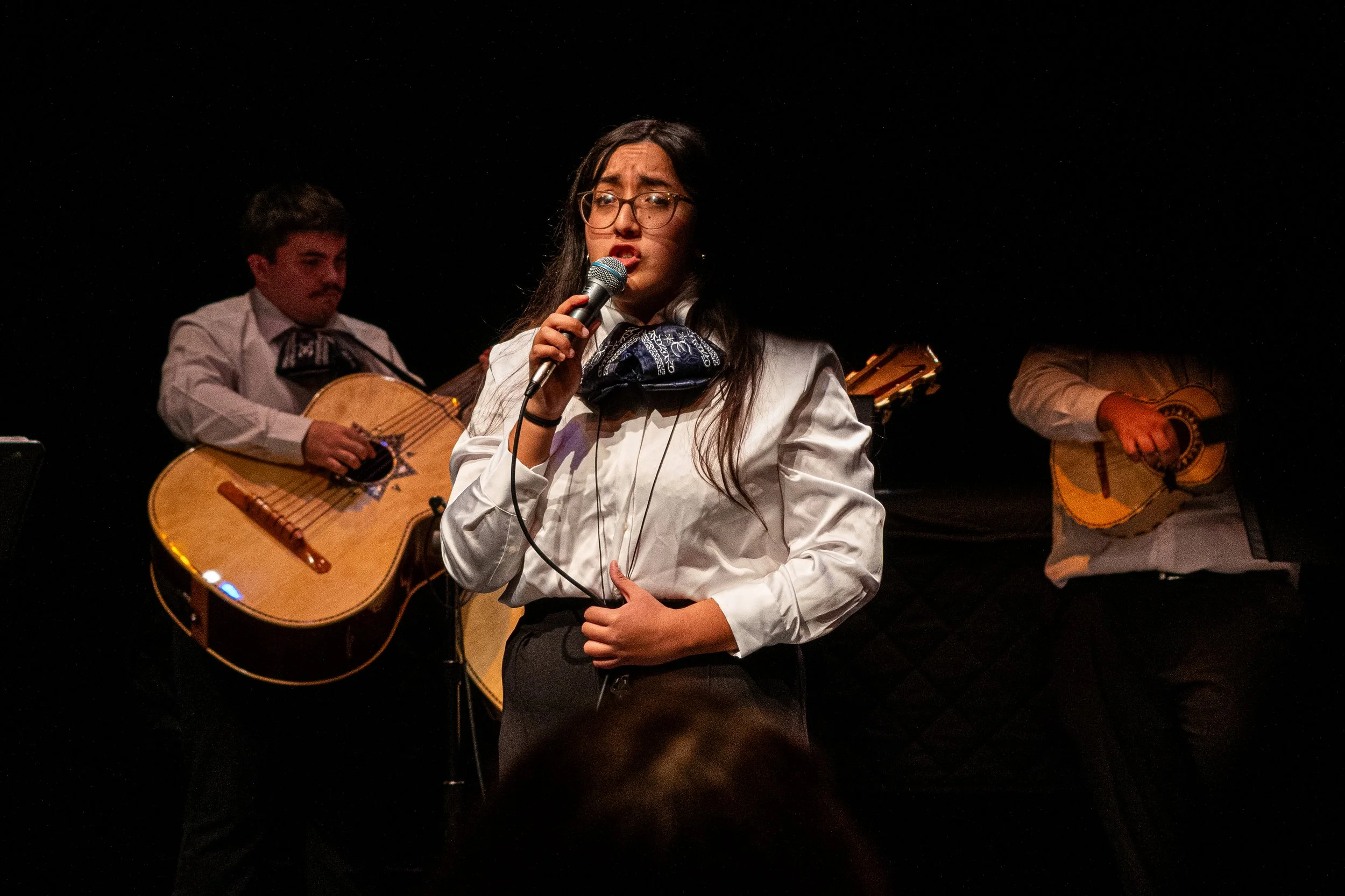
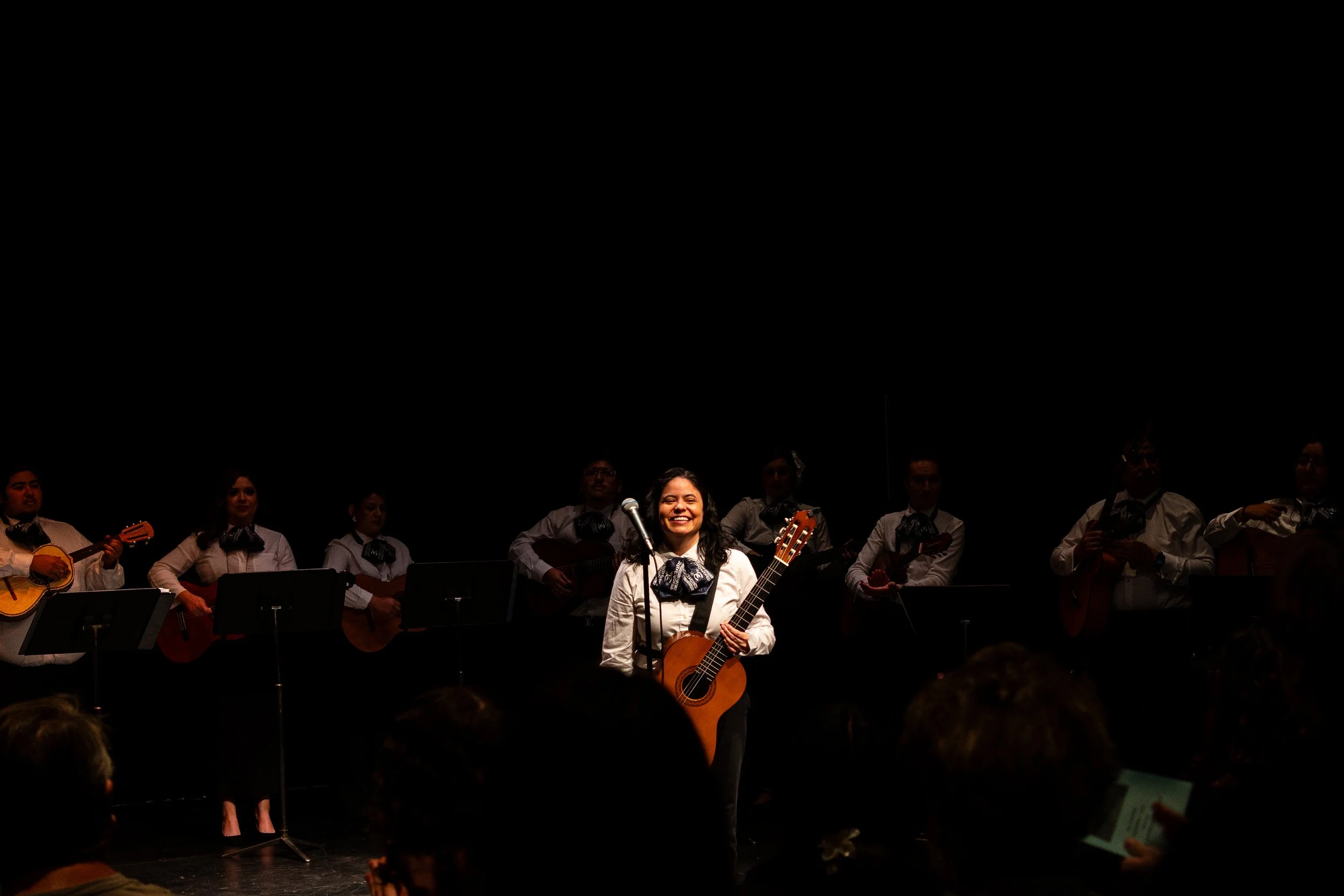
Santa Monica College’s (SMC) music department held a memorable showcase featuring Mariachi Los Corsarios de Santa Monica College at the Edye Second Space on Dec. 4, 2025.
Upon entering the room, the space was dark with the spotlight shining down on the mariachi band front and center. The event was no ordinary musical showcase — it became something more with each performance. One song featured on the band's set list was "Si tu también te vas," written by Mexican mariachi legend José Alfredo Jiménez.
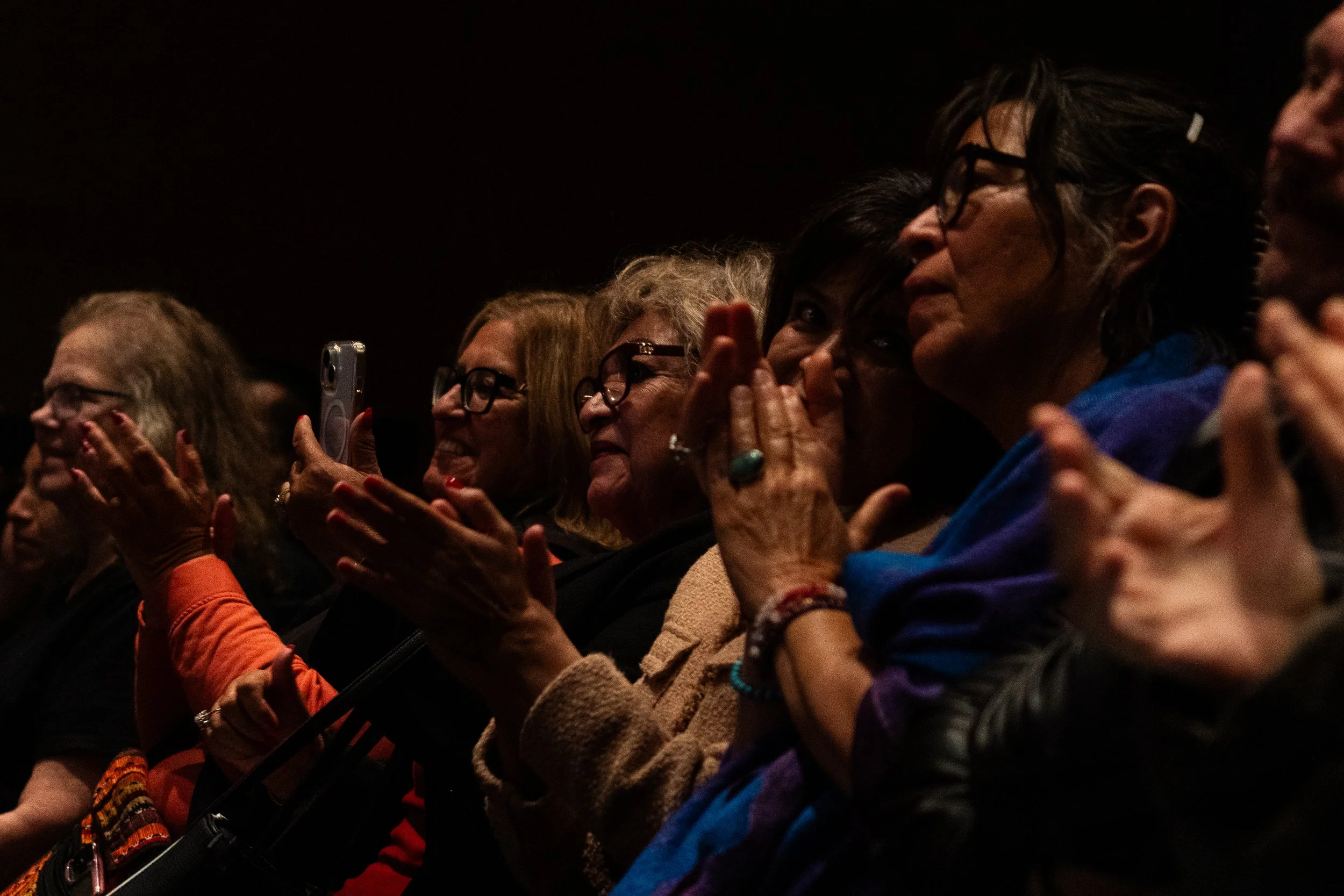
It was a warm Thursday morning as friends, family and fellow students filled the seats. Small moments — like a member of the mariachi extending a microphone to the audience to sing the next line of a song and invitations to cheer the band on — cultivated a sacred and safe space.
With the leadership and guidance of Professor Mary Alfaro, Mariachi Los Corsarios have created a unique and successful program since its inception in 2022 and 2023. She explained that the section started as a SMC class available to Santa Monica High School students that could enroll for college credits.
“This class started fall 2024 and we are just finishing our third semester here,” Alfaro said.
Alfaro continued, “I would say one of the more challenging things about leading the mariachi class in general is that there is usually a mix of advanced players, intermediate and beginners. So keeping the class fun and engaging for all the levels of musicianship. We don’t want beginners to join the class and get discouraged — and we don’t want our advanced players to get bored or disengaged. So we also have to do challenging songs.”
“The hard part is making a cohesive group out of students that are at different levels of playing and singing,” Alfaro said.
During the concert, Alfaro gave kudos to the beginners and the advanced members of the group.
A mission of the mariachi is to make songs accessible to everybody, regardless of skill level. It’s a successful approach as the results shine amongst the members of the mariachi including a strong sense of self esteem, musical mastery and joy radiated throughout their performance.
One of the beginners in the group is Brayan Reyna, a third-year sociology student at SMC who plays the classical guitar in the mariachi. He says the course came highly recommended by a former member of the group, noting that his family is his motivation. “I’ve always been attracted to that type of music and my parents were always into it so I wanted to make them proud by singing a little bit to them,” Reyna said. His father was born in Guerrero and his mother in Mexico City. He grew up going to restaurants like El Chamizal in Huntington Park. “We [would] go there and there’s always live performances by mariachi. As a kid it just called my attention right away,” Reyna said.
Reyna sang a mariachi rendition of Ramon Ayala’s "Tragos Amargos," paying homage to his memories of family gatherings. “The trumpets are amazing on it. It’s very addictive. You just want to hear it over and over again at every party,” he said. A few members of the audience joined in on the song to sing the parts they knew and loved. Others whistled and cheered on the band.
Reyna adds that he would encourage others curious about the world of mariachi to join the course.
“I came into this class knowing nothing about music or instruments and it's my second semester in this class and I'm already doing gigs, I'm already doing concerts. It’s always worth a try. They teach you everything you need to know,” Reyna said.
Another member, Marina Portillo, is majoring in applied music for musical theater. She started off as an acting student, and her curiosity and desire to expand her skillset brought her to the SMC mariachi. Portillo shared that last semester she would hear their performances on campus, which peaked her interest. She knew members and inquired more about the class.
“I just inquired about it and I was like, that’d be a really good opportunity to work on my singing and tap into my roots and explore, you know, my history. I’m Mexican American, I was born here, however, my family, my Dad is from Sonora and my mom is from Texas,” Portillo said.
Portillo was born in California and explains her goal of joining the SMC Mariachi.
“I just really wanted to have a deeper appreciation for the style of music on a more serious level, compared to just listening and singing along at parties and things like that,” Portillo said.
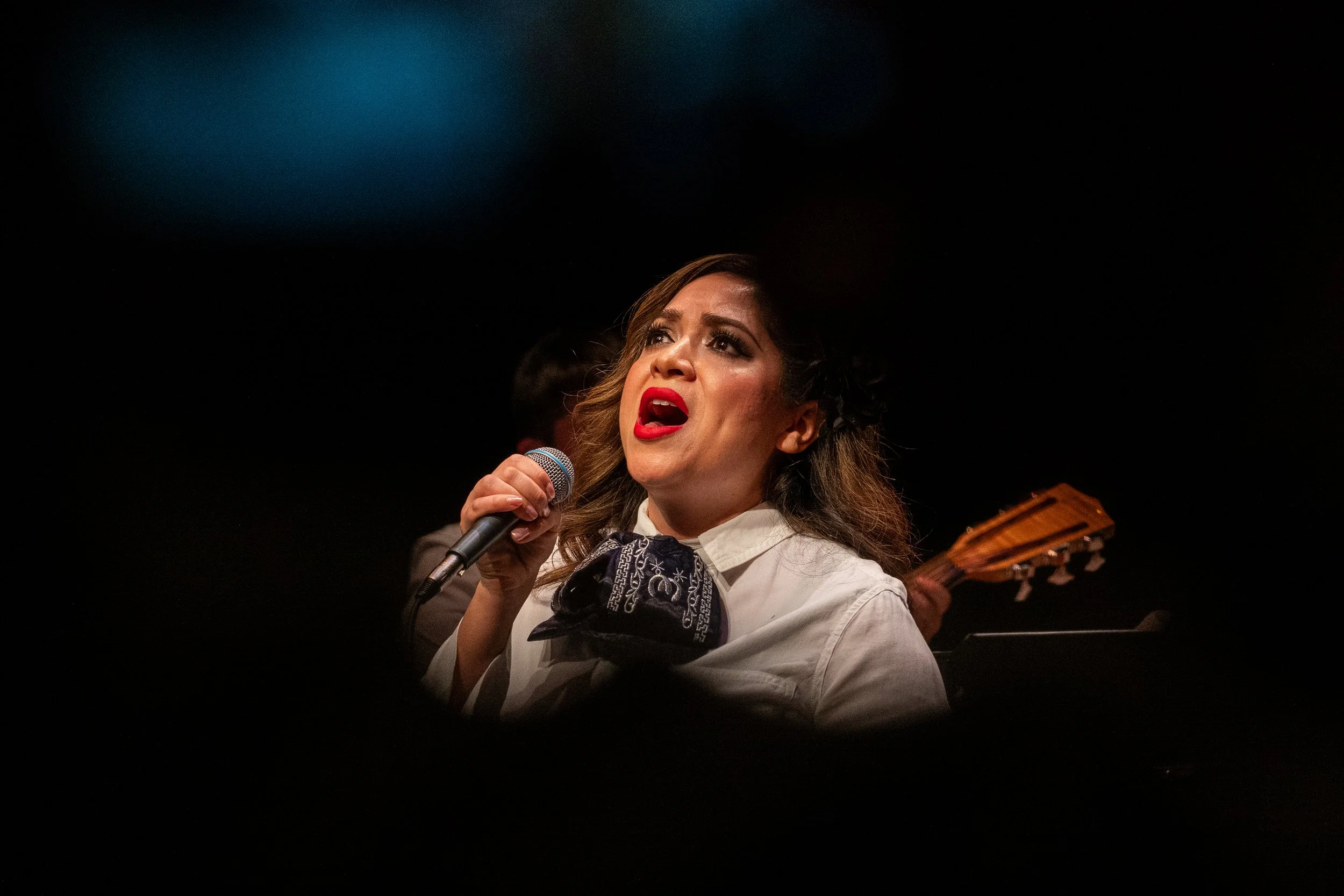
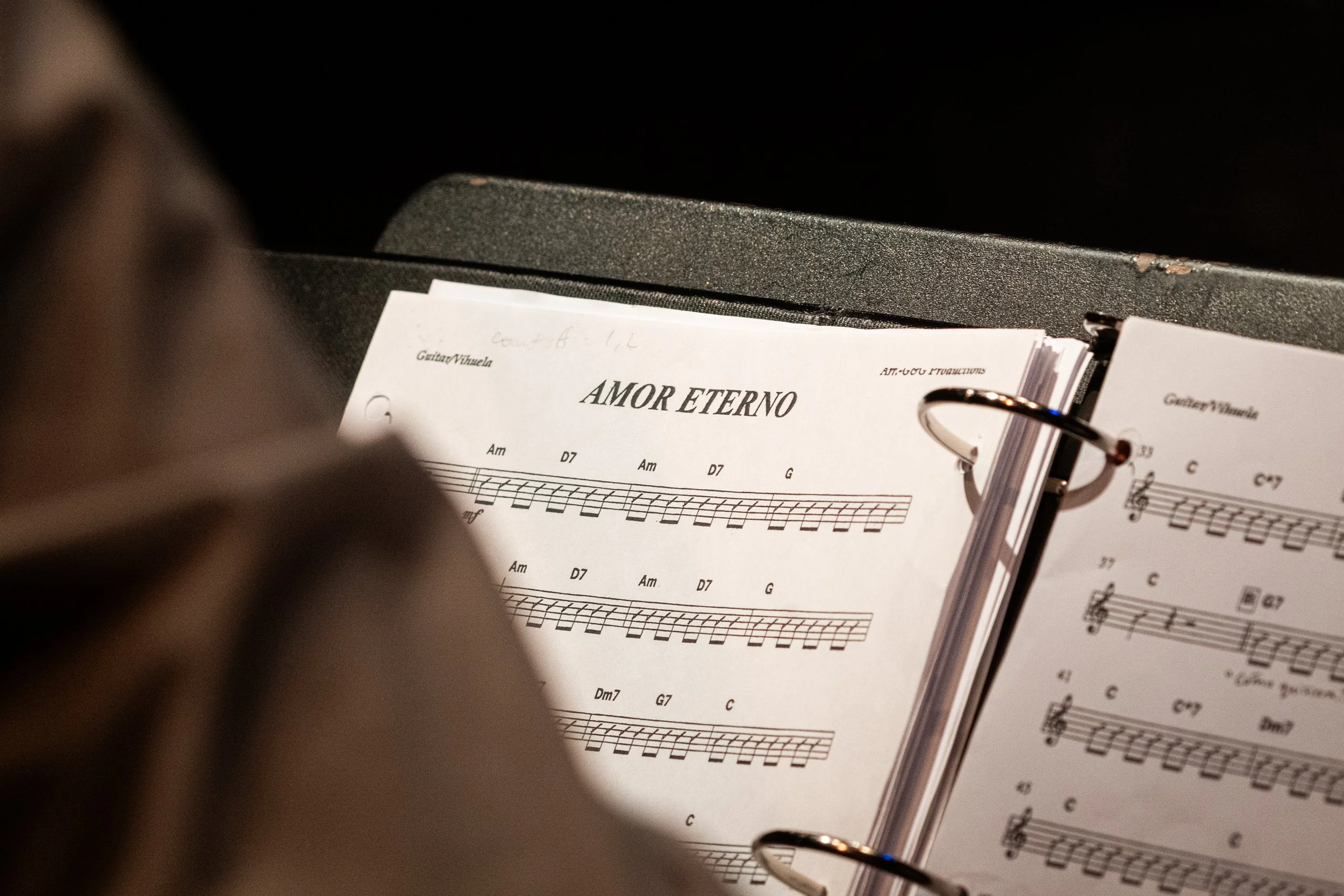
Portillo sang a cover of Mexican composer and singer Juan Gabriel’s "Amor Eterno". The song gained recognition through Spanish singer Rocío Dúrcal, who activated the emotional piece written by Gabriel as an ode to his mother after her passing.
Portillo reflected on her experience performing the song. “It was a wonderful song that Miss Alfaro recommended for me and it was a pretty emotional song, and I really wanted to have an authentic approach to it — it's about losing a loved one. I did have the people I lost in mind, so I feel like that brings more of the text out of the lyrics. I really wanted it to be like a personal experience and maybe have someone relate to it,” she said.
Portillo’s performance opened a sacred space between grief and love. Her performance was reminiscent of a rose unfurling as she centered herself, appearing to check in with her chakras, placing her hands on her solar plexes and heart before extending her hand out. She appeared to be reaching out to someone beyond the audience.
“I was singing it as if I was alone and recollecting people who passed that I've lost. In particular it was my grandmother who I was very close to — an extremely strong woman — and she’s the epitome of my example for my work ethic and just being a strong Hispanic woman,” Portillo said.
Portillo’s grandmother was the matriarch of her family, and she shared that it hasn’t been the same since her passing. For anyone losing someone of that significance, it can be challenging. That’s what makes “Amor Eterno” so powerful for the community of family members mourning the loss of a loved one.
So much so that “Juan Gabriel’s 1990 live recording [of Amor Eterno] in The Palacio De Bellas Artes in Mexico City, is now persevered forever via the Library of Congress’ conservation and inclusion of the song in the 2024 National Recording Registry.” according to Noel Hernandez, Assistant Professor at Broward College, and a PhD Student at Florida International University researching the history of Latin music in the US during the early 20th century, in his essay Amor Eterno Added to the National Registry: 2024.
You could almost see the tears rolling down the cheeks of a few audience members as they held up cellphones to record the live performance of the ballad. One person leaned over to console a woman silently weeping, as if she had been absorbed into that space Portillo described — alone recollecting the memory of a loved one. The room’s energy shifted to a bittersweet moment of healing.
Portillo’s support extended to the audience, including her friend Yukari Amasaki, a fellow SMC music student who described the performance as theatrical while highlighting themes of love and agony.
“I feel the love and agony from the love, and we suffer from the love. Love and suffering are always together,” Amasaki said.
This was Amasaki’s first mariachi experience and before attending, she didn't know about the genre. She attended under the impression it was a guitar concert, but to her surprise, there were more instruments.
“I like the concert because it's not quiet, they [don’t] just sing while everyone is just sitting down, it's more audience participation,” she said. Amasaki is also considering joining the class in the near future.
Mario Mondev, an SMC student from Bulgaria pursuing a music degree, has been in Los Angeles since 1986 and says the city's culture has had an immense impact on him.
“I enjoy the mariachi songs, in particular this “El Rey” song that I sang. I've been wanting to sing it for like the last five years. I’ve been embedded in the community, and it's a cultural respect to learn about the food, the customs, the religion. And I enjoyed having this experience so I wanted to share it on the stage,” Mondev said.
"El Rey" is another popular song written by José Alfredo Jiménez, though it is more well known for being performed by mariachi superstar Vicente Fernández.
“It’s an immense emotional experience to be within the band. It’s different when you watch it; it's different when you are in public,” Mondev said.
Mondev says that he’s learned to excel while playing guitar due to the fast changes. He encourages everyone, regardless of background or culture, to join. “I think they will have a wonderful experience,” he said.
Jesse Del Rio, an SMC student and member of the mariachi, was accompanied by his mother, Erlinda Valle. Valle expressed her pride and gratitude for her son’s achievements as a member of Mariachi Los Corsarios.
“Estoy muy contenta y agradecida con sus maestros que siempre me lo apoyan y lu ayudan y lo regañan. Les digo regaña me lo también,” Valle said.
Translation:
"I am very happy and grateful to his teachers who always support him, help him, and sometimes scold him. I even tell them to scold him too."
She laughed, looking towards Professor Alfaro to confirm her statement.
“¿Verdad maestra? Desde que mi niño entró el primer año les dije tienes el permiso de regañar al niño si se porta mal,” Valle said.
Translation: "Right, teacher? Since my son joined the first year, I told them they have permission to scold him if he misbehaves."
Del Rio joined the SMC mariachi after high school and has been attending SMC for five years. He and his mom enjoy jamming together at home, with Del Rio playing the violin while Valle says she personally enjoys singing songs by Juan Gabriel and José Alfredo Jiménez. She shared that her favorite songs are "Siempre en mi mente" & “Amor Eterno.”
Del Rio’s family traditions ignite his pursuit of studying music. He explained the significance of being able to perform this style of music in light of the political climate being dealt with by the community where mariachi originated.
“I think it gives you an opportunity to be proud of your raíces, your background, and it unites us all, especially today you saw how many people of different backgrounds got to enjoy the same music,” Del Rio said.
His family has roots in Zacatecas, Mexico, and his earliest memories of mariachi are attending church and hearing it play in honor of La Virgen de Guadalupe during the annual Dec. 12 celebration.
In Mexico, many pueblos host 12 days of festivities, complete with parades, fireworks, music and attending Mass to honor the miracle of the Virgin Mary’s apparition in 1531 to indigenous Mexican Juan Diego Cuauhtlatoatzin.
The significance of her appearance represents the message that God’s love is universal and not reserved only for those who claim to be elite or powerful. Today, her image symbolizes the perseverance, strength and willingness of her devotees on both sides of the Mexico/U.S border.
Sadly, in 2025, the Mexican community and other immigrants continue to face prejudice similar to what Juan Diego faced almost 500 years ago.
Alfaro said, “One, being in southern California, the Southwest, Mexican culture is an integral part of the culture of this part of the country. It’s only natural that people would want a class like this, granted right now we are seeing a lot of pushback in such a violent way and seeing our culture denigrated and made fun of by people at the highest level of government its mind boggling, at the same time sad, infuriating but not surprising. It just makes music educators, mariachi educators just want to do what we do even more.”
“Mariachi music is not just a huge part of Mexican culture, but Latino culture in the United States. Los Angeles has played a huge role in mariachi's development and it's only natural that folks who want to hear mariachi music and students would want to learn it,” she said.
Alfaro invites the SMC community to attend the shows, follow them on social media @SMCMariachi, and enroll in the class to support its growth. She hopes the group will continue performing at both public and private performances.
Alfaro plans to continue teaching the next generation of mariachis and musicians, encouraging students to take up space unapologetically.
“You belong here, we belong here, we've been here for centuries literally,” Alfaro said.