
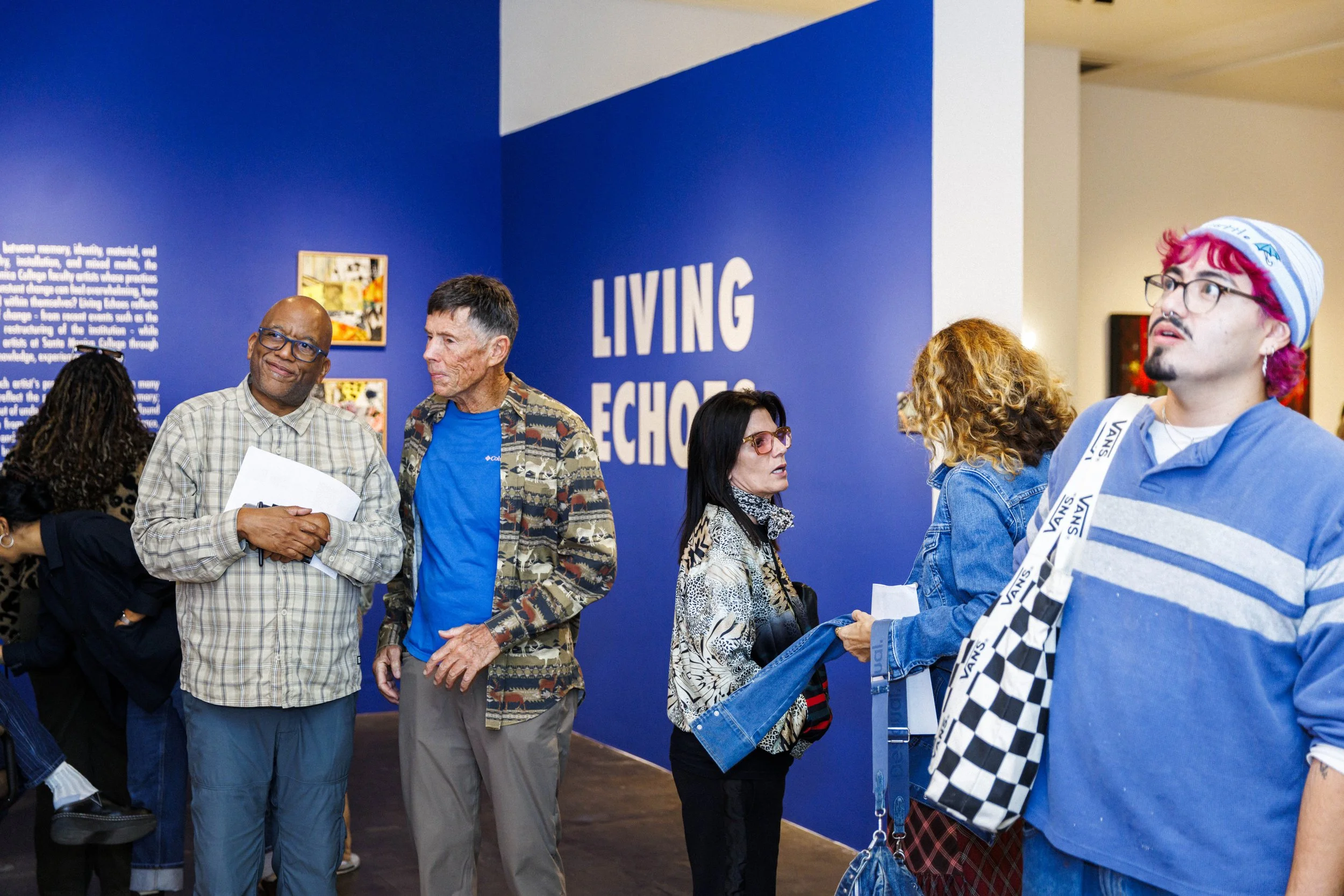
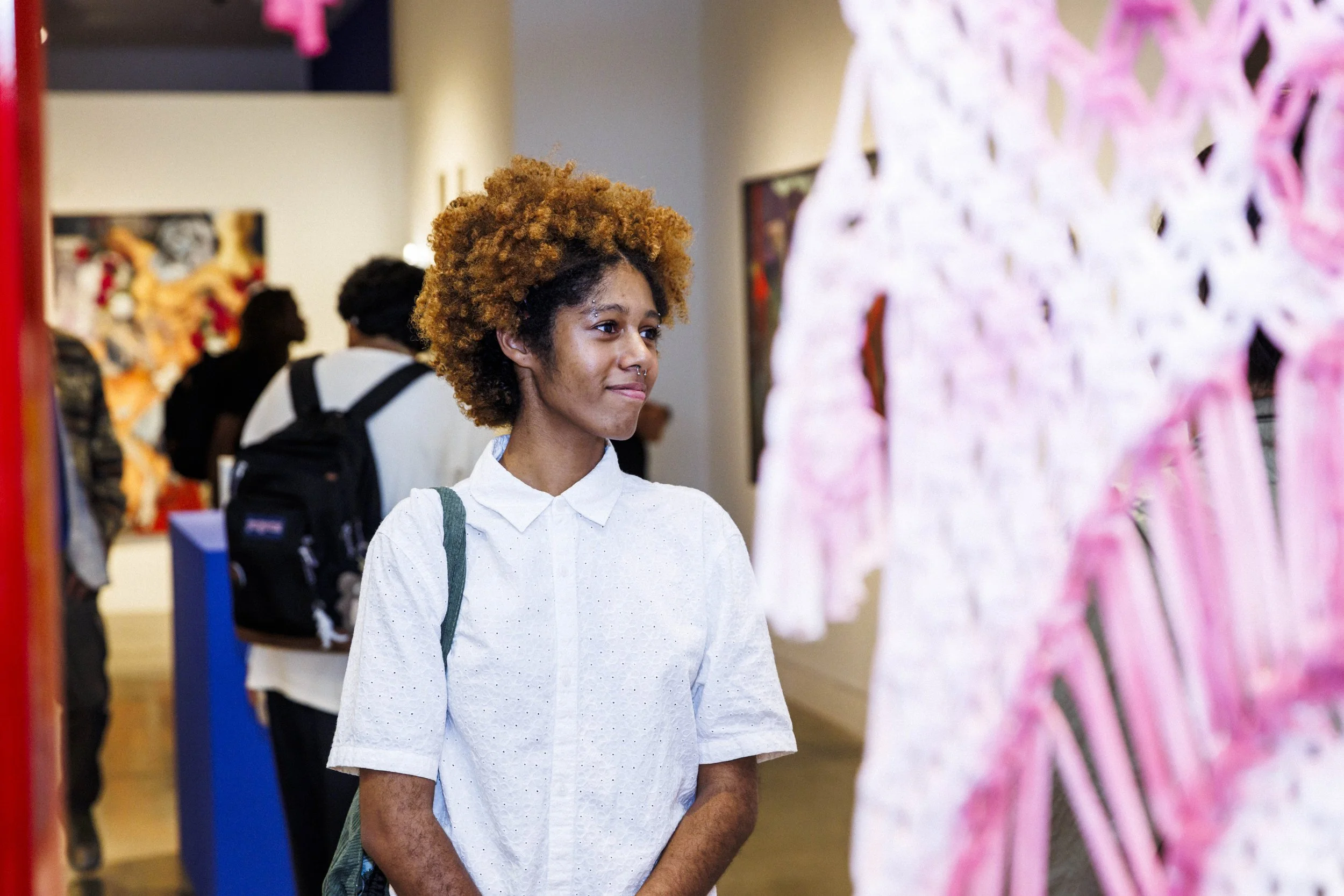
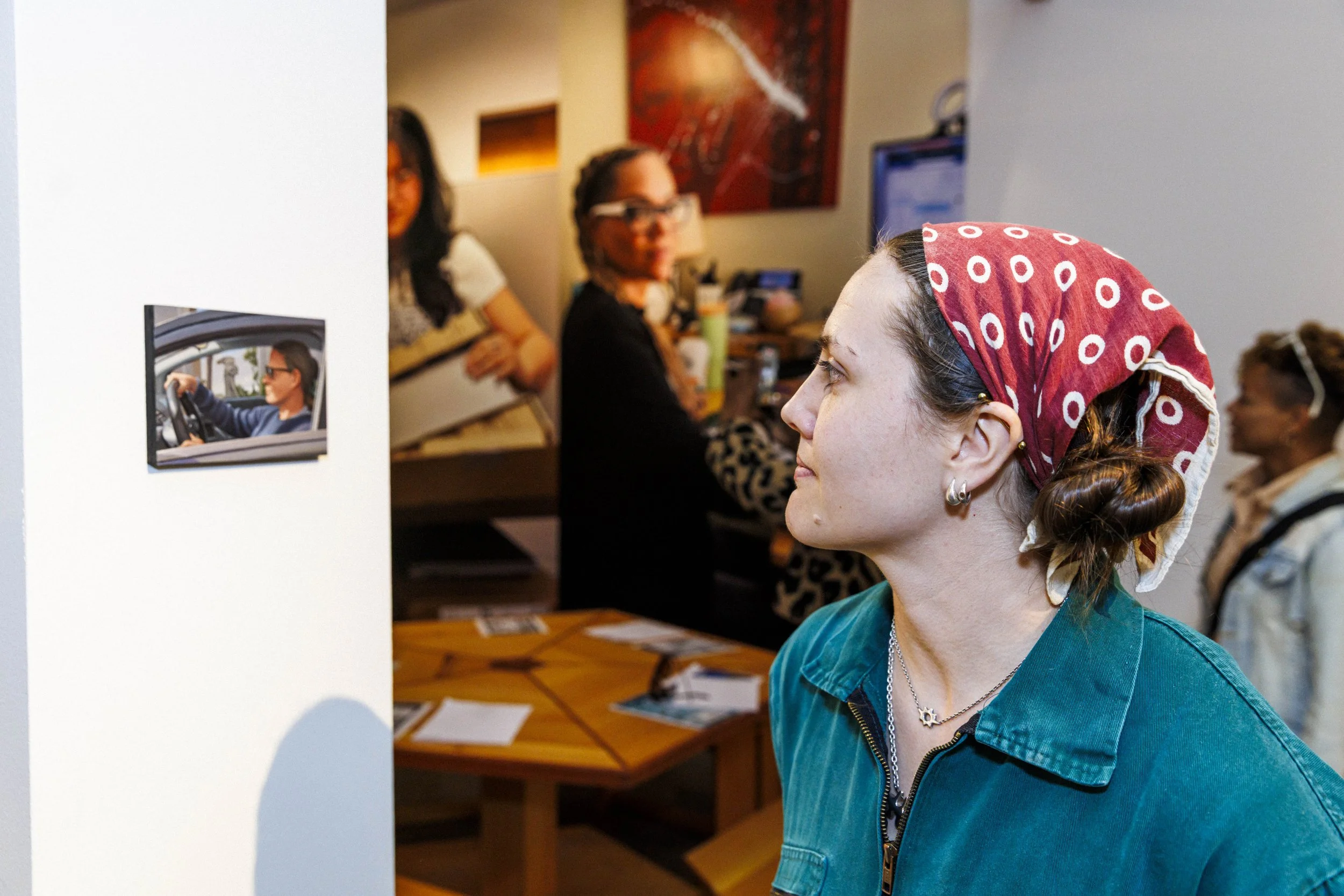
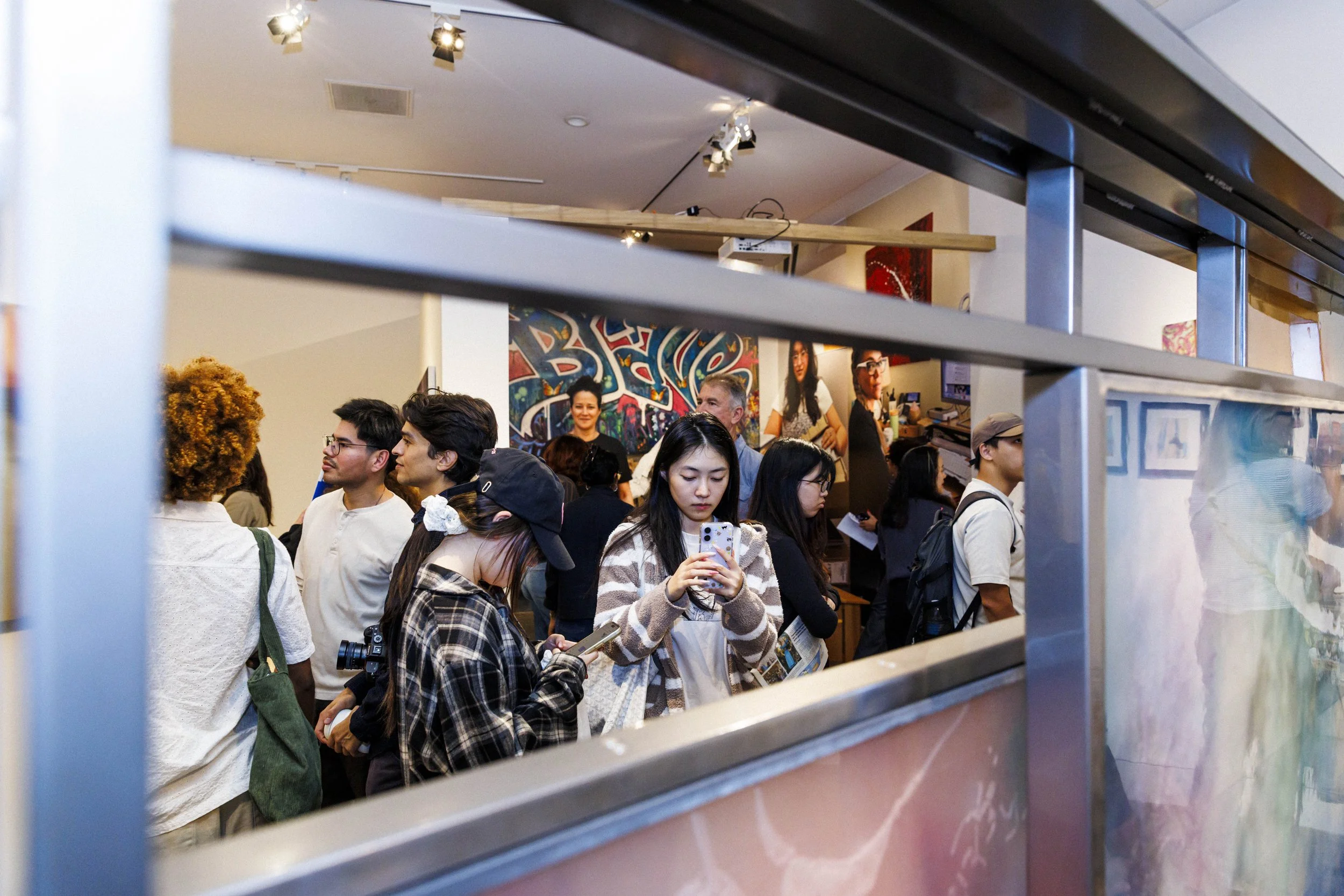
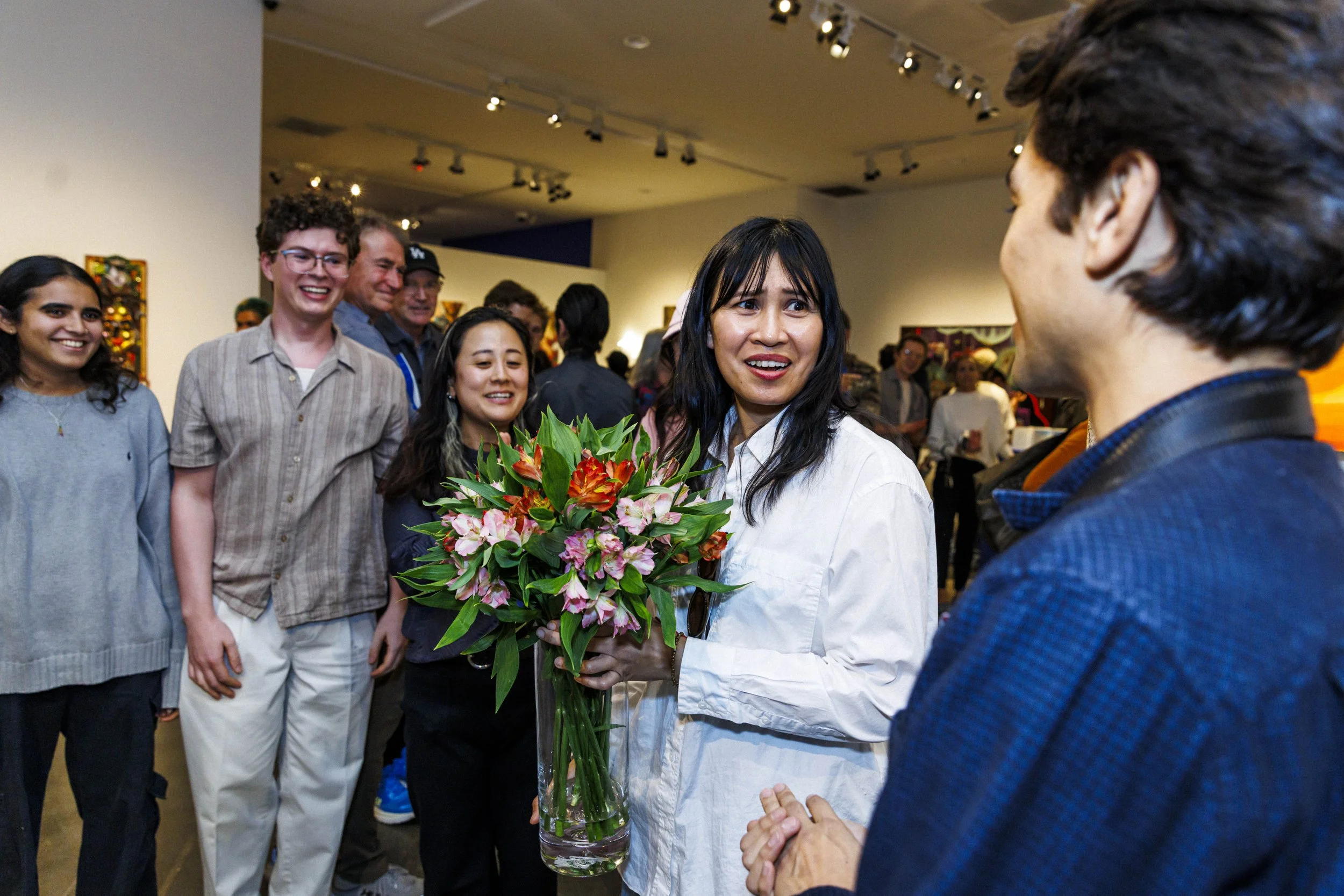
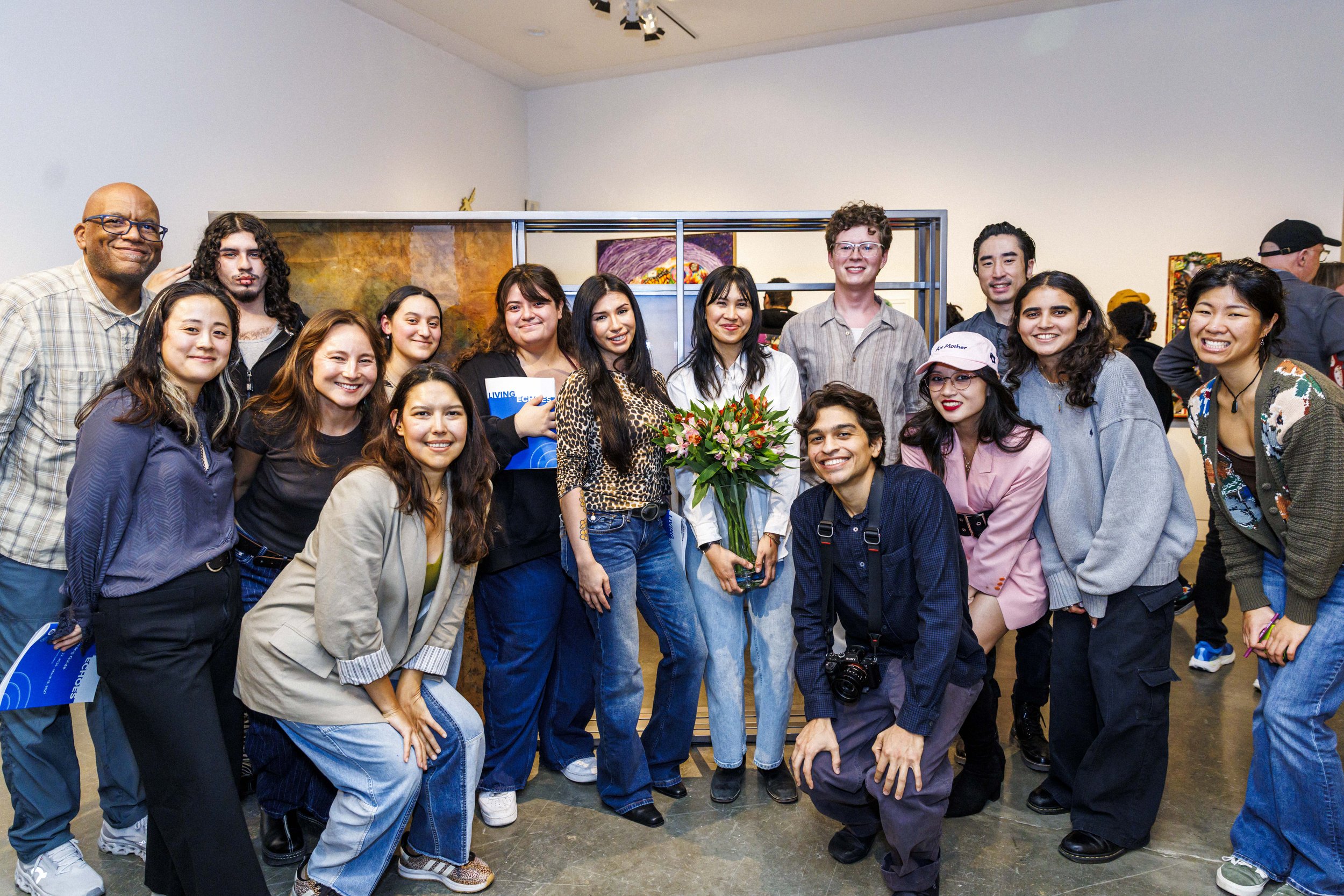
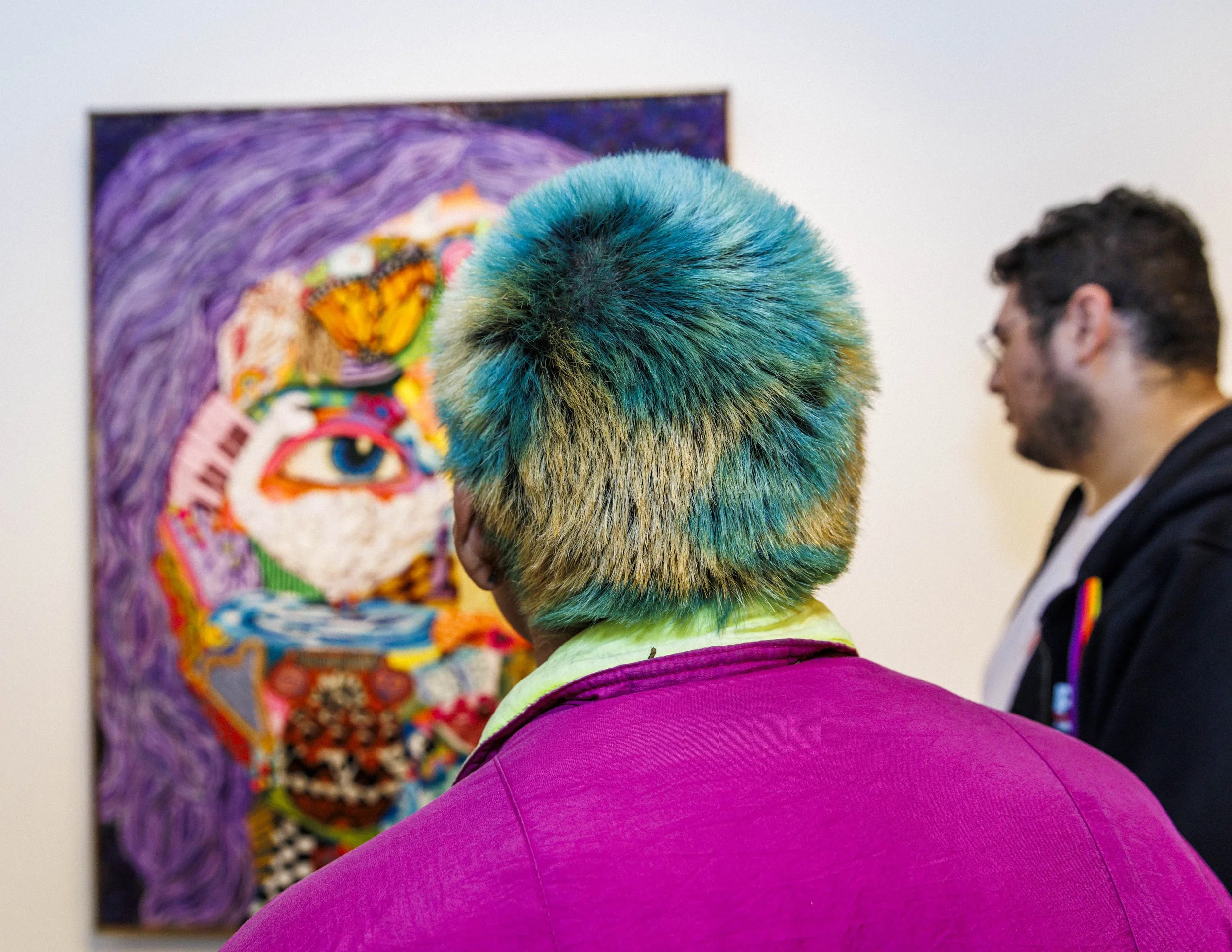
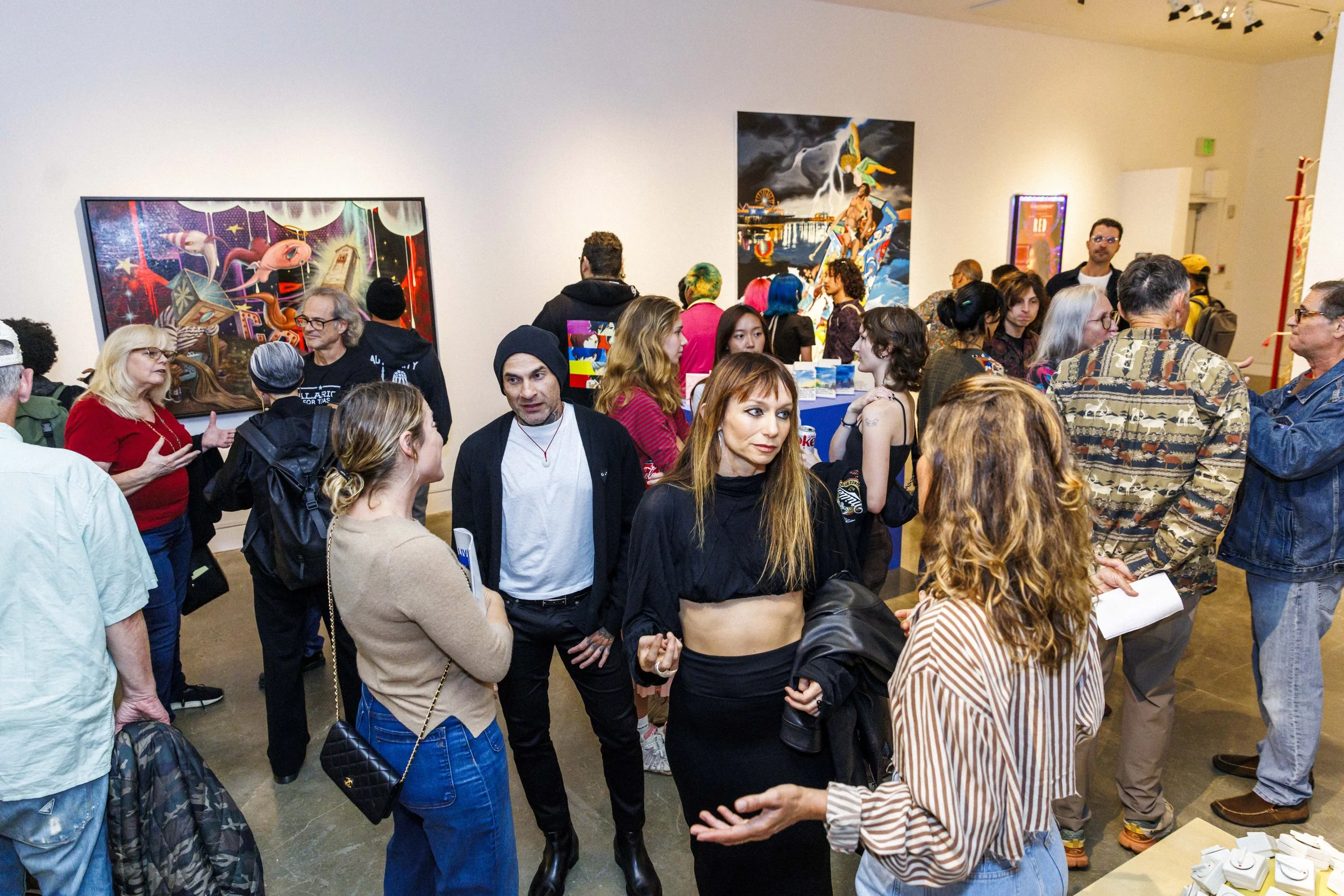
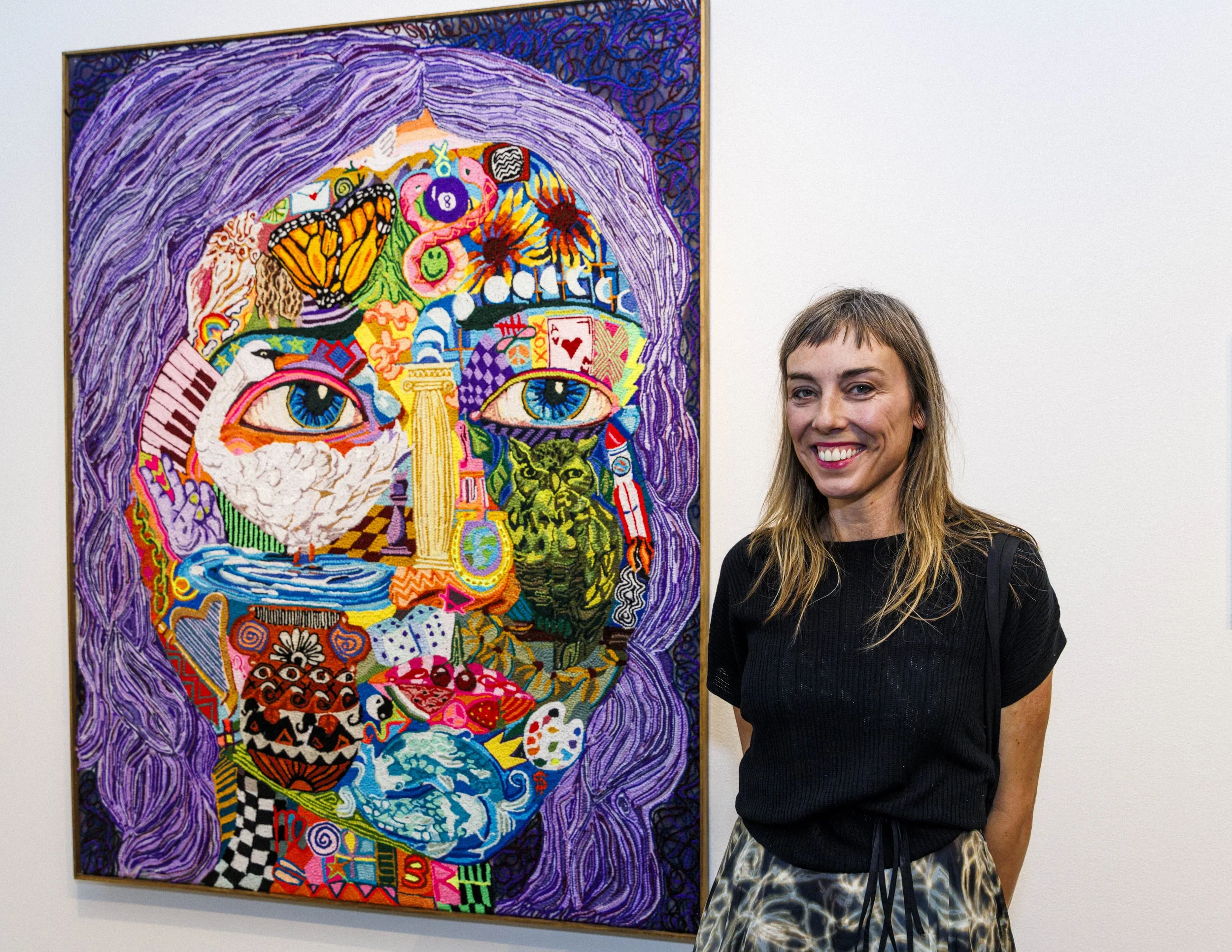
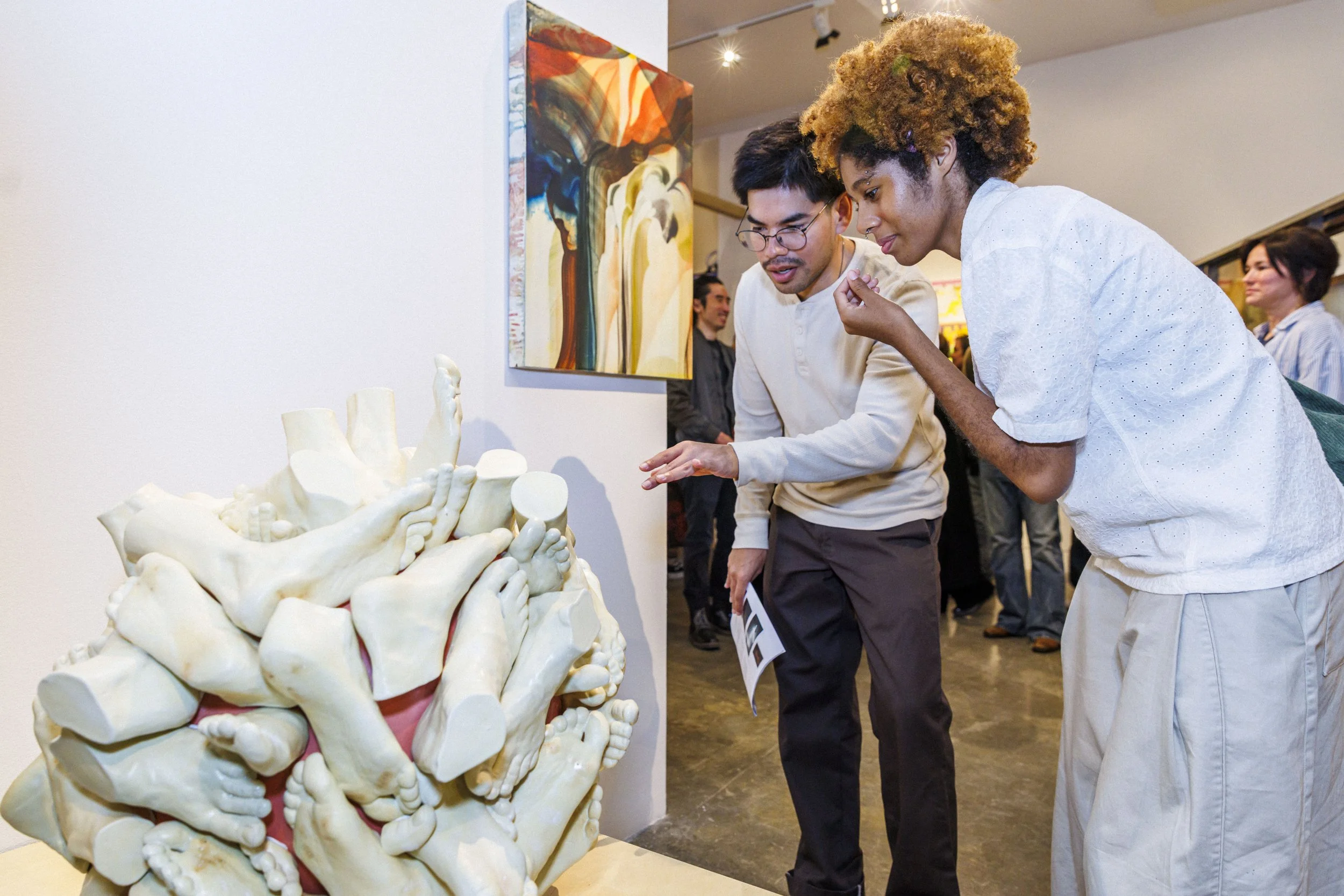
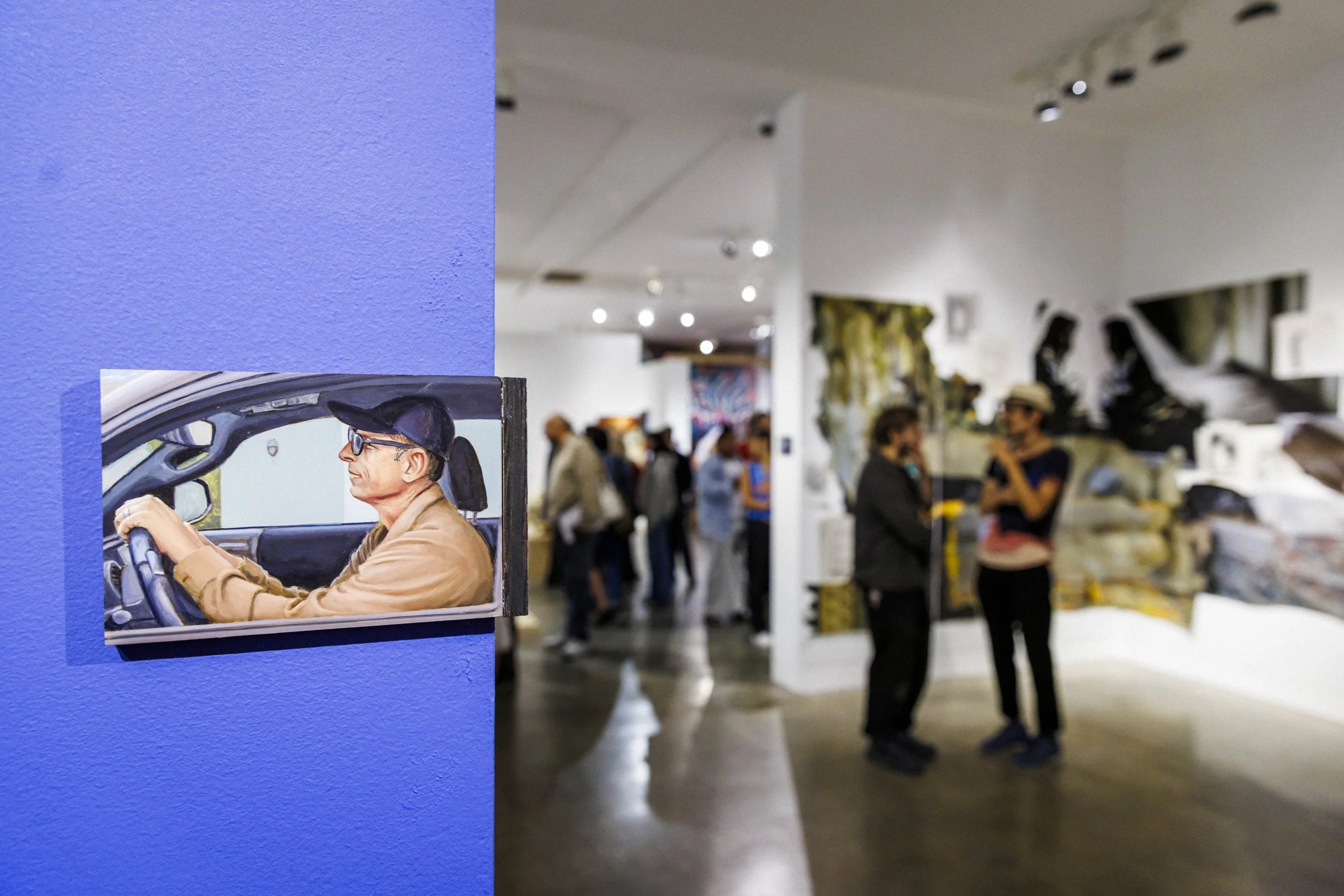
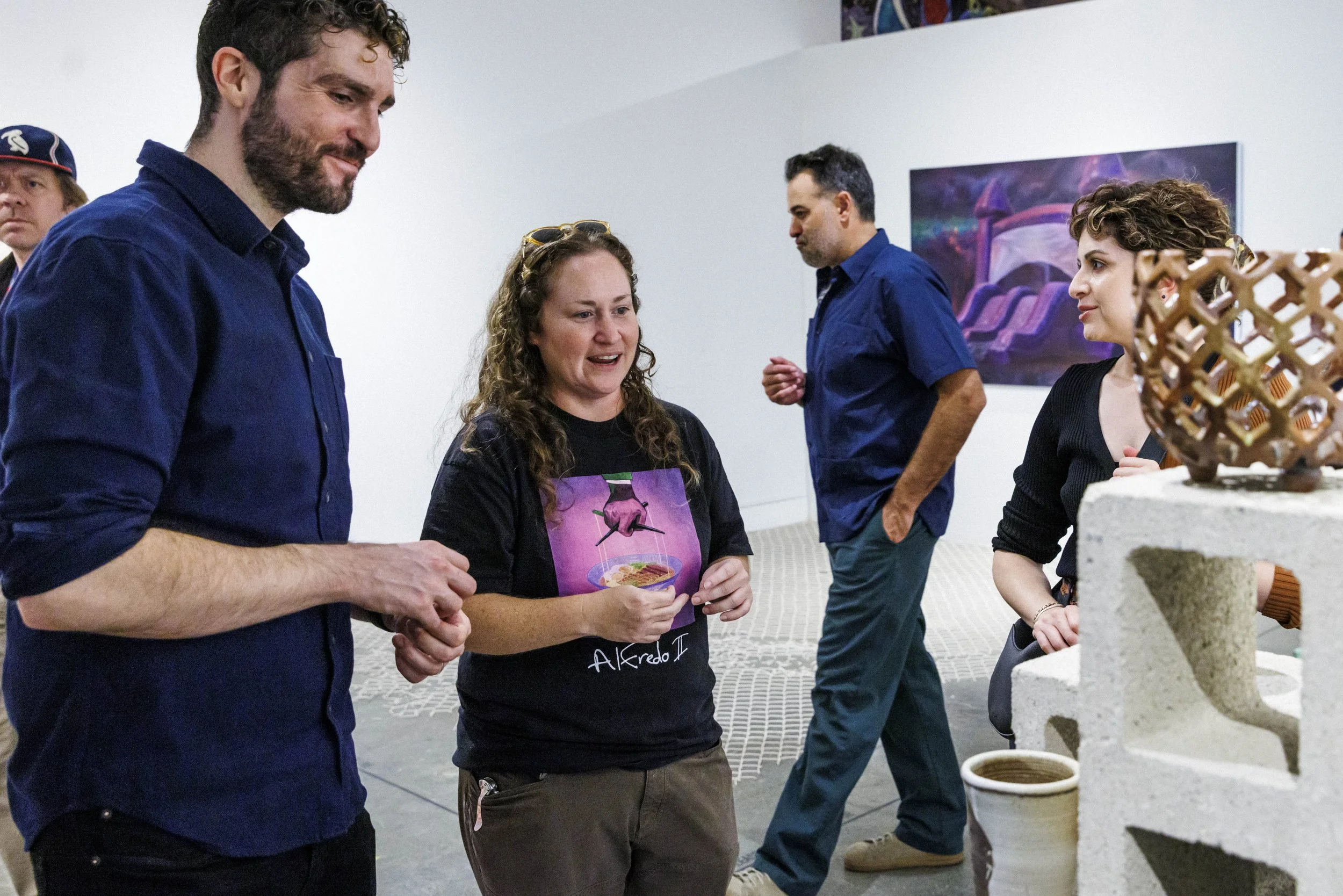
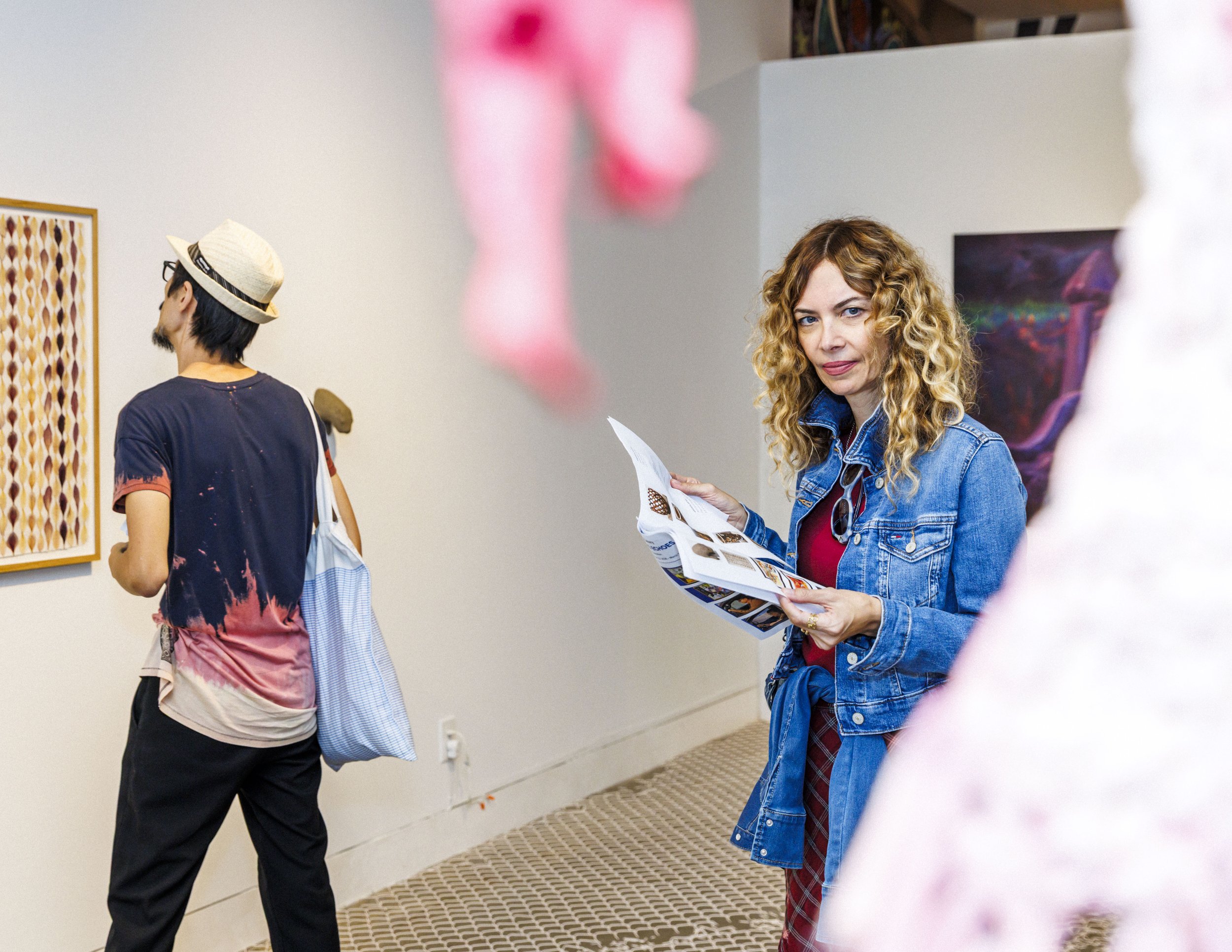
The Barrett Gallery has developed into a playful symphony of colors and textures. The canvases pulse with intricate patterns and vivid hues, pulling you into a surreal tapestry of embroidered yarn. Meanwhile, the tactile textures give the sculptures an earthbound finish, seamlessly linking natural materials with artistic form.
Living Echoes brought together twenty-eight artists whose work was selected and arranged by student curators. The exhibition explores artists’ personal experiences and their responses to a rapidly changing world, connecting memory, identity, materials and place. This transformation of lived experiences into art is a key element of the exhibition, from Margaret Oakley’s mycelium sculpture to Liv Aanrud’s mixed-media textile work.
It is not only the art on display that matters, but also the stories behind it.
Margaret Oakley's sculpture Dispersal (after the fire) (2025), brought together mycelium, foraged seed pods, berries and other natural materials. She collected these materials before the Palisades fires and decided to use them afterwards. She hoped to convey ecological loss, intimacy with nature and the possibility of regeneration.
“I’m trying to create a sense of intimacy with the natural materials that gives people a chance to engage with nature in an art gallery,” Oakley said.
Another important message lies behind Liv Aanrud’s textile artwork Earth Looks Back (2015), made of acrylic and punch-needle embroidered yarn on monk’s cloth. The textile portrait combines faces, tears and personal symbols. The work imagines the Earth looking back at humanity.
“Look at us, we are out of control,” Aanrud said, referring to the destruction of the Earth by humans. She explained that she usually allows her work to unravel through associations, memories and experiences.
Behind the exhibition lies a lengthy process of research, selection and installation led by student curators.
Michael Sanchez, a student from Art 80 with instructor Kim Garcia, gained hands-on experience in art handling, curation and exhibition planning. He and the other students visited faculty artists in their studios, where they learned about their different artistic practices. During the exhibit,some artists presented recent work while others brought back older pieces they wanted to exhibit again.
“The challenge was finding a common thread among such diverse works,” Sanchez said.
For Joy Watanabe, the project marked her first time curating an exhibition. Watanabe is a photographer, so taking this course and working with sculptures and other three-dimensional pieces made her think beyond displaying flat, two-dimensional images.
“What do I want to do as an artist?” Watanabe said, reflecting on the process of curating.
Kim Garcia explained that the exhibition's theme grew out of class discussions about how artists process their environment. “Art is a way of thinking through and digesting our surroundings," Garcia said.
Garcia, who teaches Art 80, 82, and 84, guides students through curating and installing exhibitions, writing press releases and developing educational materials. Having attended community college herself without knowing what resources were available, a museum studies course helped her open doors, and now she wants others to have access to the same resources — an opportunity she now works to provide for her students.
Kaili Stafford, a visitor and emerging artist, felt an immediate connection to the art on display.
“It's inspiring to see our mentors' work in these spaces,” she said.
Her favorite piece was Rebecca Frantz’s Compulsion no. 6, which made her reflect on anxiety around time, deadlines and obligations.
“We live in a society that demands us to stretch ourselves beyond our capacity to function,” Stafford said. She left the gallery inspired by the different artistic practices on display, challenged to explore new directions in her own work.