
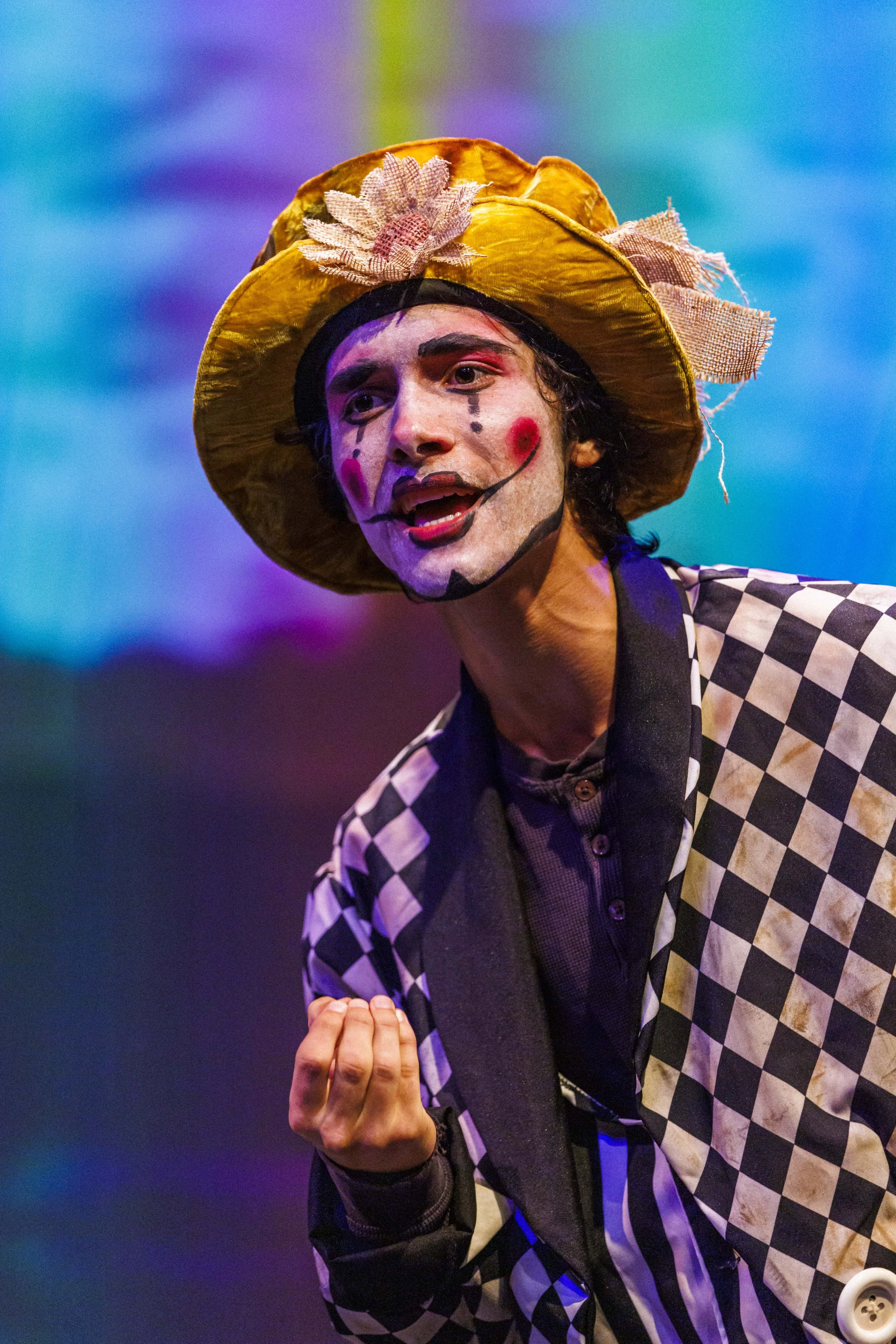
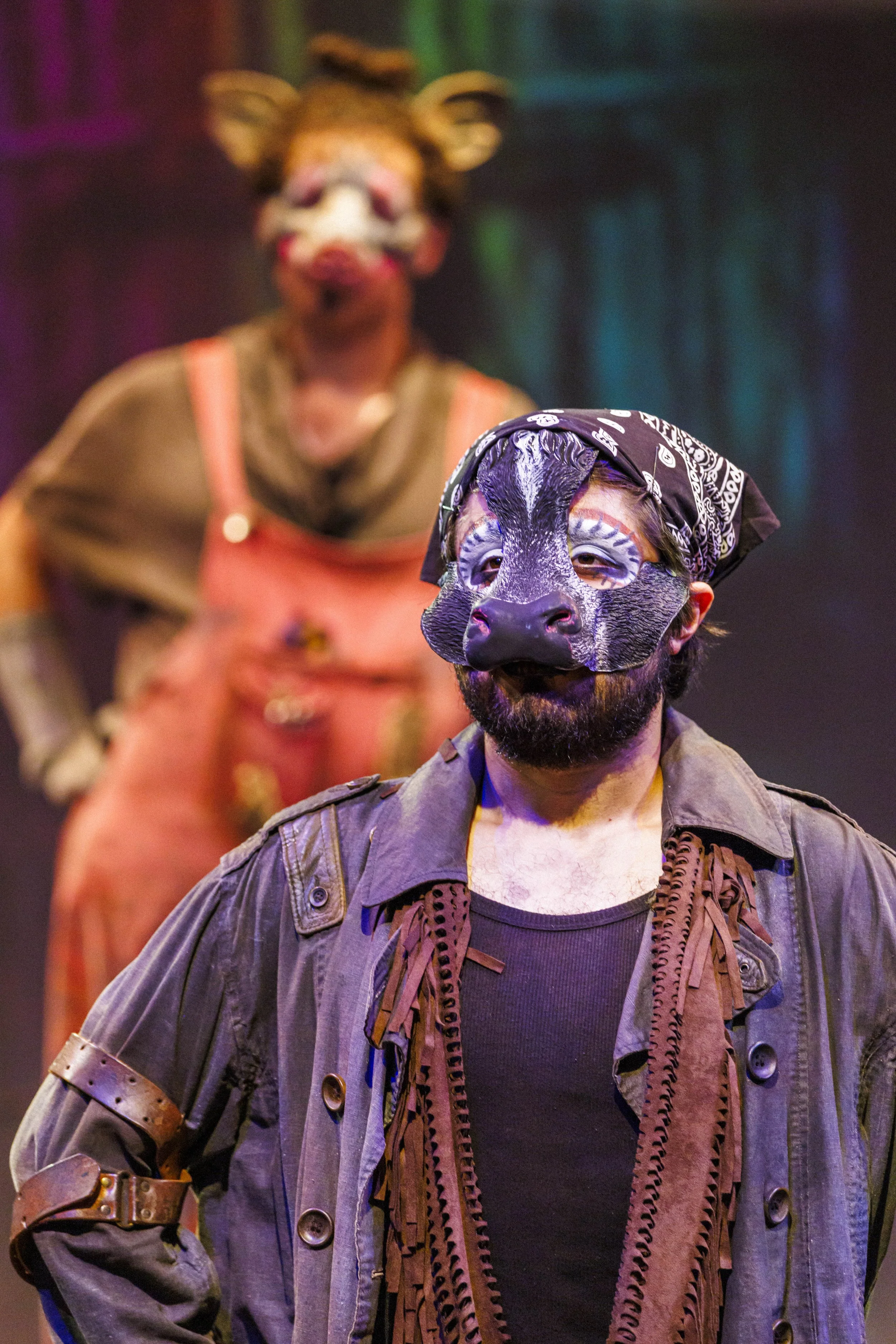
George Orwell’s “Animal Farm” comes to life on stage at Santa Monica College in an adaptation by Nelson Bond, directed by Terrin Adair-Lynch. The production communicated how manipulation and the pursuit of power can turn a revolution based on equality into the very oppression it sought to destroy. While Napoleon’s commanding presence and Squealer’s manipulative performance effectively illustrate the mechanics of authoritarian rule, the production stumbles in its core conflict: the rivalry between Snowball and Napoleon fell somewhat flat, weakening the portrayal of Napoleon’s rise to power.
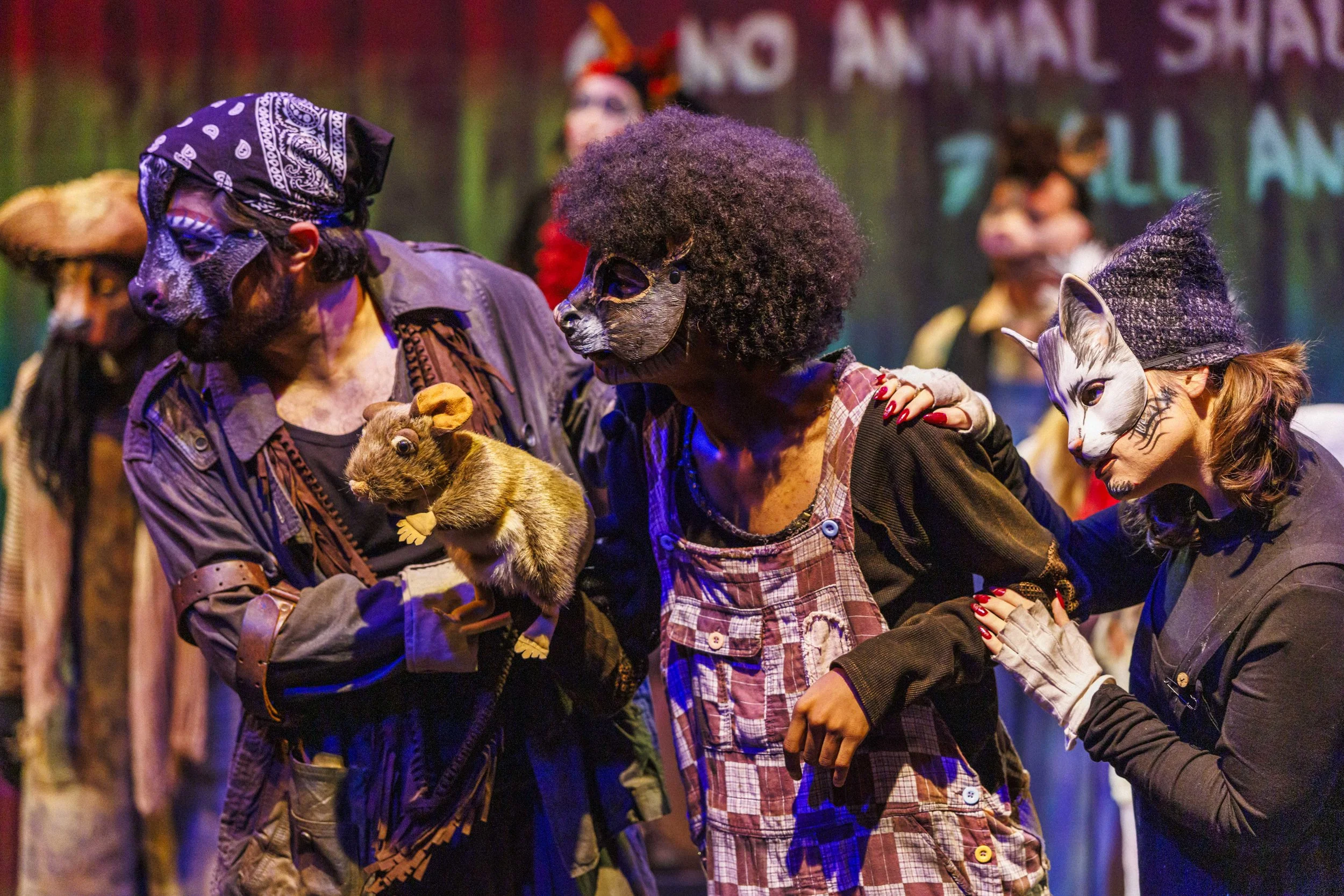
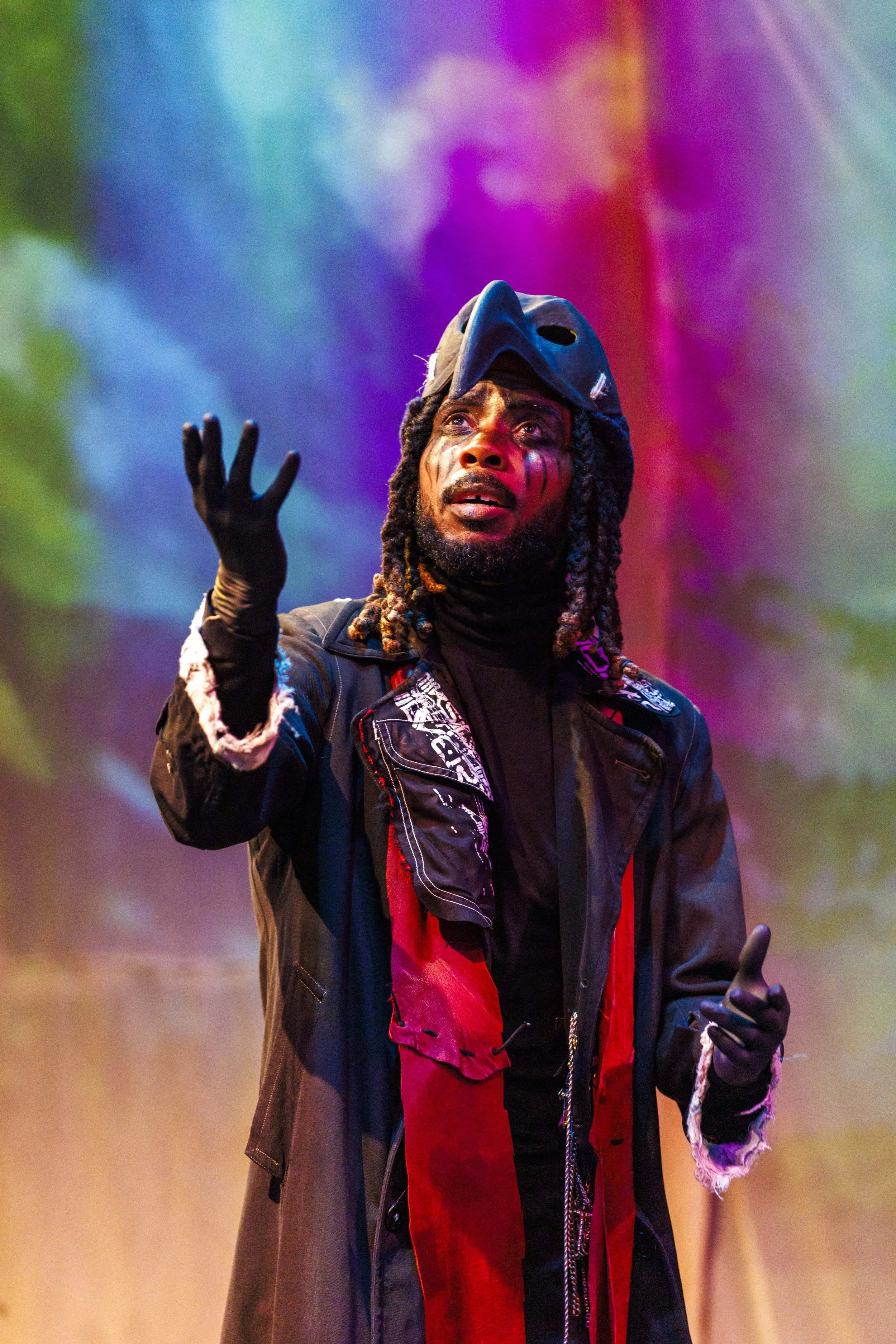
On “Animal Farm”, two threats converge: from outside and from within. The farm’s founding rules are subtly altered to accommodate the pigs’ growing appetite for power, just as farmers arrive at the gate. Dressed in overalls, leather boots and cowboy hats, with shotguns in hand, the farmers march past square hay bales and onto the farm. The animals respond with an aerial assault, as pigeons swoop down on the intruders and the farm’s inhabitants unite to defend their territory.
The external threat is beaten back — for now. But external enemies are rarely a revolution’s true undoing. Instead, the pigs gradually become the very thing the animals revolted against, abandoning the principles they tried to ingrain in others. On this farm, all animals are equal, though some are far more equal than others.
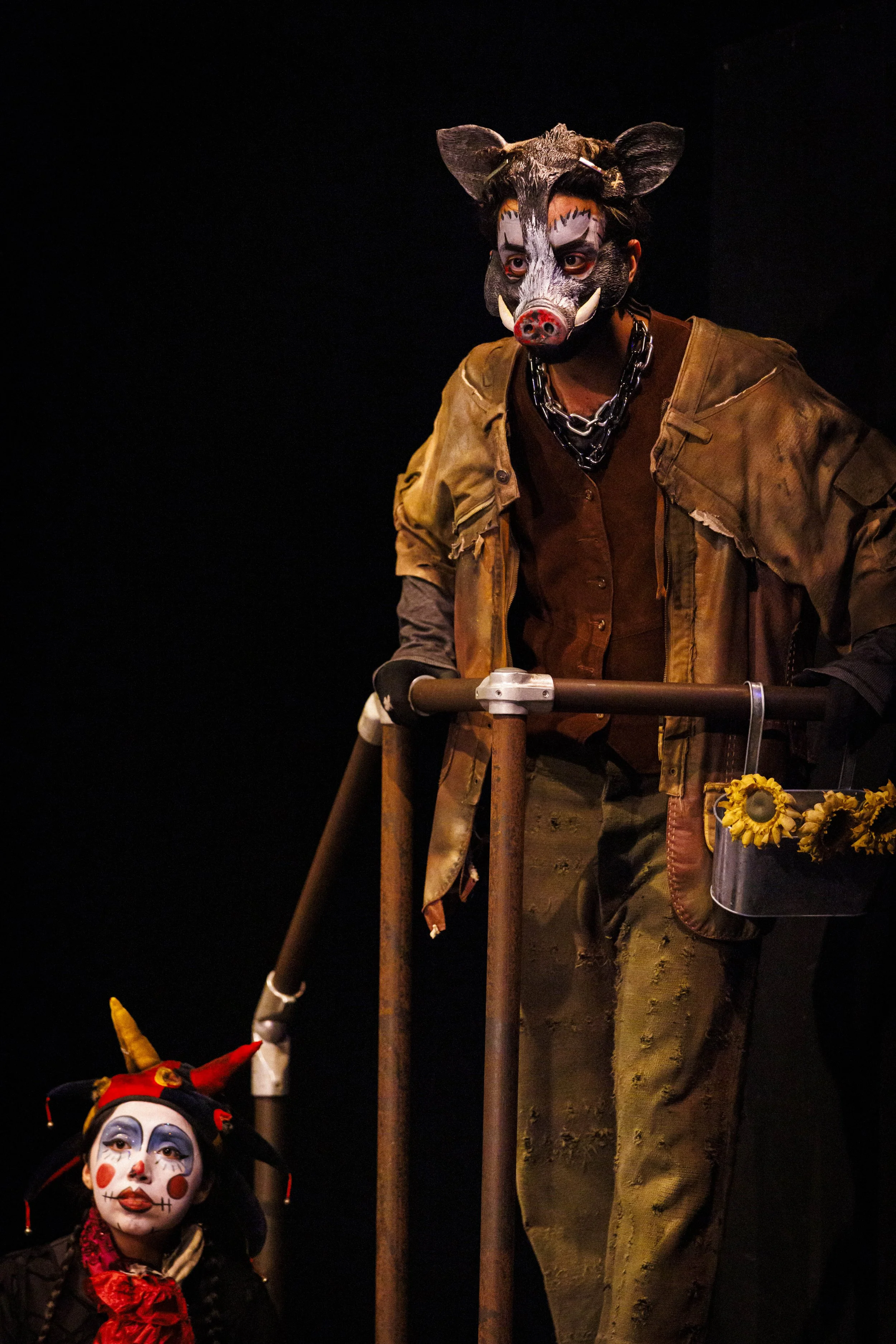
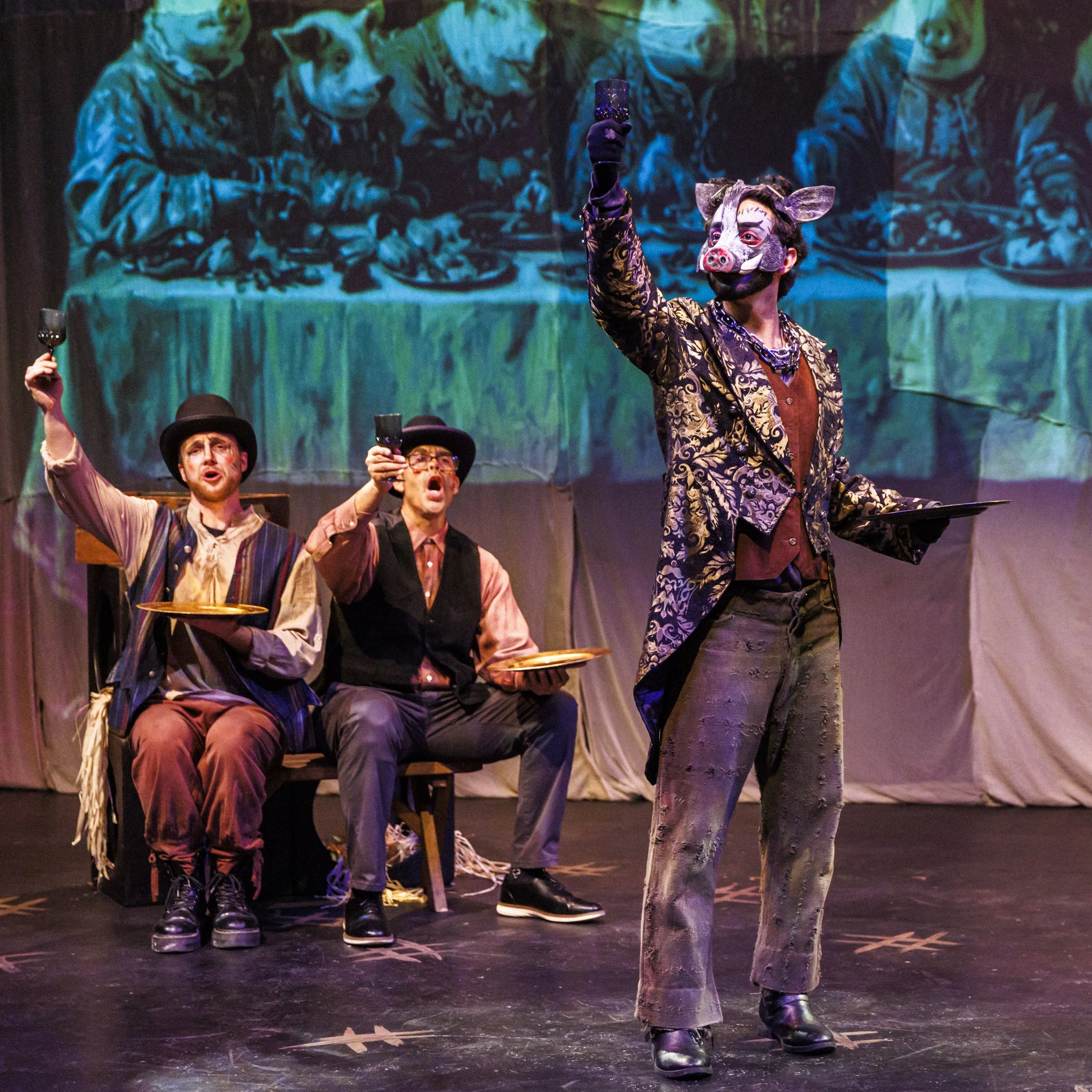
Napoleon’s rise to power is reflected in his changing appearance. Initially wearing a lumpy, grayish-brown sweater with large chains around his neck, the fierce-looking, commanding boar later reappears in a redingote after an alliance is formed between humans and animals, giving him a more militaristic, authoritative appearance.
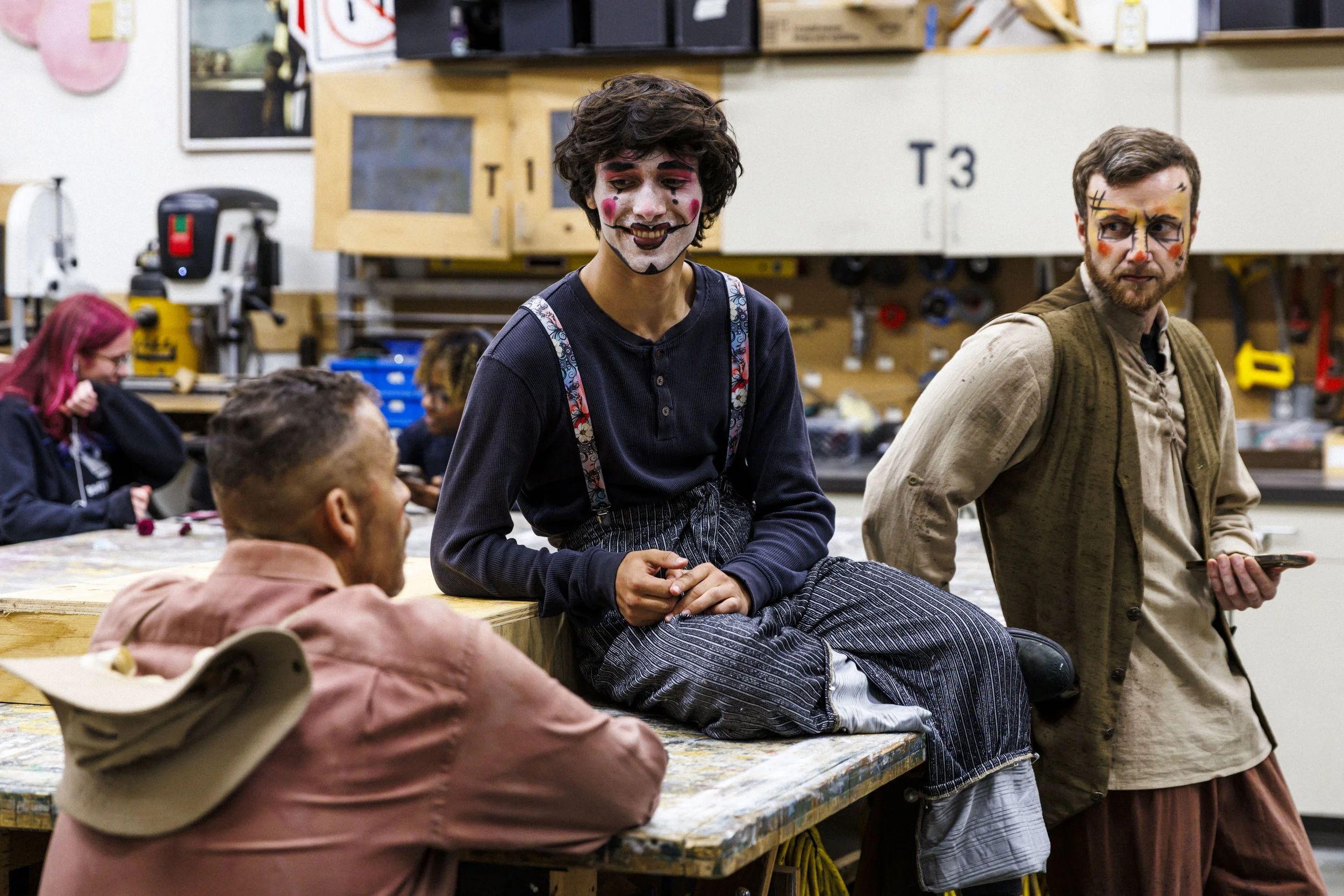
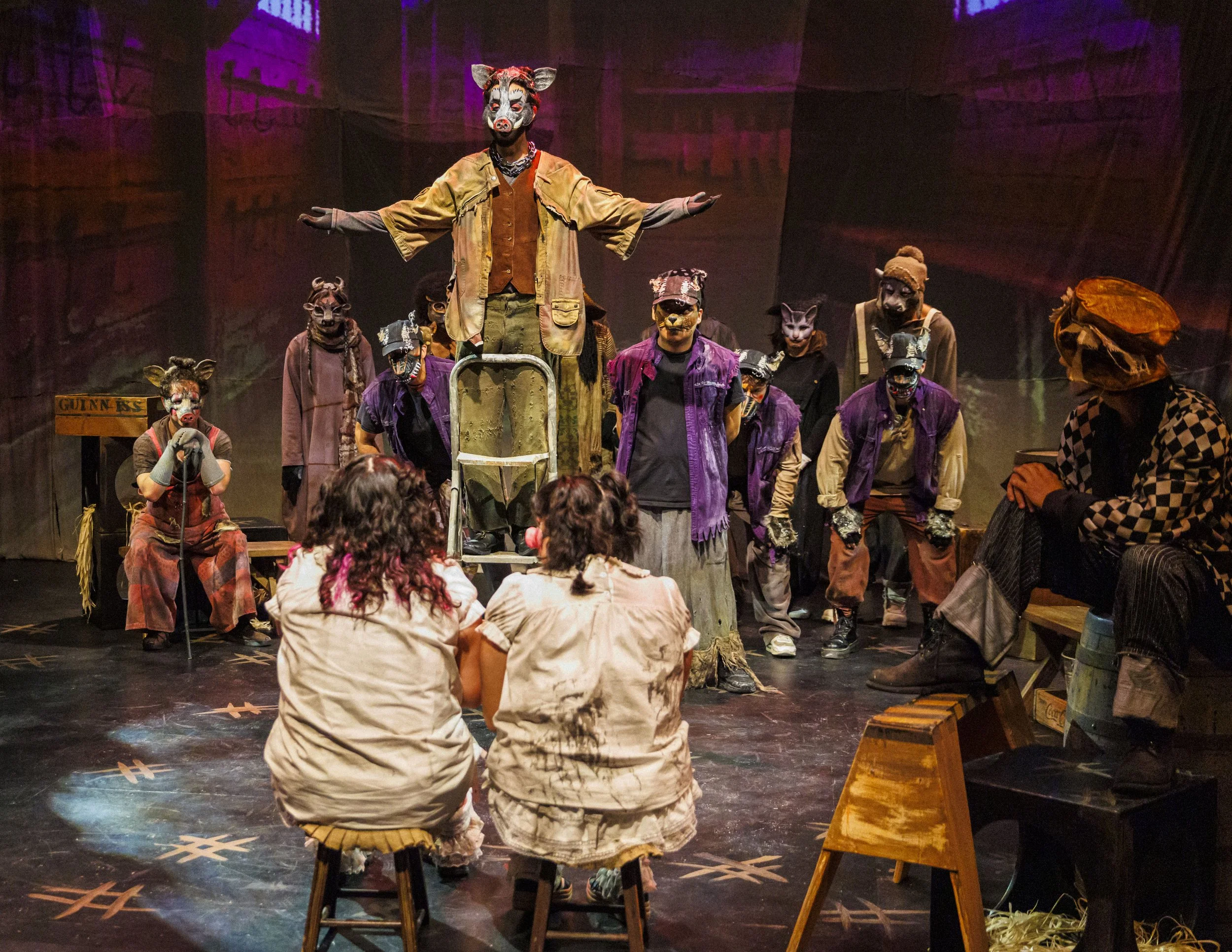
Speaking with a deep, raspy voice, actor Arjan Farahani delivers his lines with sharp aggression. As Napoleon consolidates his control over the farm, he asserts complete dominance — perched atop a raised iron platform, he physically looms over the other animals, making the hierarchy impossible to ignore. His dominance is established through acting choices the moment he enters, well before Snowball ever makes an appearance. This leaves little doubt about who holds the power, though establishing it later might have given Snowball a fighting chance in the audience’s eyes.
Farahani intended for that drive for power to resonate immediately. “I just wanted to be the center of power. I wanted this power because I wanted to be in control,” Farahani said. In his portrayal, Napoleon is a power-hungry pig whose gradual adoption of human habits becomes the ultimate betrayal of the farm’s revolution.
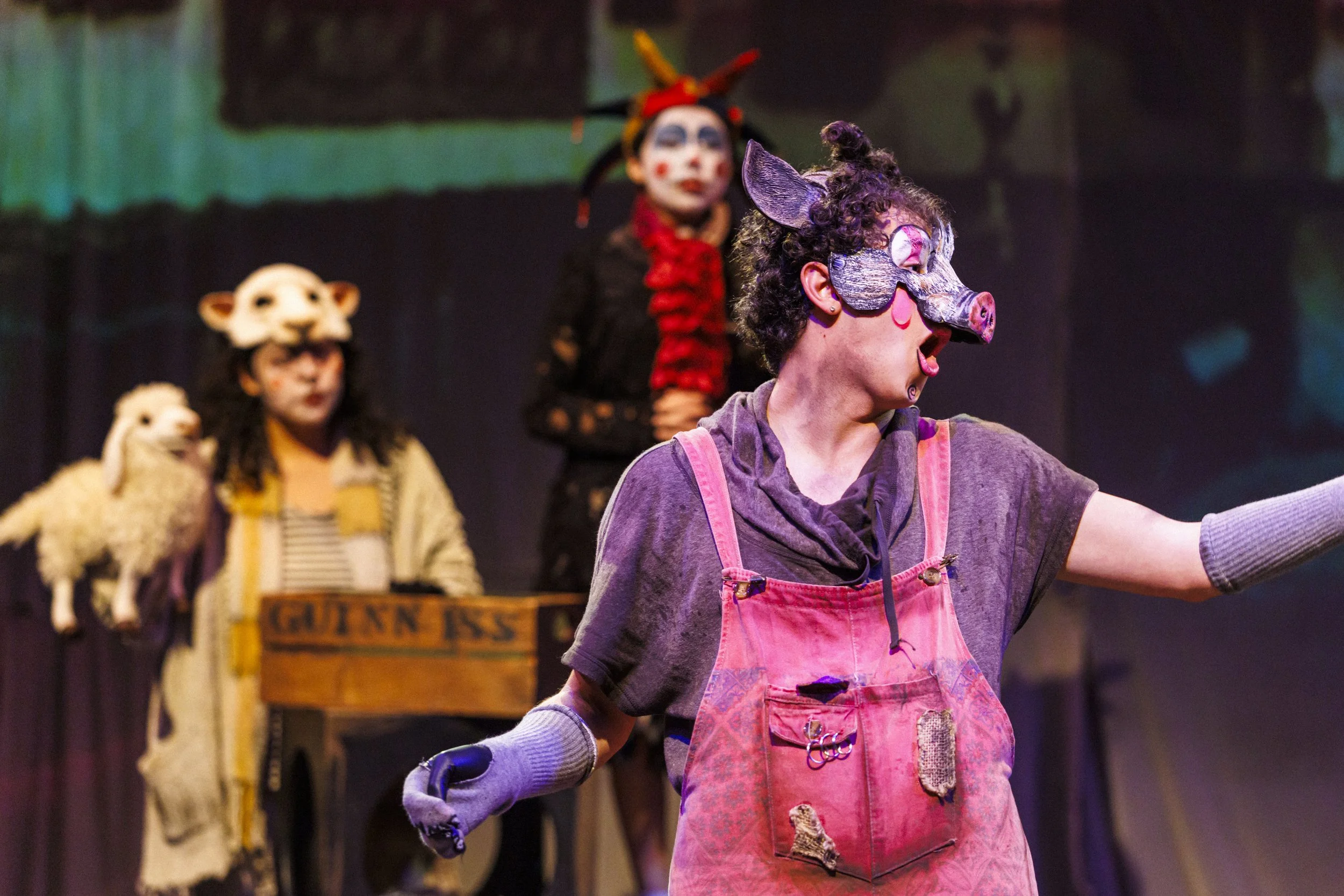
While Napoleon asserted physical dominance, Squealer engaged in psychological warfare. His entrance immediately captured the audience’s attention, prompting laughter through his dramatic expressions and an imposing physical presence. Luca Fierro-Feinstein’s delivery is loud, pompous and deliberately exaggerated; since the pig mask limits his facial expressions, he uses his body movements and eyes to communicate emotion.
These choices create comedic moments, such as when he thrusts his belly outward, all while successfully manipulating Boxer with his devious lies. Boxer is not the only one persuaded; the other animals are also convinced that the pigs’ decisions are justified and that conditions are improving.
Fierro-Feinstein describes Squealer, Napoleon’s spokesperson, as the play’s most visible villain. “He lies all the time to convince animals things are getting better when they aren’t,” Fierro-Feinstein says. One commands the stage while the other commands the narrative. While Squealer’s physical comedy makes him entertaining to watch, his lies have sinister weight, making him just as dangerous as the leader he serves.
Unlike Napoleon and Squealer, Snowball relied on his intellect and idealism to establish himself as a rival. Played by Milo Thomas, Snowball speaks quickly to convey his cleverness and ambition to modernize the farm. Thomas describes him as “a bit more energetic, a little bit more lively, sort of more personable.” However, a submissive tone makes him appear vulnerable — a weakness further emphasized when farmers arrive at the farm’s gates and shoot him.
Although Snowball survives the attack and receives a medal for his bravery, the moment raises a fundamental question: did Snowball ever stand a chance against Napoleon’s far greater authority? Even when the two pigs stand on equal footing to debate their ideas, Snowball’s energy and vision never quite translate into the same sense of power that Napoleon commands.
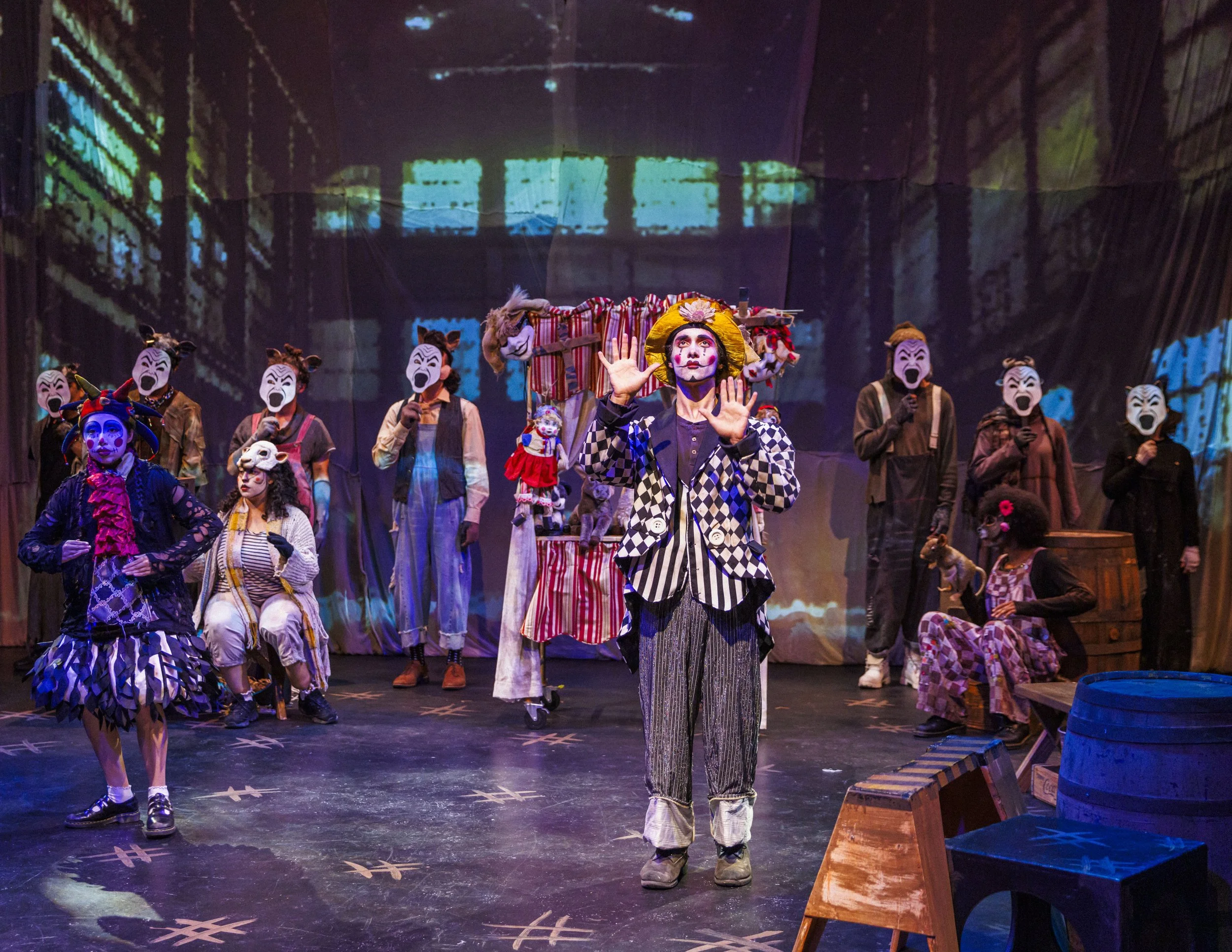
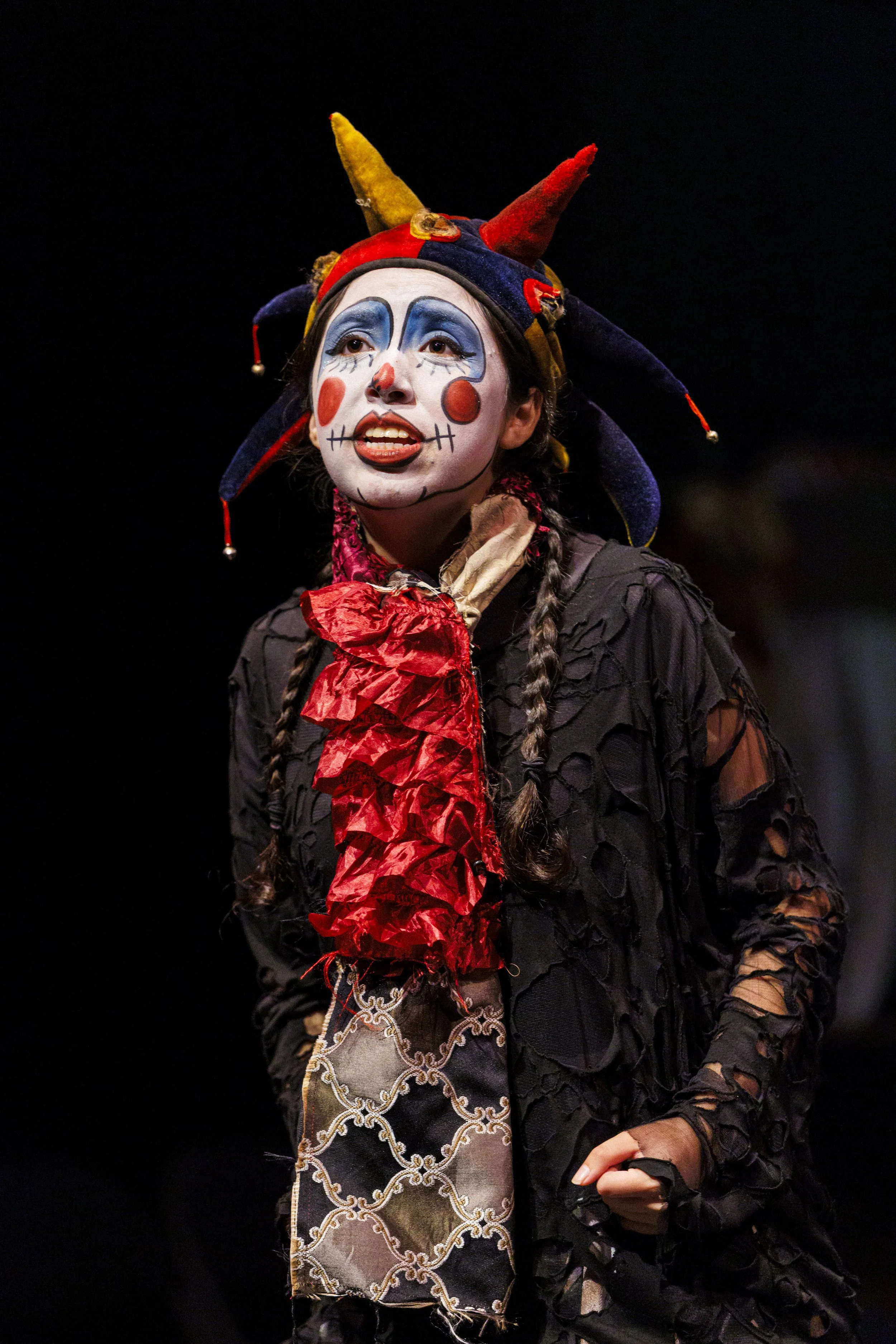
The overall production came together nicely, with staging choices that bring Orwell’s characters to life and reflect shifts in political power. The minimalist set design emphasizes the hierarchy between the animals, while the costumes and makeup reflect each animal's character and position. Mollie the horse, played by Jane Amador, is the first to express a desire for human luxuries — dressed entirely in white, she embodies vanity, materialism and privilege, illustrating how the pursuit of personal comfort can outweigh collective ideals.
These visual choices supported director Terrin Adair-Lynch's interpretation of Orwell's story as a timeless warning. “On its face, it might seem like a children’s book, but it’s really just a message to the ages about tyranny, about abuse of power,” Adair-Lynch said. Trusting the political allegory, she avoids heavy-handed symbolism and lets the story unfold naturally. “There's no need for me to push anything. I like my audiences to watch the play and take away what they see and make their own decisions about what messages are present in the piece.”
By giving the audience freedom to draw their own conclusions, SMC delivered a timely reminder that when the metaphor fades, the line between revolutionaries and oppressors blurs all too quickly — or, as Orwell’s novel concludes, “It was impossible to say which was which.”