

Walking past the Bodega, you might see a student browsing the clothing racks in green pants, a layered grey wool hoodie, and white sneakers. At SMC’s main campus, you might see a shopper wearing a white wool skirt with side buttons and a floral silk tie-top bought at Crossroads. You might see a student showing off a versatile black dress found at the Bodega or a vintage red wool coat sourced through Thrifted Treasures. From production to being bought, worn, and resold, garments travel a long journey that ends when Santa Monica College students give them a new life.
As fast fashion is on the rise and clothing waste grows, Santa Monica College students are turning secondhand clothing into a lifestyle. They rely on initiatives like the Bodega, communities like the Thrifted Treasures club, and resale spots like Crossroads. Combined, all of these resources allow SMC students to build a wardrobe of their personal style while prioritizing affordability and sustainability.
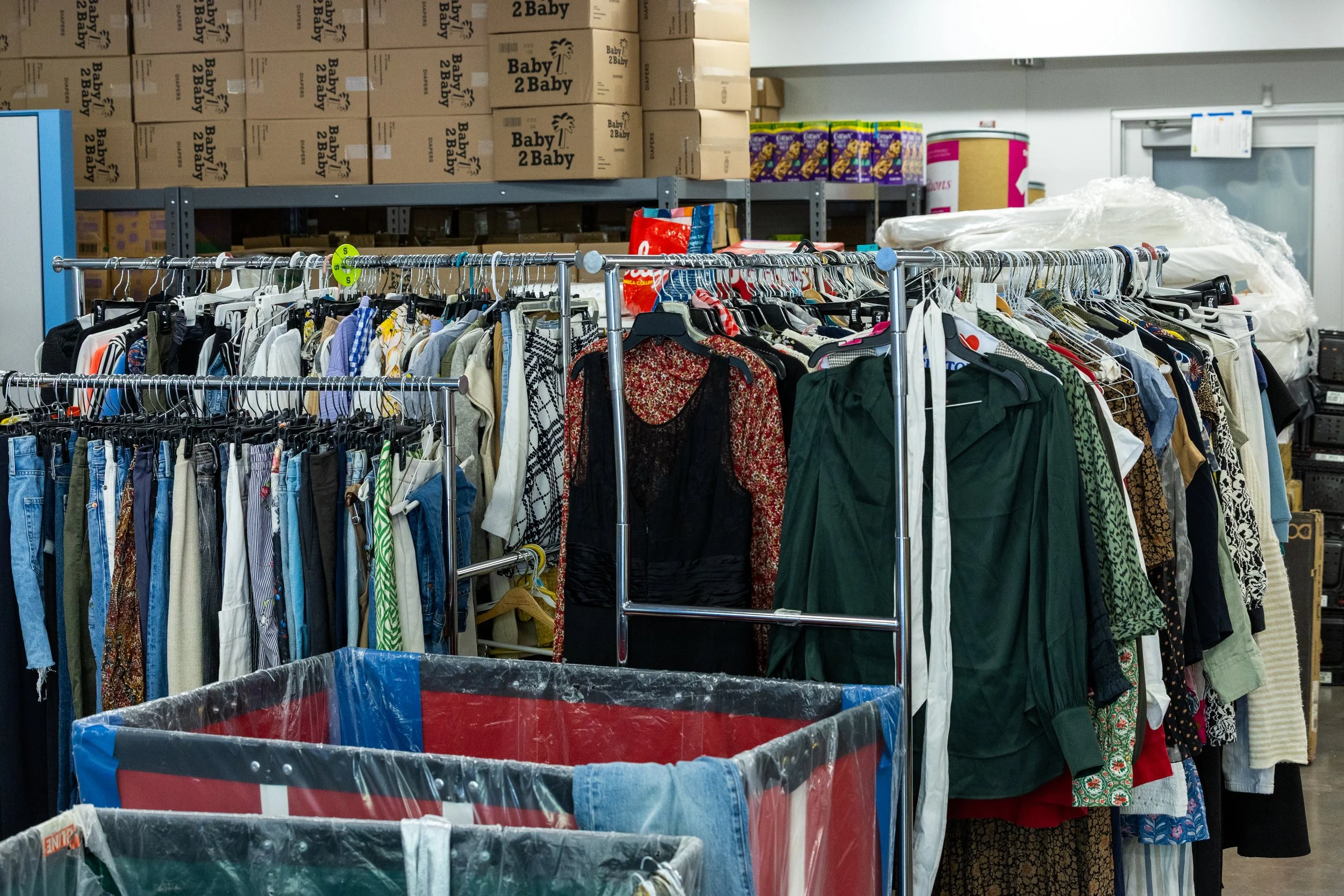
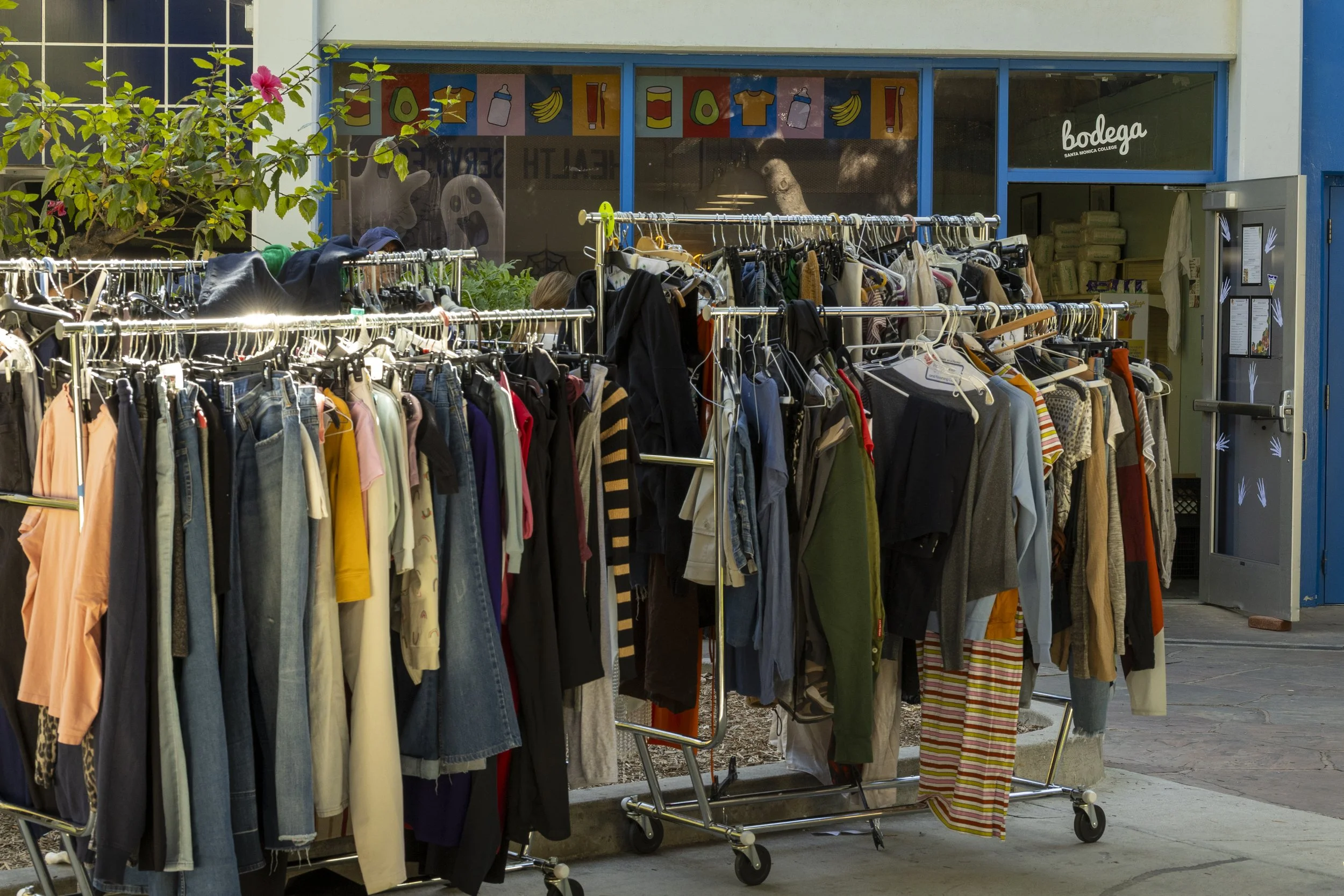
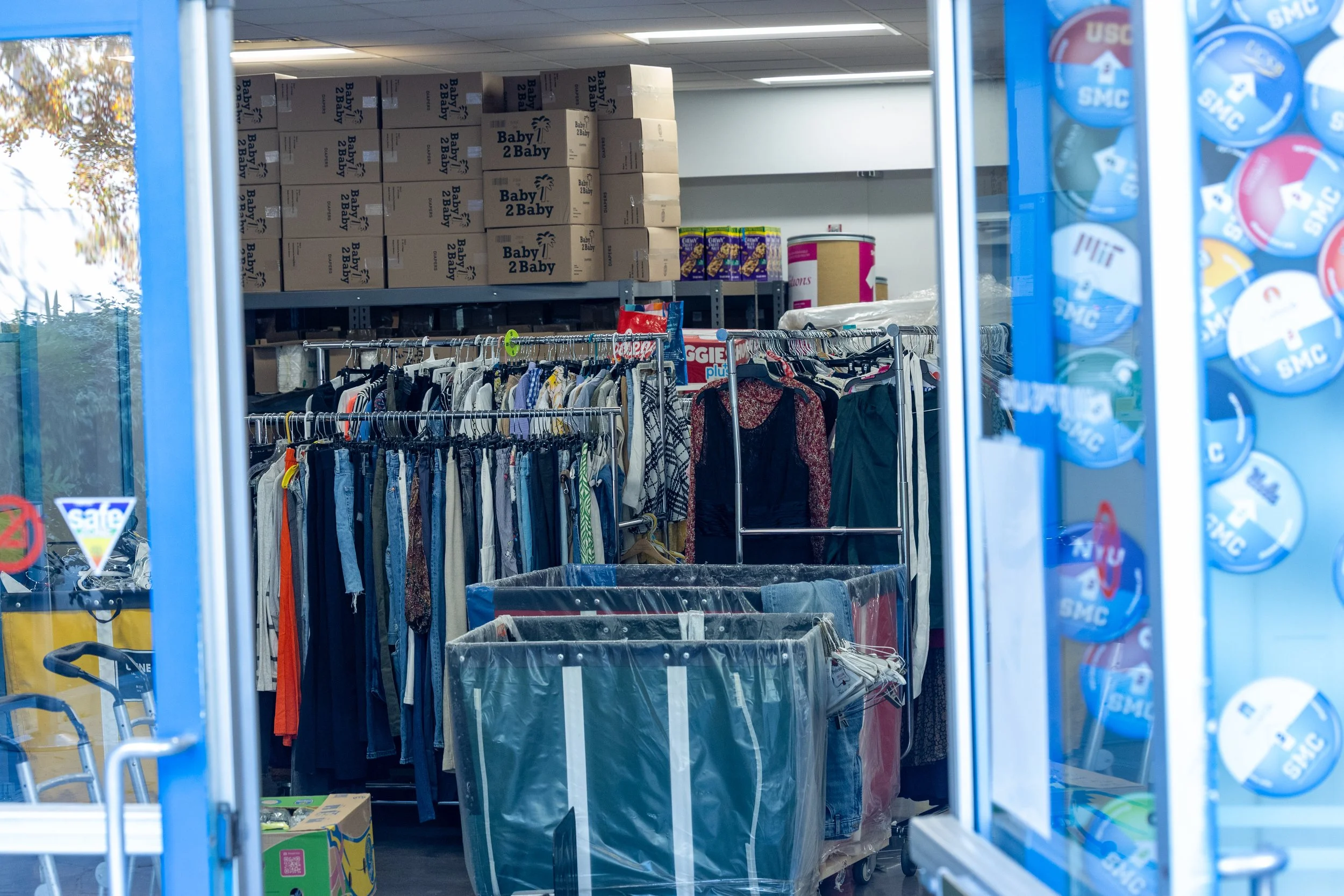
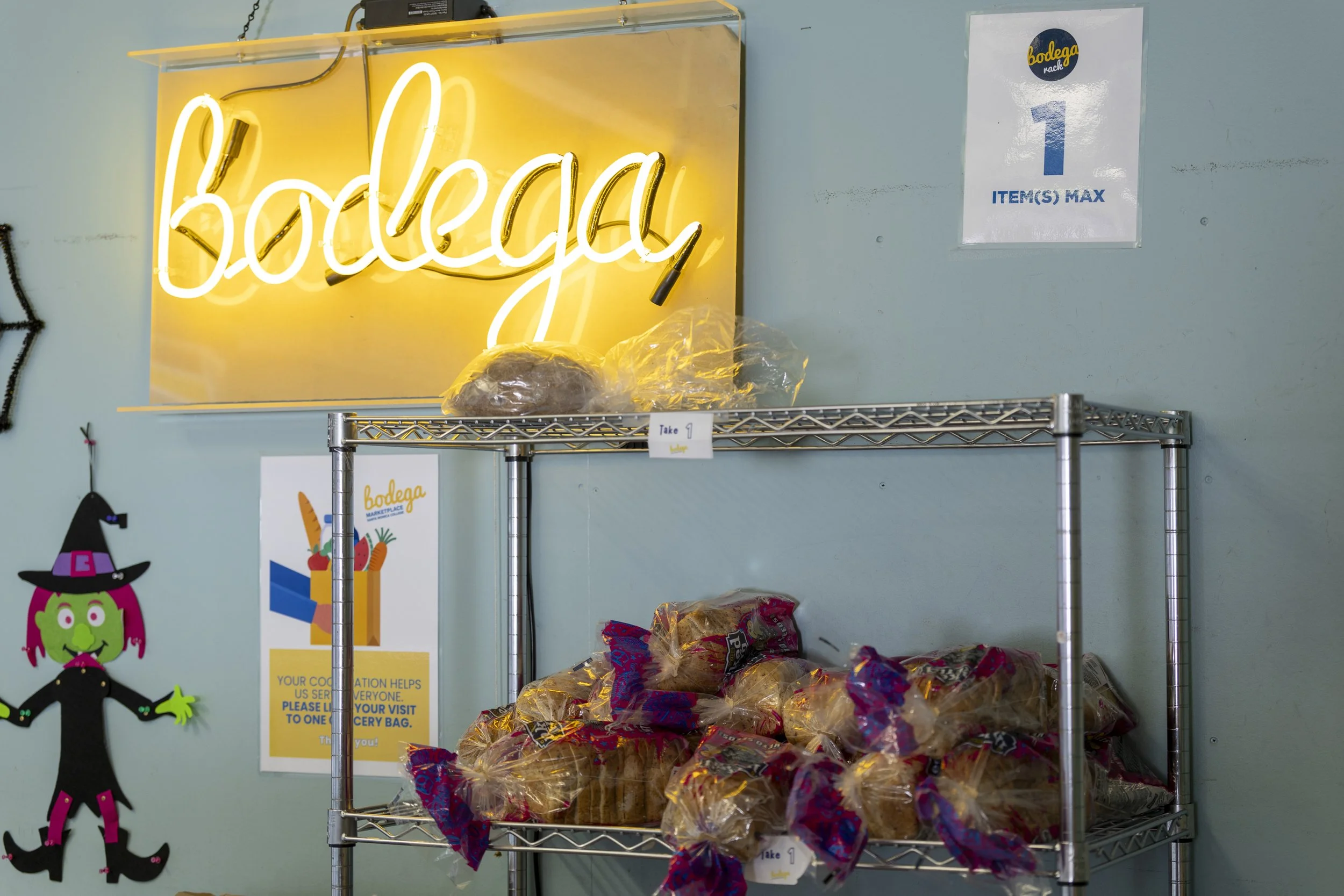
At Santa Monica College, you can find more than just groceries at the Bodega. Set up right outside, multiple clothing racks hold free clothing. To pick out these free clothes, you have to simply be an enrolled student and check in with your student ID number, which is available on Corsair Connect.
Hannah Mock, a Basic Needs Project assistant, said the clothing program serves practical and personal needs. “Part of what we give out here at the Bodega includes professional clothing,” Mock said. Students can find casual attire that allows them to express themselves, as well as professional clothes for job interviews and other formal settings. Seasonality plays a role too — coats and cold weather items are reserved for fall and winter.
The clothes you see at the Bodega come from the SMC Foundation, which supplies clothes regularly with weekly arrivals. There are also clothes donated by community members from around Santa Monica. These are checked by Bodega staff for their condition before being distributed. “We sort through them and just make sure they're good. We don't want to give away anything that's gross,” Mock said. Items that are accepted include shirts, pants, dresses, skirts, jackets and baby clothes.
Despite those efforts, student experiences with the racks vary - some are disappointed, while others see it as a valuable resource. Gregor Reti is one of the students disappointed by the garments’ quality. “It really feels like putting up abused and third quality garments, which I would not put on myself,” Reti said.
However, for Taylor Buffington, the clothing racks offer a resource as she rebuilds her life after losing her belongings. “Right now I'm actually homeless, and that was due to a mental episode, and I lost everything. So I am starting over,” Buffington said. She goes on to explain that the Bodega offers a judgment-free zone where she can shop freely. She also encourages others to stop by: “Don't hesitate. It's a judgment-free zone,” Buffington noted.
Demand for the program remains high.“ We move through one or two racks of clothes every day,” Mock said, noting that most visitors stop by the racks to pick out a few clothes.
The two purposes of the program are helping students access free clothing and keeping these clothes out of the waste stream. By offering clothes at no cost, students can find pieces that fit their personal style or experiment with new looks. It makes shopping for clothes even more fun when you can give them a new purpose. “It is nice that we can… give these clothes a second life to students,” Mock said.
The best thing about the Bodega is that it distinguishes itself from regular thrift stores. “We have a unique opportunity here where we can give away the clothes for free,” Mock said.
If you like the concept of the Bodega, you should check out the Thrifted Treasures Club at Santa Monica College. Through the club, you can skip traditional retail stores altogether and go thrifting instead. Its mission is similar to the Bodega's, making clothes affordable and sustainable.
Lily Emad, publicist at Thrifted Treasures, said the club combines fashion, sustainability and environmentalism by promoting thrifting as a lower-cost alternative to retail. It offers a place where people can socialize, learn about thrifting and share ideas. “Another person's garbage is another person's treasure,” Emad said.
“Clothes are a necessity. They should be a right,” Emad said, describing the club’s core mission of making clothing accessible to everyone, regardless of financial standing. Members believe students should be able to express themselves and build fashionable wardrobes without an expensive price tag. Instead of relying on popular brands to make a good outfit, the club encourages people to experiment and find inspiration anywhere. As Emad put it, “You can develop your own personal style without having to get already stylish stuff.” To help members find their unique aesthetic, one of the club's planned activities is vision boarding.
Beyond vision boarding, club activities range from educational presentations and social gatherings to hands-on arts and crafts. Upcoming plans include “Lowballing 101,” which teaches online price negotiation, as well as planned visits to thrift and resale stores, including Goodwill, Salvation Army, and Crossroads.
Buying secondhand can introduce college students to more sustainable shopping habits and help reduce clothing waste. “The more people who know they have options elsewhere, the more we can reduce that waste,” Emad said. The club wants to challenge the assumption that fashionable clothing has to be new and come from fast-fashion brands. Instead, members emphasize that secondhand garments can be well-made, durable, and timeless.
At Crossroads, a secondhand clothing resale store, people can buy, sell and trade clothing. The Thrifted Treasures club even goes on field trips to source, shop and find new styles there. Crossroads gives students an alternative to traditional retail stores when looking for a refresh of their wardrobe. You can find clothing items from brands such as Reformation, Aritzia, Free People, Levi’s and Lululemon.
Hayden Bartholomew, sales associate at Crossroads, said “This is a great option for fashion lovers in college to get access to higher-end pieces that are higher in quality.” She reaffirms that you will get the best price-to-quality ratio since they evaluate every clothing item with care and filter out fast fashion and worn out clothing.
People can also sell their used items, though it's important to keep in mind that the store is only looking for the best clothing. “You have to come in with the mindset of, we're not going to take everything,” said Bartholomew. Still, it's a great option for students looking to make some extra cash on clothes they don't wear anymore. The store manager, Emily Moser, noted that prices are set based on style, condition, brand and season to ensure items fit their inventory.
Although first-time sellers may not always have the experience they hope for, Crossroads offers shoppers a curated selection of secondhand clothing. “My first time selling was not good. They took nothing,” Bartholomew said with a laugh.
For Shiva Mayden, however, Crossroads has become a place to find pieces that reflect her personal style. Among her favorite finds is a pair of Giuseppe heels. Rather than simply following trends, Mayden looks for pieces that feel unique to her. “Crossroads allows you to have your own unique style,” Mayden said.