
Concrete Hope Artists Antonio Perez and Damon Casarez Show Us The Weight of the Camera
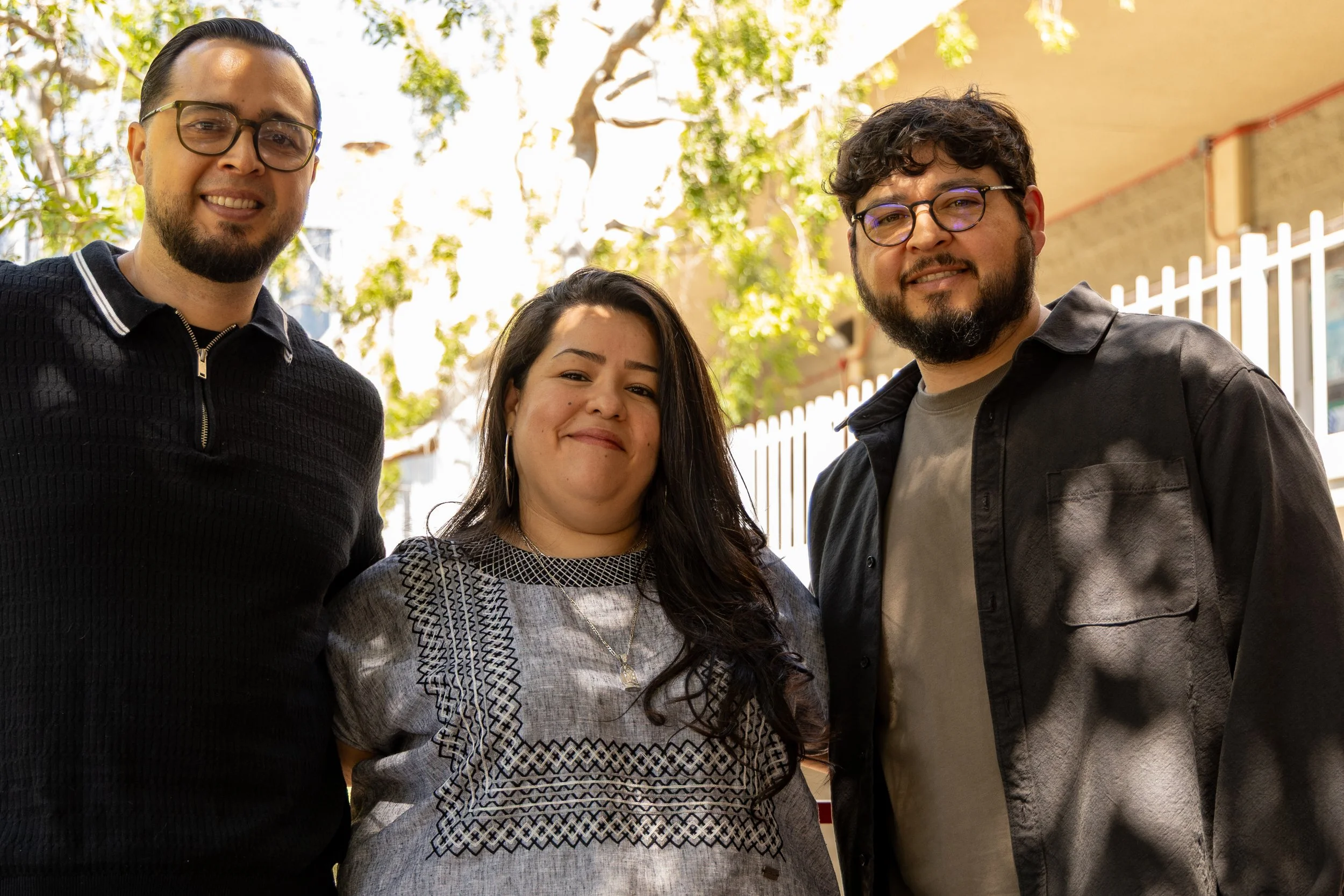
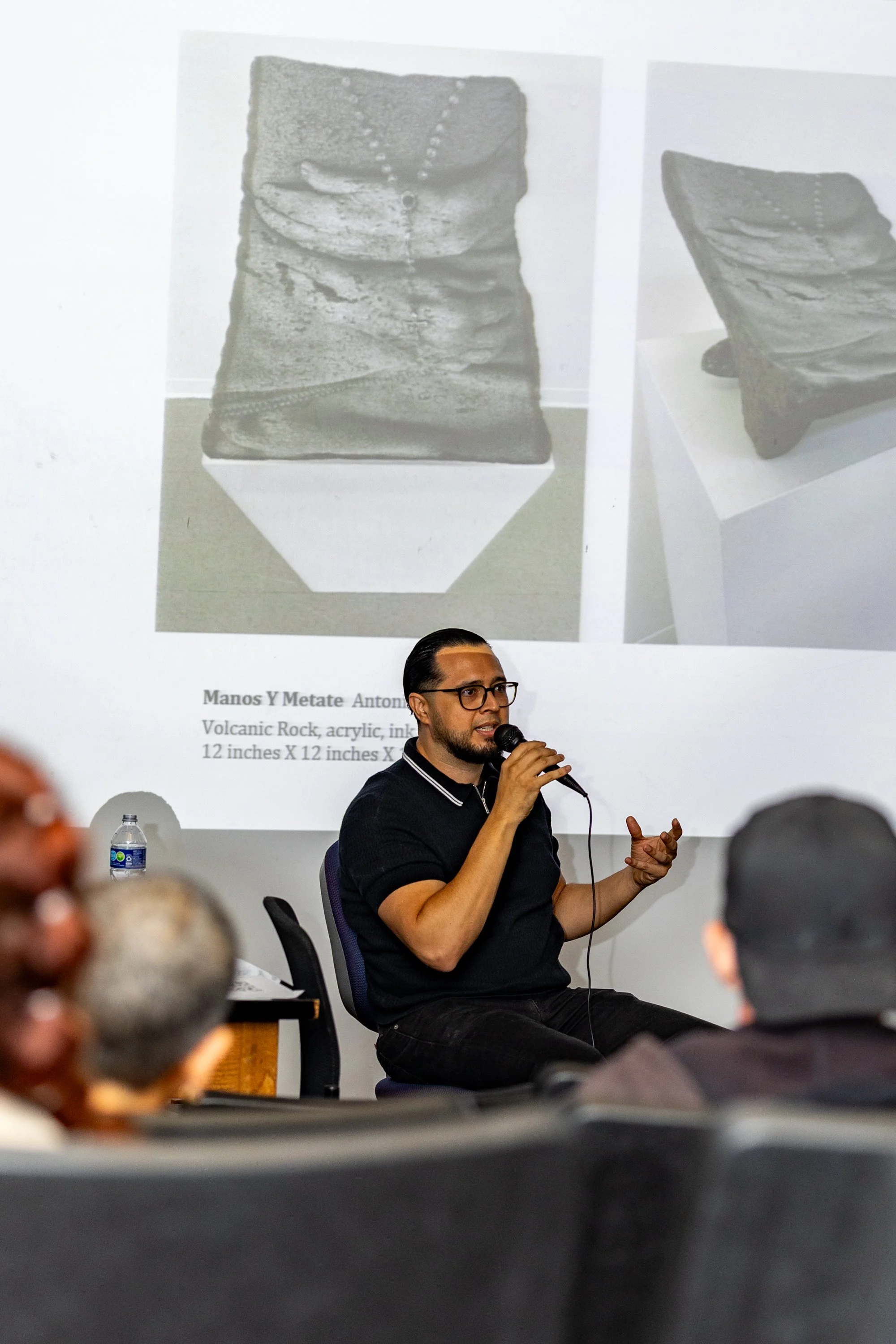
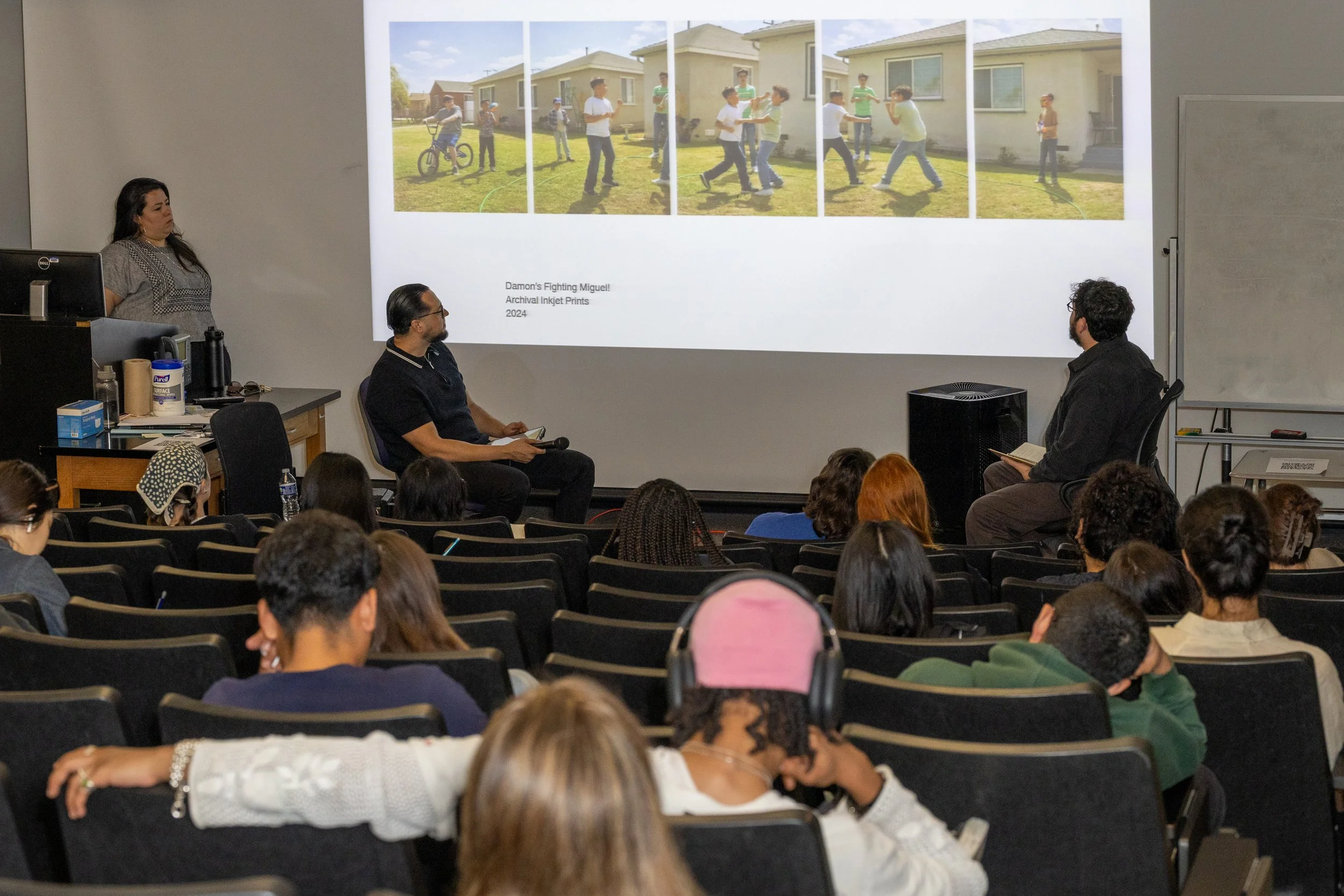
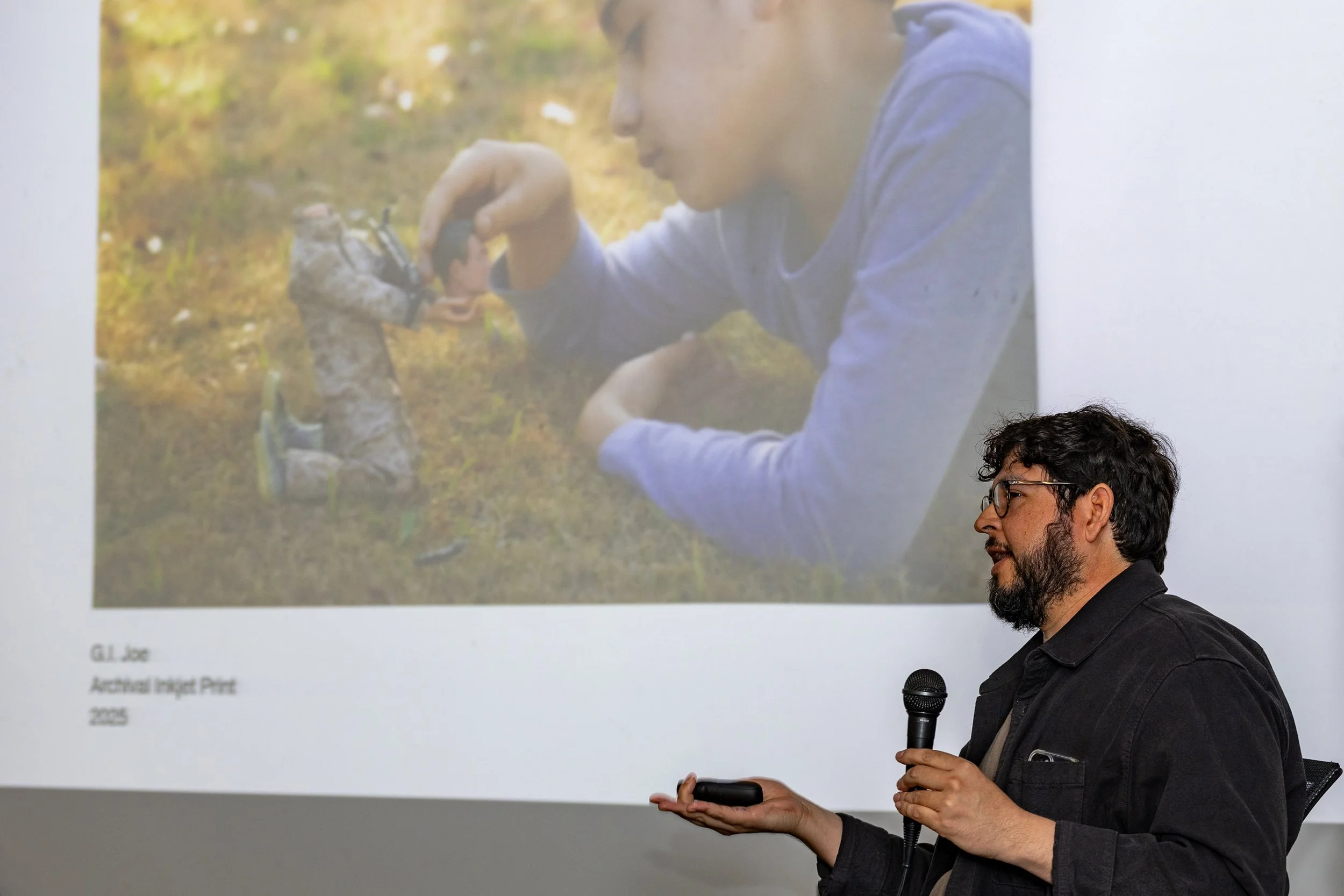
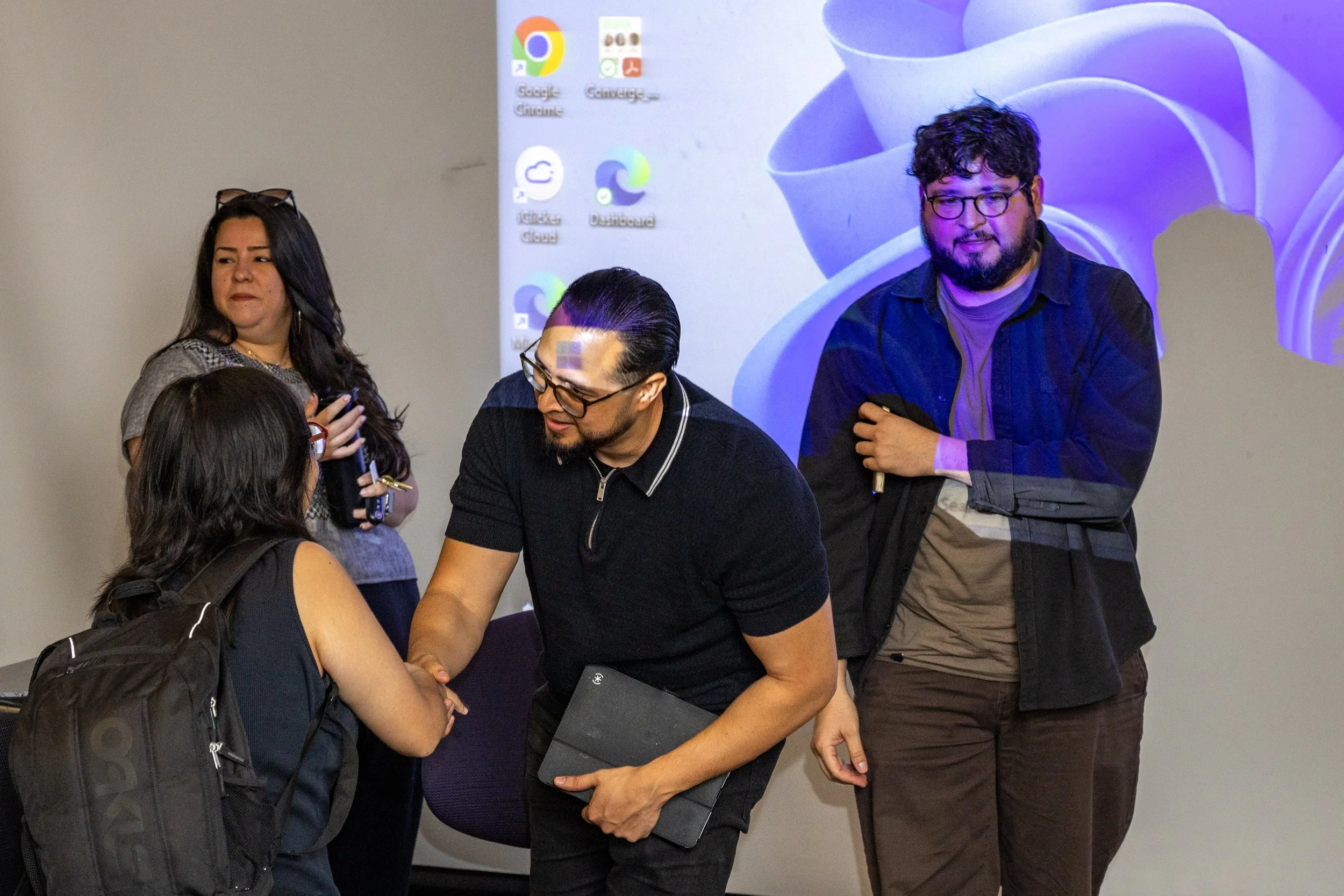
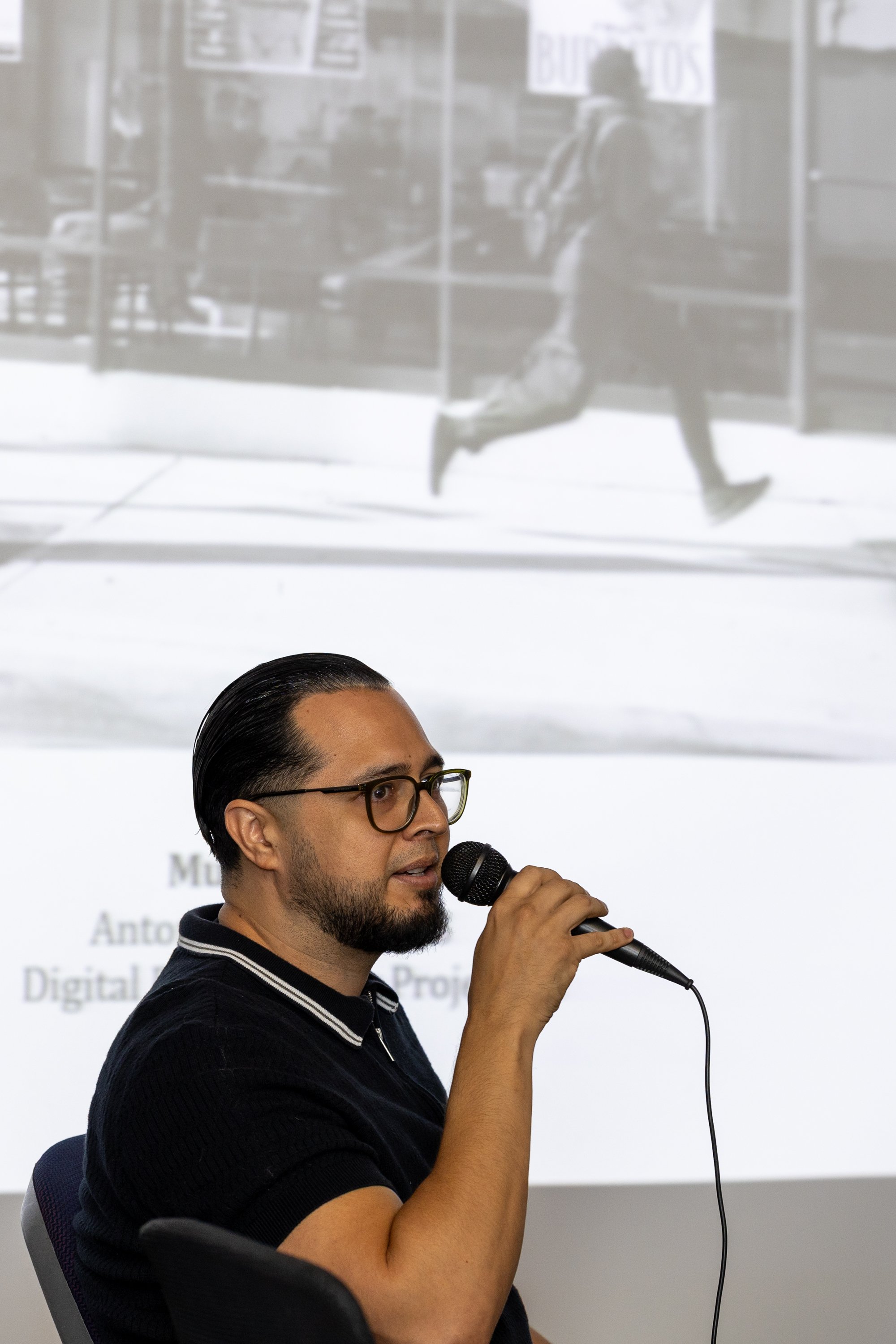
The Pete & Susan Barrett Art Gallery at Santa Monica College, in conjunction with the ongoing exhibition “Concrete Hope | Esperanza Concreta”, hosted a two-part series of artist-on-artist discussions.
Curated by Professor Erika Hirugami, Concrete Hope spotlights the works of 38 lens-based Latine artists. The gallery is an extension of FotoSoCal by CuratorLove, of which Hirugami is CEO and founder. FotoSoCal boasts an ensemble of over two dozen community college exhibits across Southern California.
Moderated by Hirugami, the first of these artist-led dialogues took place on April 7, on the SMC main campus and featured photographers Antonio Perez and Damon Casarez.
Students flocking in from their morning classes filled the lecture hall with chatter. In under two hours, the Perez-Casarez dyad explored the stories behind their featured gallery pieces, the progression of their careers, and the themes that pervade their respective work.
Perez began: A first-generation Mexican-American, educator and Otis College of Art and Design alumnus, his roots are entwined with his output.
He shared the inspiration behind his piece, “Stella I.” A cinder-block structure, resembling a brick wall typical of Los Angeles’ urban landscape. Spray-painted onto its facade is a figure known as the Chacmool, a type of Mesoamerican sculpture, which Perez described as an entity that holds a “little cup” wherein the hearts of the sacrificed would be deposited and offered to the Gods.
Perez said that his academic career at Otis was “kind of a tumultuous time”, characterized by personal tragedy. The same year he was accepted, his father was diagnosed with stage four cancer. Despite this devastating news, Perez ultimately still transferred, with his father later being discharged from the hospital.
During Perez’s first year at Otis, his brother passed away from a sudden brain aneurysm. The following year, his father’s cancer metastasized and spread to his brain, paralyzing him and soon after claiming his life.
“My dad kind of becoming this reclining figure, right? He became paralyzed. And also someone that sacrificed so much for our family,” Perez said.
For Perez, his art evolved into a method of recontextualizing grief, trawling for symbolism in memory and to “build these narratives within these ancestral figures in my personal history.”
Casarez’s work, as a fourth-generation Mexican-American, operates on a similar thread of reflection and cultural exegesis.
“Our family has a long history of being in the suburbs since the 1950s, which you normally don't associate with Mexican-American families in terms of what I've seen in research and popular media… I wanted to photograph what that looked like for me and my kind of spaces that I grew up seeing.”
A Diamond Bar native, he has been working as an editorial photographer since graduating from ArtCenter College of Design in 2012.
Casarez’s client list includes several publications, with his initial surge of notoriety stemming from a pitch he made to The New York Times shortly after graduating from ArtCenter.
An intimate look at the student loan crisis, not only did it become a front-page story, but it would establish Casarez as “a photographer that's interested in social issues, but also has… a cinematic style within portraiture.”
He pursued a master's degree at Stanford University, graduating in 2025, with a selection of the pieces he worked on for his thesis, finding a place in Concrete Hope.
“Piñata Line” is a staged recreation of a family photograph, the original on which it’s based depicting Casarez’s first birthday party. The principal figure is his father, who stands on a ladder, stabilized by his kin, as he strings up a piñata that's out of view.
Notable alterations have been made in Casarez’s reconstruction, but the spirit central to the image has been preserved and, arguably, enhanced.
Drawing influence from “Raising the Flag on Iwo Jima” and Leutze’s “Washington Crossing the Delaware,” Casarez “wanted to make something that's kind of expansive on that level and monumentalize this moment.”
When later asked about the importance of highlighting BIPOC stories in our current cultural milieu, Perez said, “I actually have been thinking about that a lot… I was thinking of how we’re being vilified… and our communities are being hit hard, and we got all the ice raids. I think the work that we're all making as a community, as a whole, is super important, because it's almost like an act of defiance, right? Because we're honoring our ancestry, we're working in defiance by showing the beauty that is our community, our people. And it's really unfortunate that all of these things are going on. You feel the pressure.”
Casarez said, “I think we make images to protest the images that they put out… To tell our story because they’re telling a different story about us.”