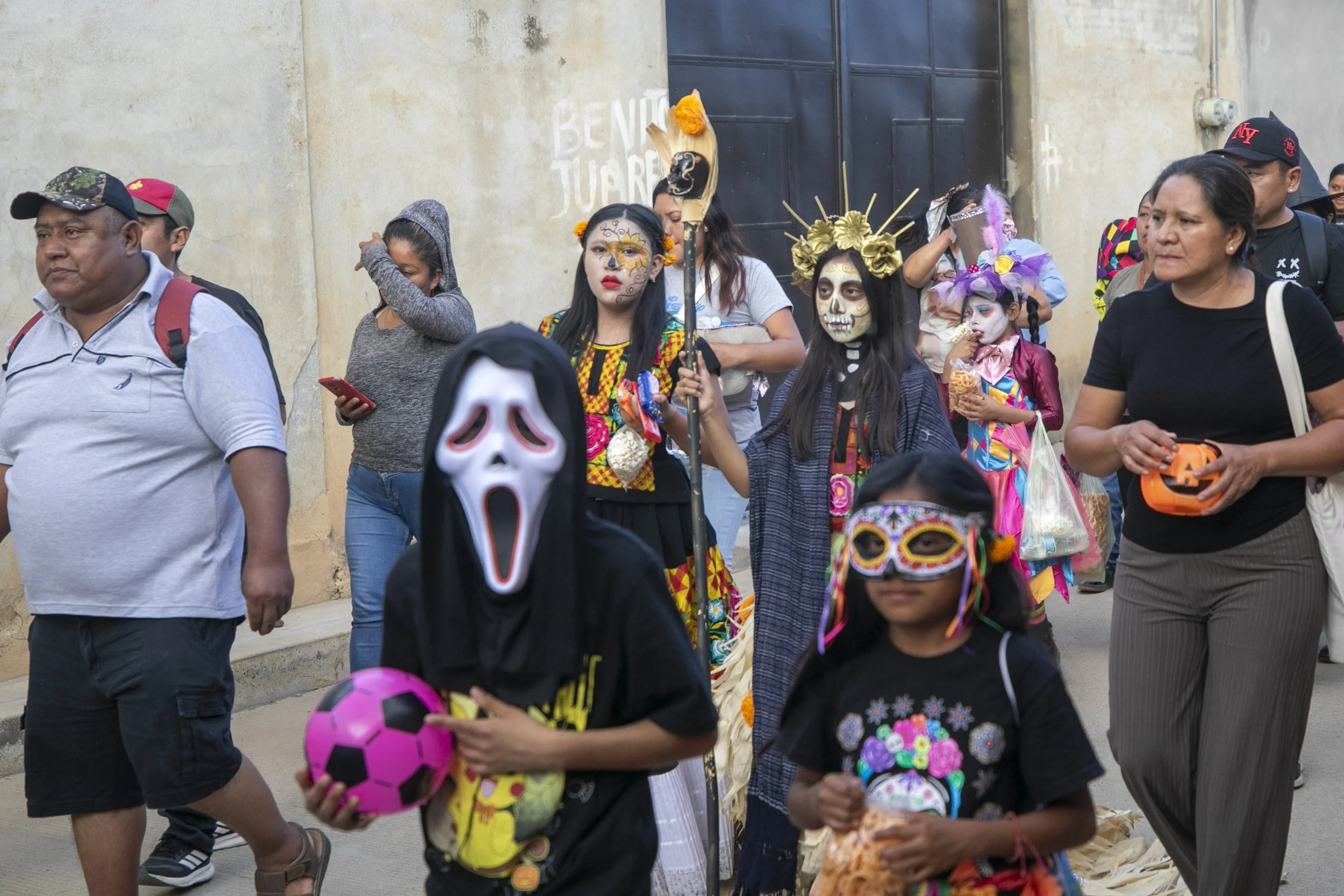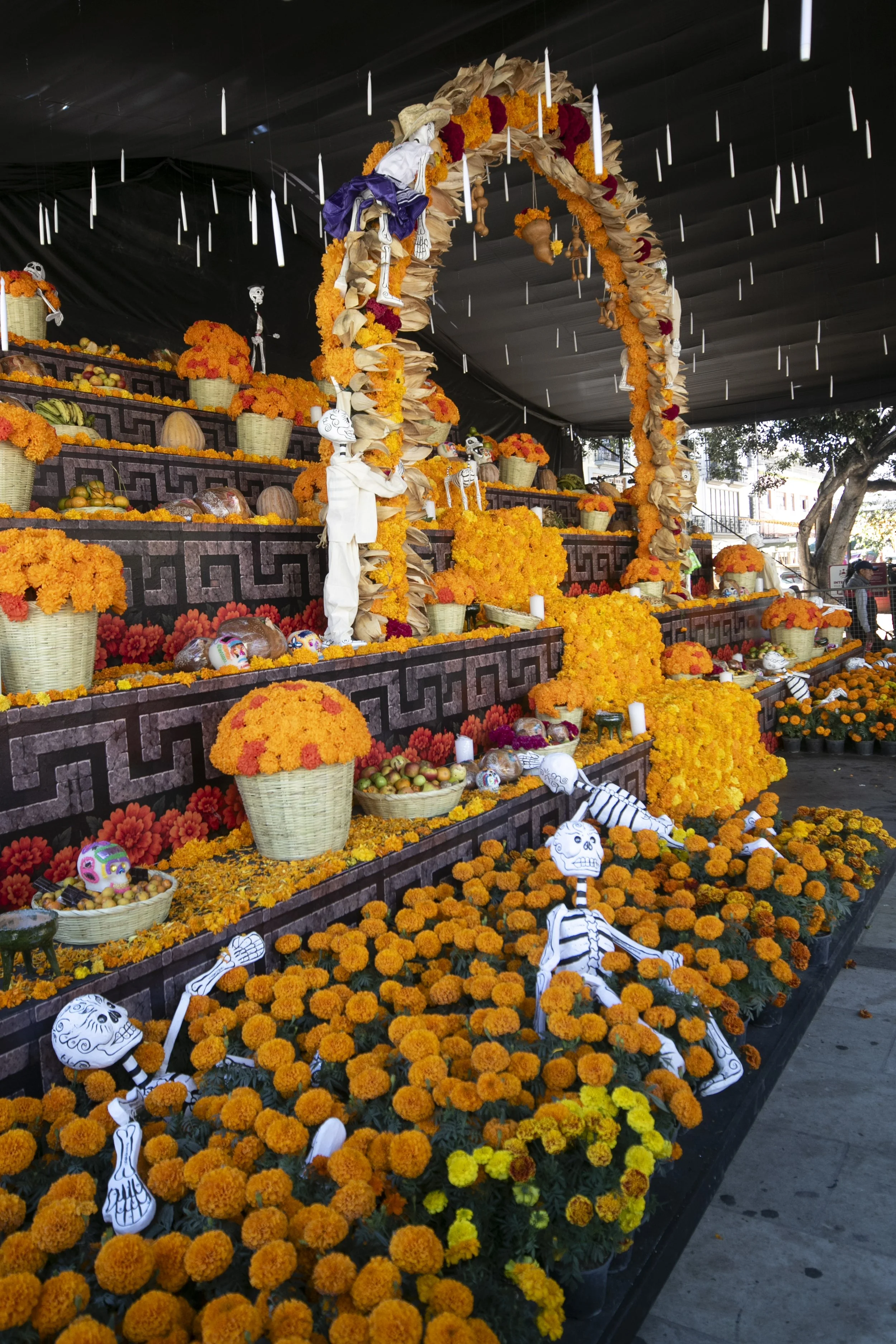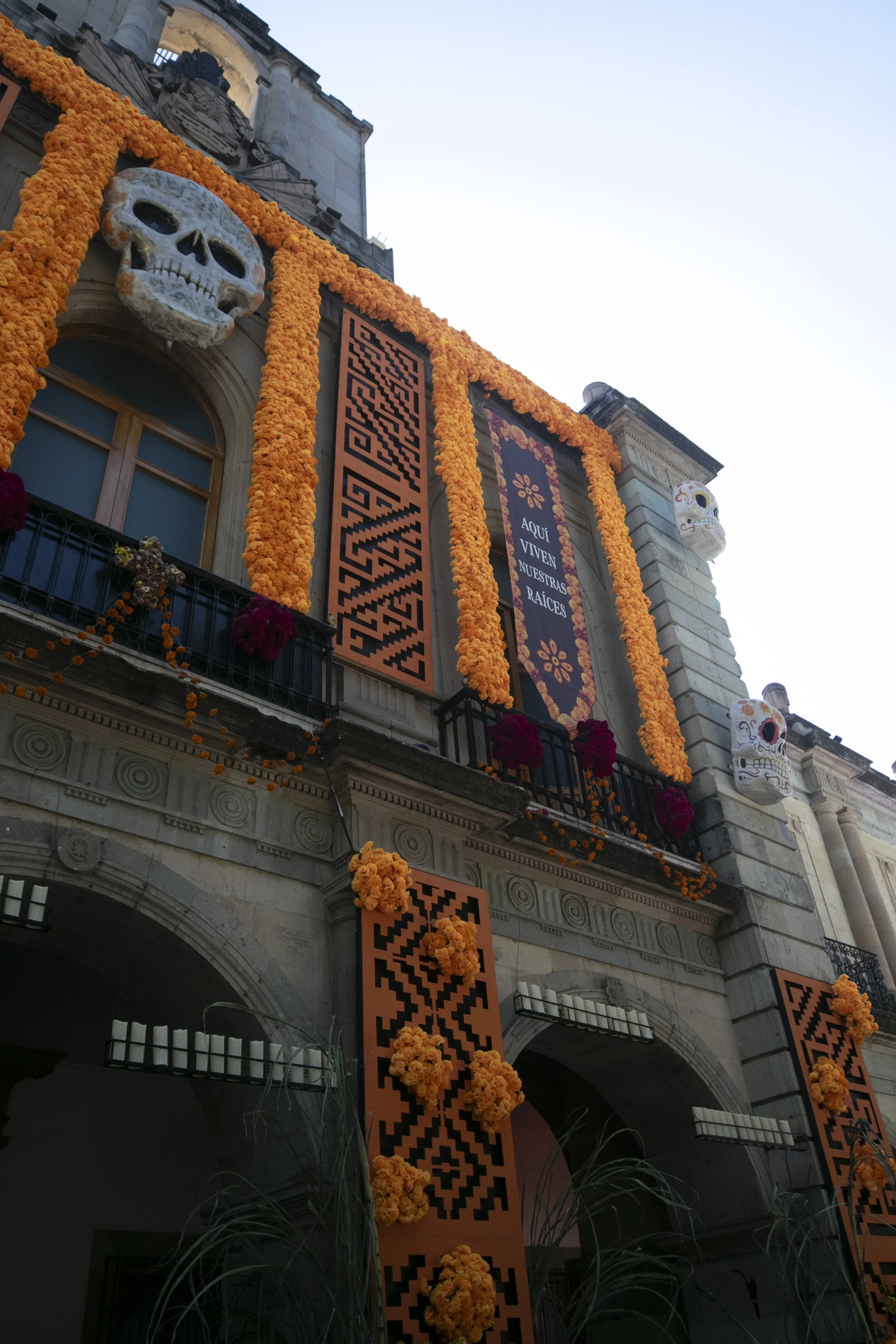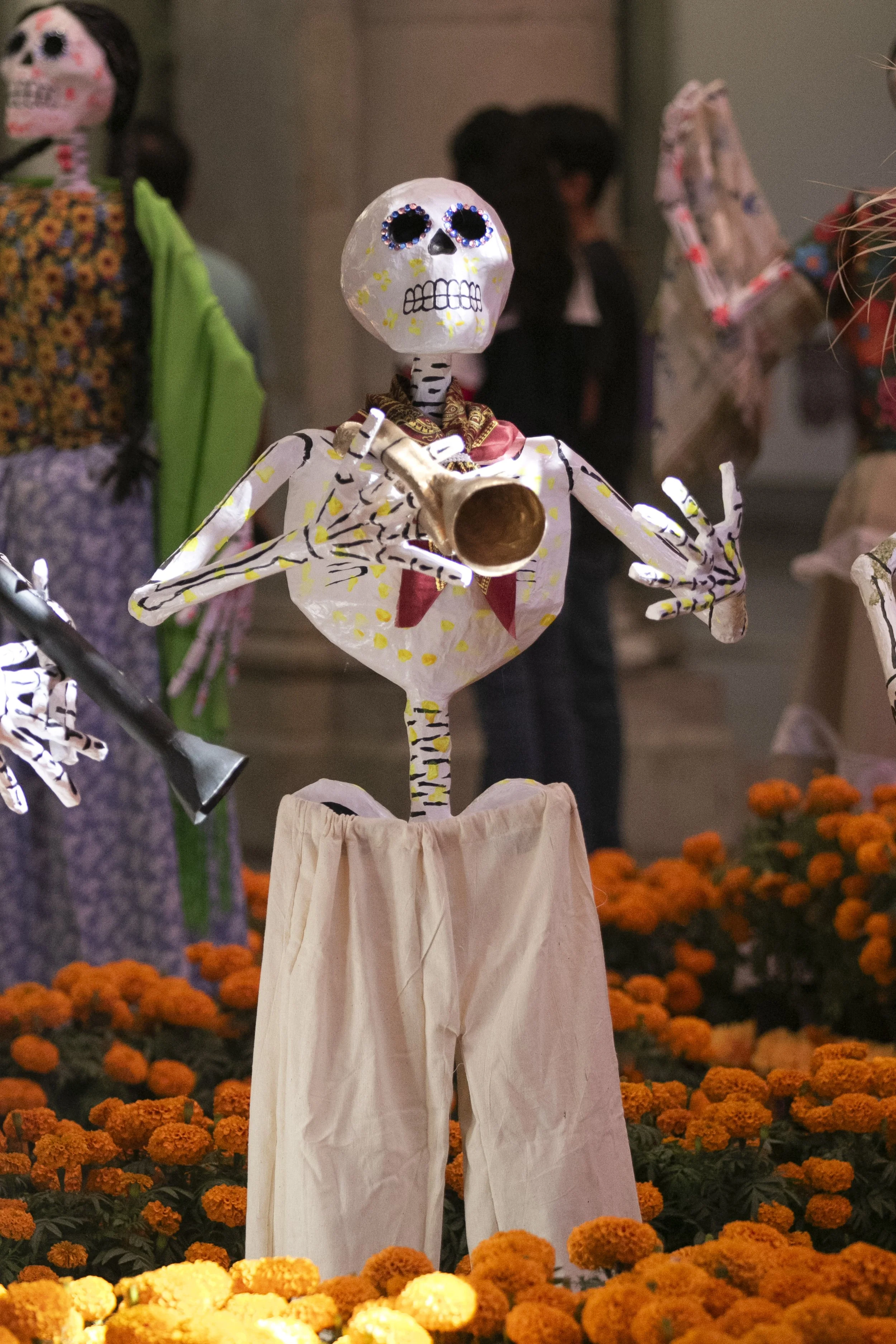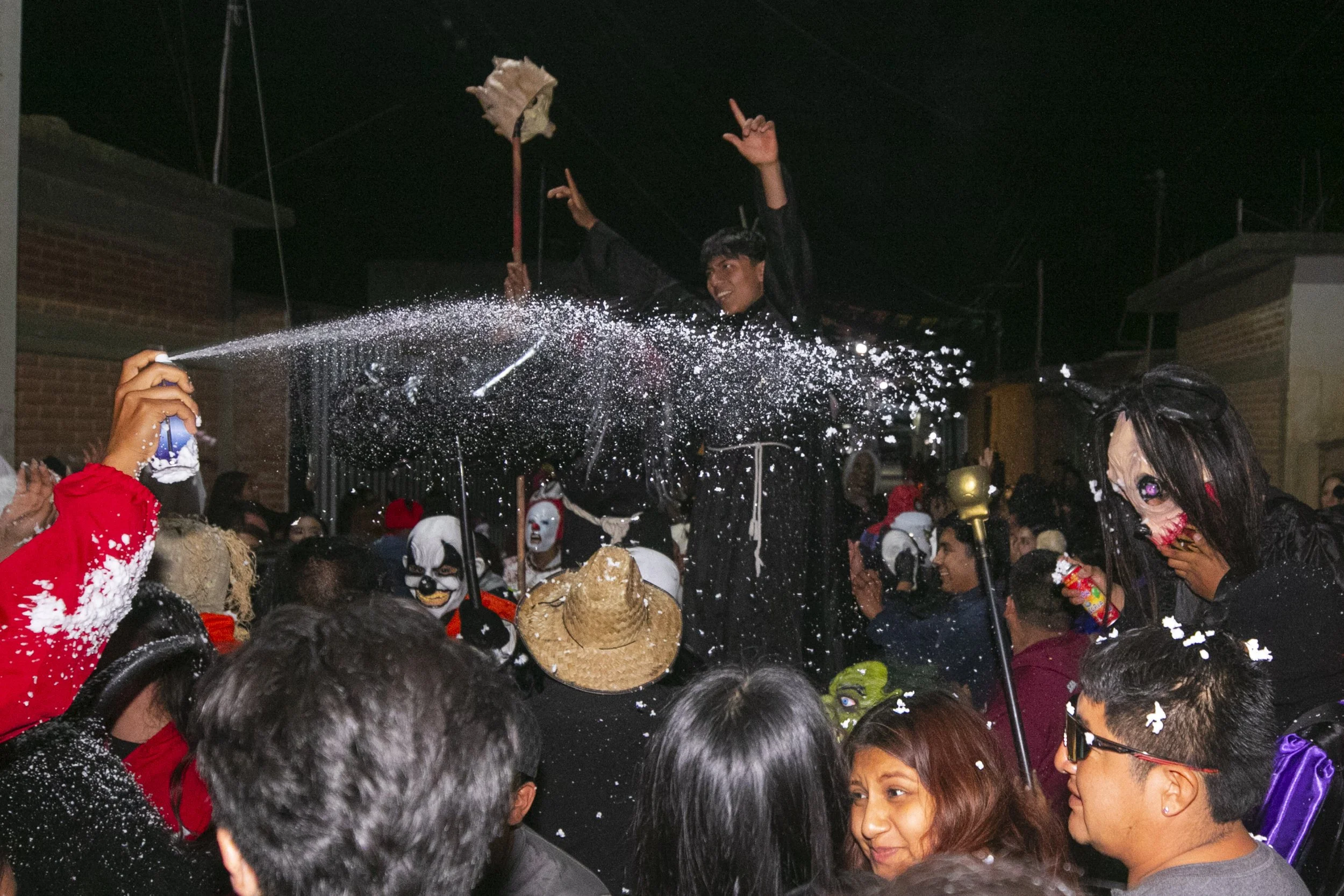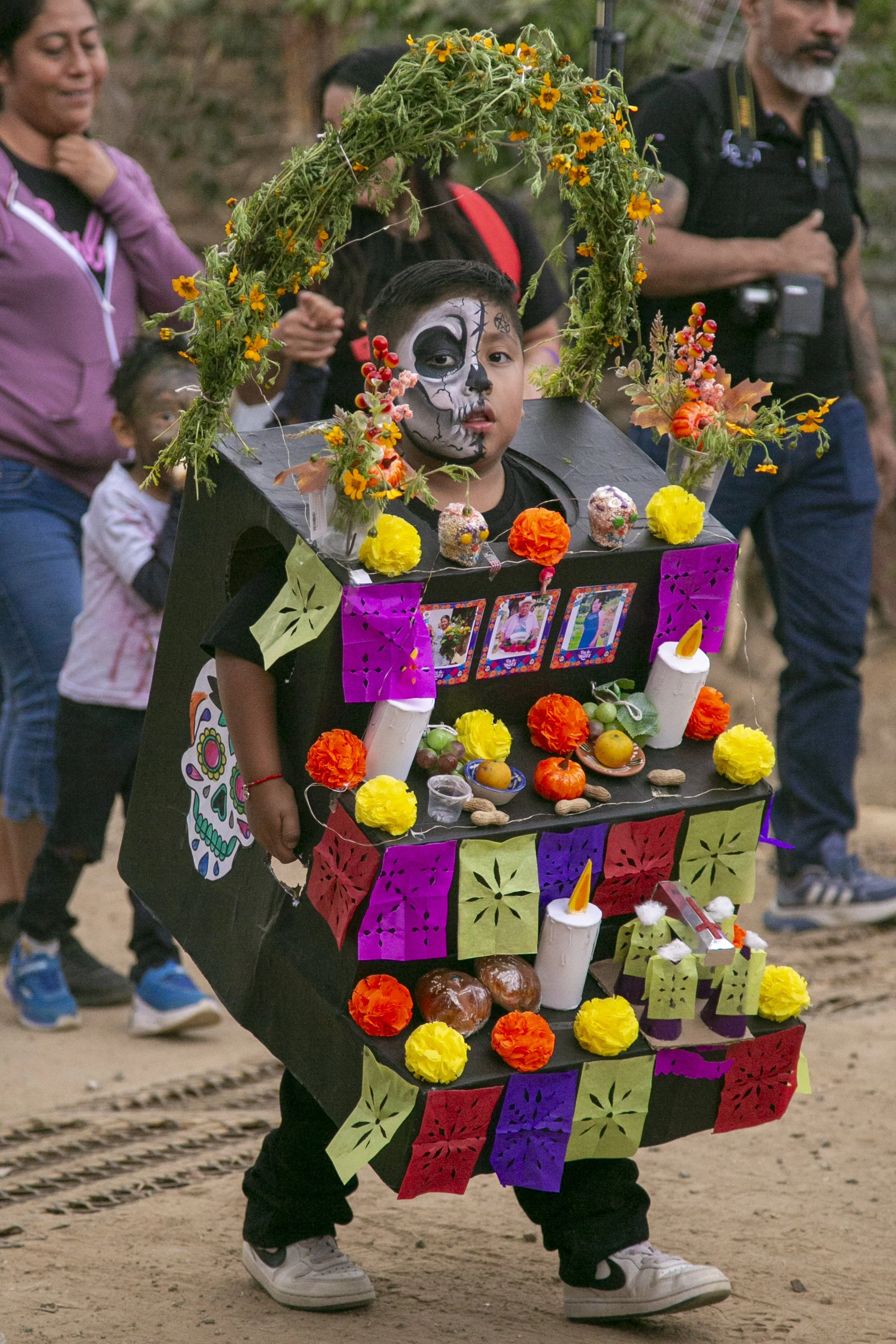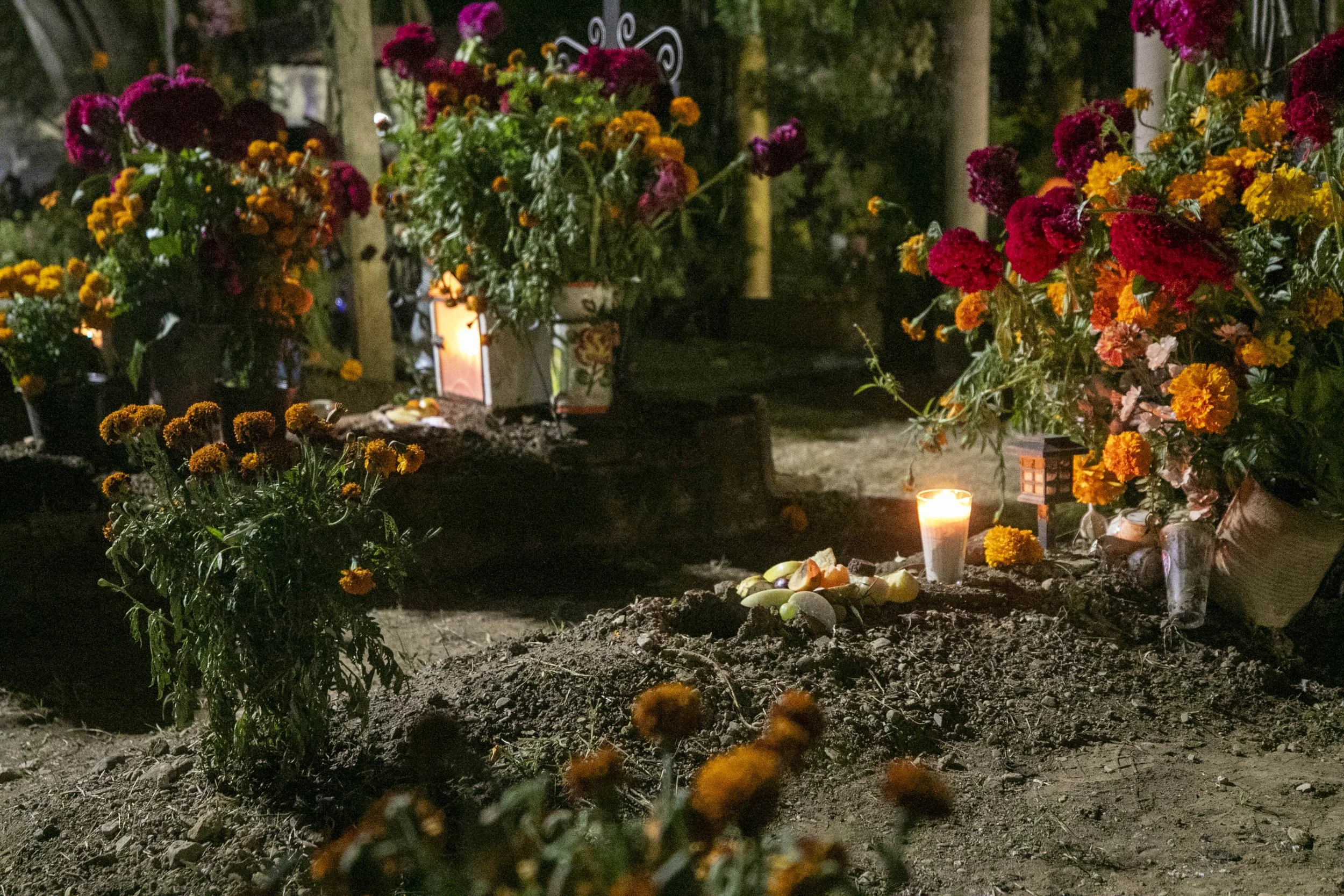
The colorful celebration of Día de los Muertos has shown the world how Mexico and its states honor their ancestry for future generations. Oaxaca, with its colorful streets, art and deeply rooted Zapotec history, demonstrates, showed how close-knit families and their multigenerational households reunite to honor and respect their deceased loved ones. With Día de los Muertos coinciding with Halloween, some pueblos take advantage of this by hosting comparsas, street parades, to celebrate both Halloween and Día de los Muertos.
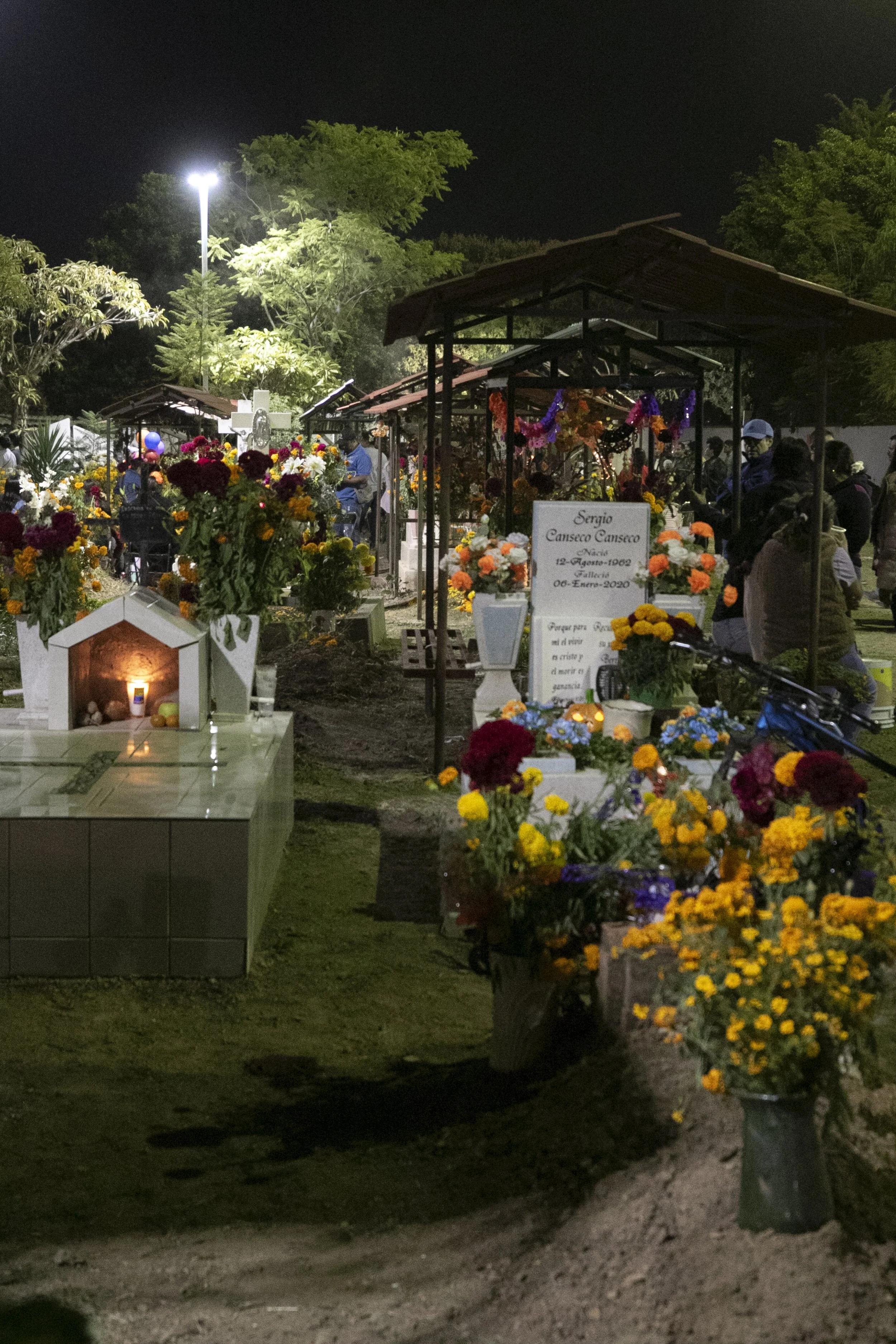
Within graveyards, food is left on top of graves. Families leave food with the belief that the souls of the dead travel from Mictlán, the main underworld believed in Aztec mythology, and would be hungry from the travel.
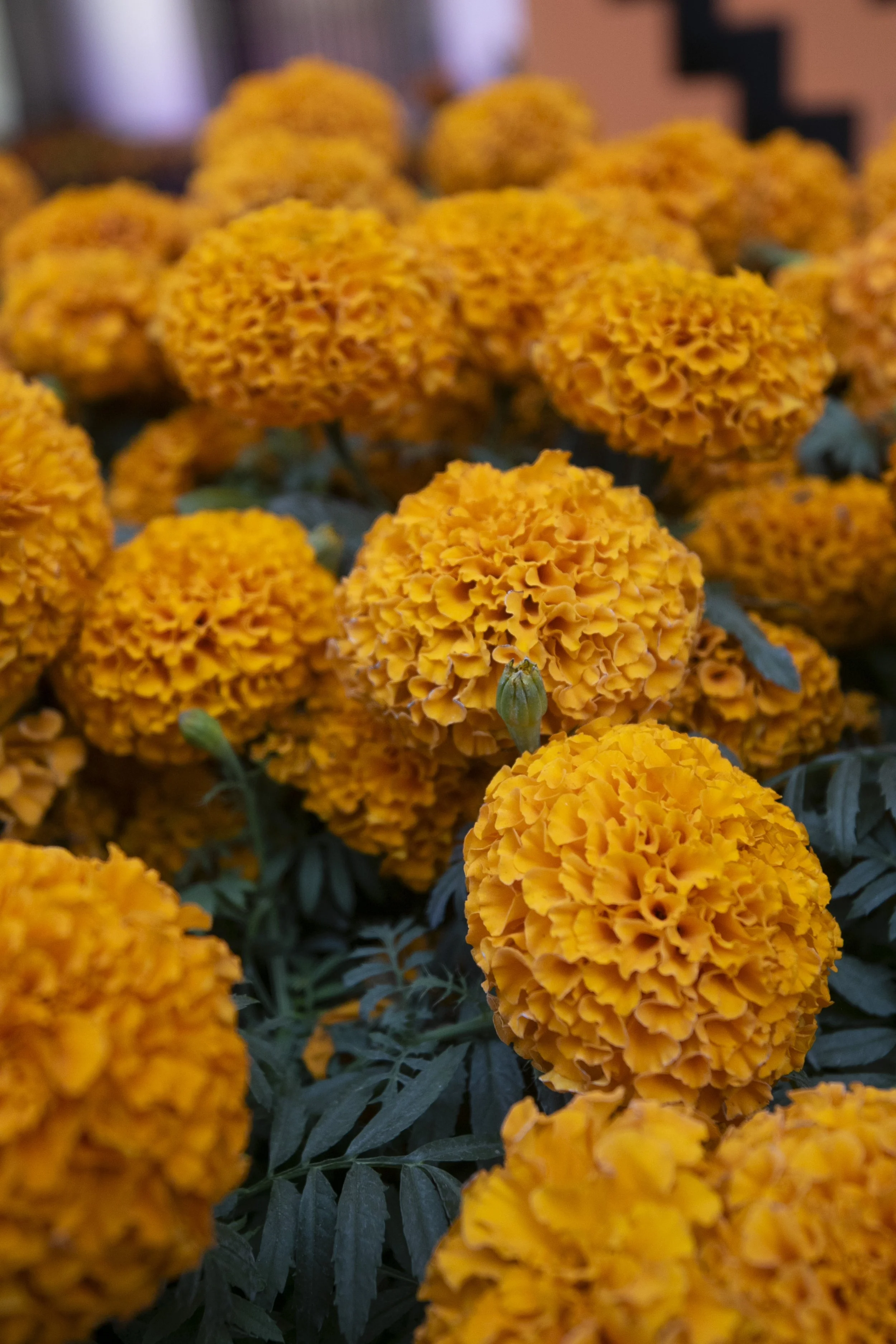
In between the graveyards and homes, orange flowers called cempasúchil (Mexican marigolds) line the streets to create a road for the souls to travel back to their homes. Many believe that dogs assist in guiding the souls back to their homes, making dogs sacred within communities and honored on altars after they die.
Between Halloween and Día de los Muertos, people gather in the streets of their respective pueblos and host comparsas. Friends and families gather together to eat, drink and celebrate while collecting candy. Live bands play as they lead the parade through the streets.