
SMC to eliminate more than 70 jobs despite pushback from staff, students




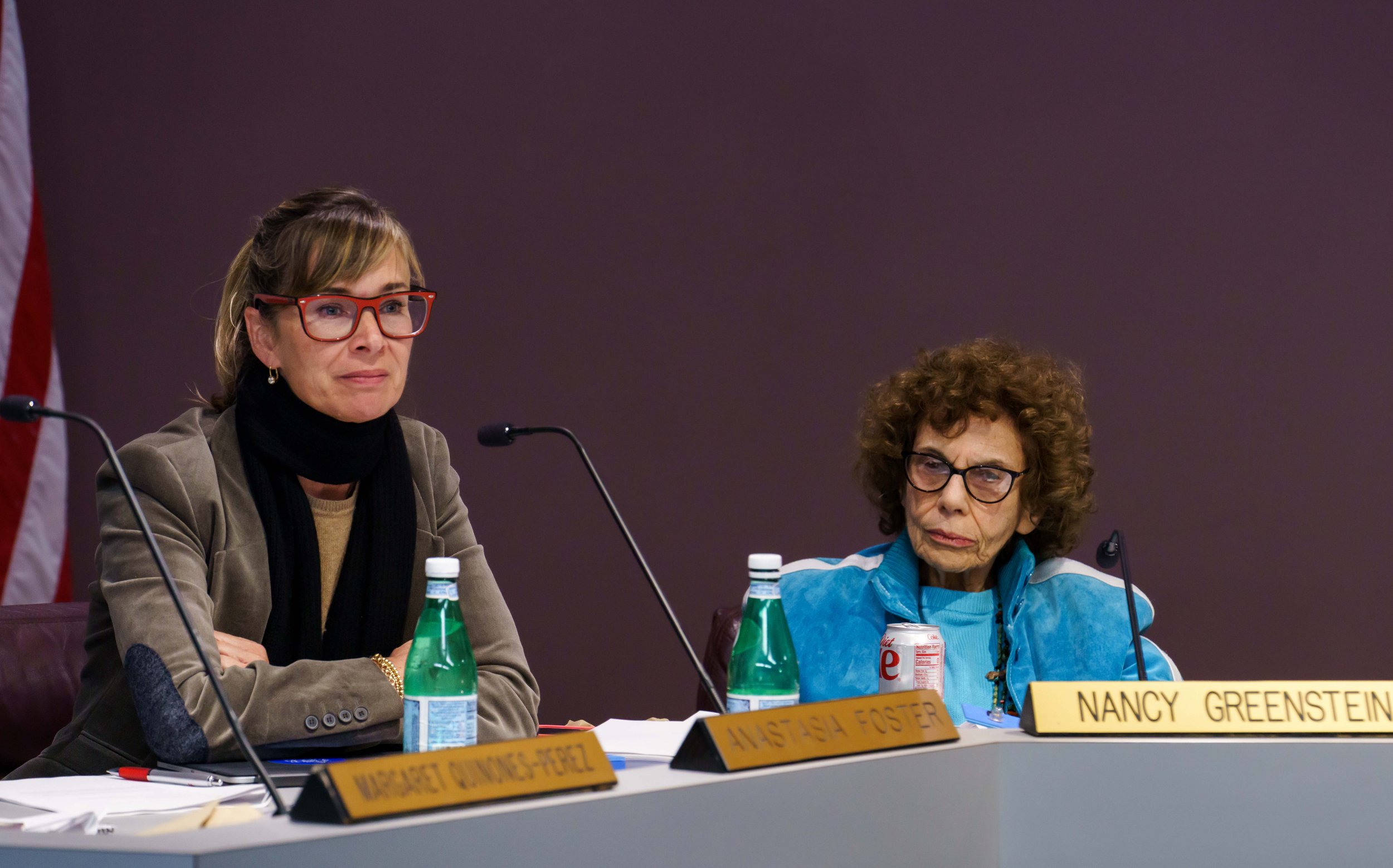

The Santa Monica College Board of Trustees adopted two resolutions on Tuesday to reduce its workforce by more than 70 positions to help solve the college’s budget crisis. The layoffs will primarily consist of classified, or non-academic, employees, such as custodians, tutors and assistants, according to the meeting agenda.
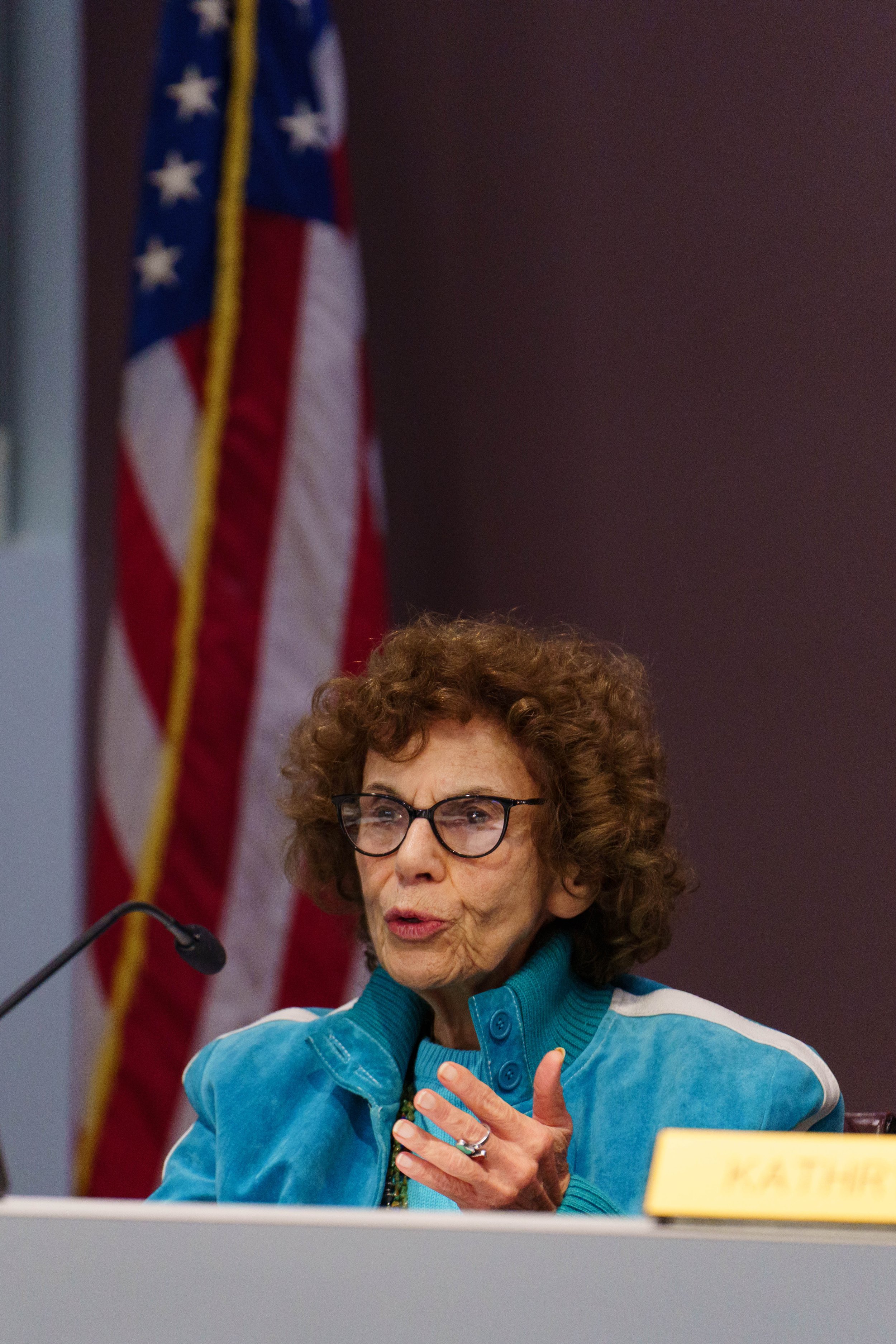
The agenda states that the equivalent of 57 classified full-time employees will be laid off, citing a “lack of work and/or lack of funds.” Four administrative positions and 13 vacant jobs will also be abolished. SMC will notify laid-off employees on March 15, Superintendent and President Kathryn Jeffery said in a Feb. 4 memo to the campus community.
Before the board passed the resolutions, board chair Dr. Sion Roy amended both items to include sending all classified managers and academic administrators March 15 layoff notices.
Roy said that he does not necessarily intend to eliminate all of these positions, but wants to allow the college to consider it while restructuring in the coming months.
Around 20 people made public comments at the Tuesday meeting, which ended close to midnight.
The board passed the resolution reducing classified staff 4-3, with trustees Rob Rader, Nancy Greenstein and Margaret Quiñones-Perez voting “no.” The other resolution, which abolished certain management positions, passed 6-1, with Rader being the only opposing vote.
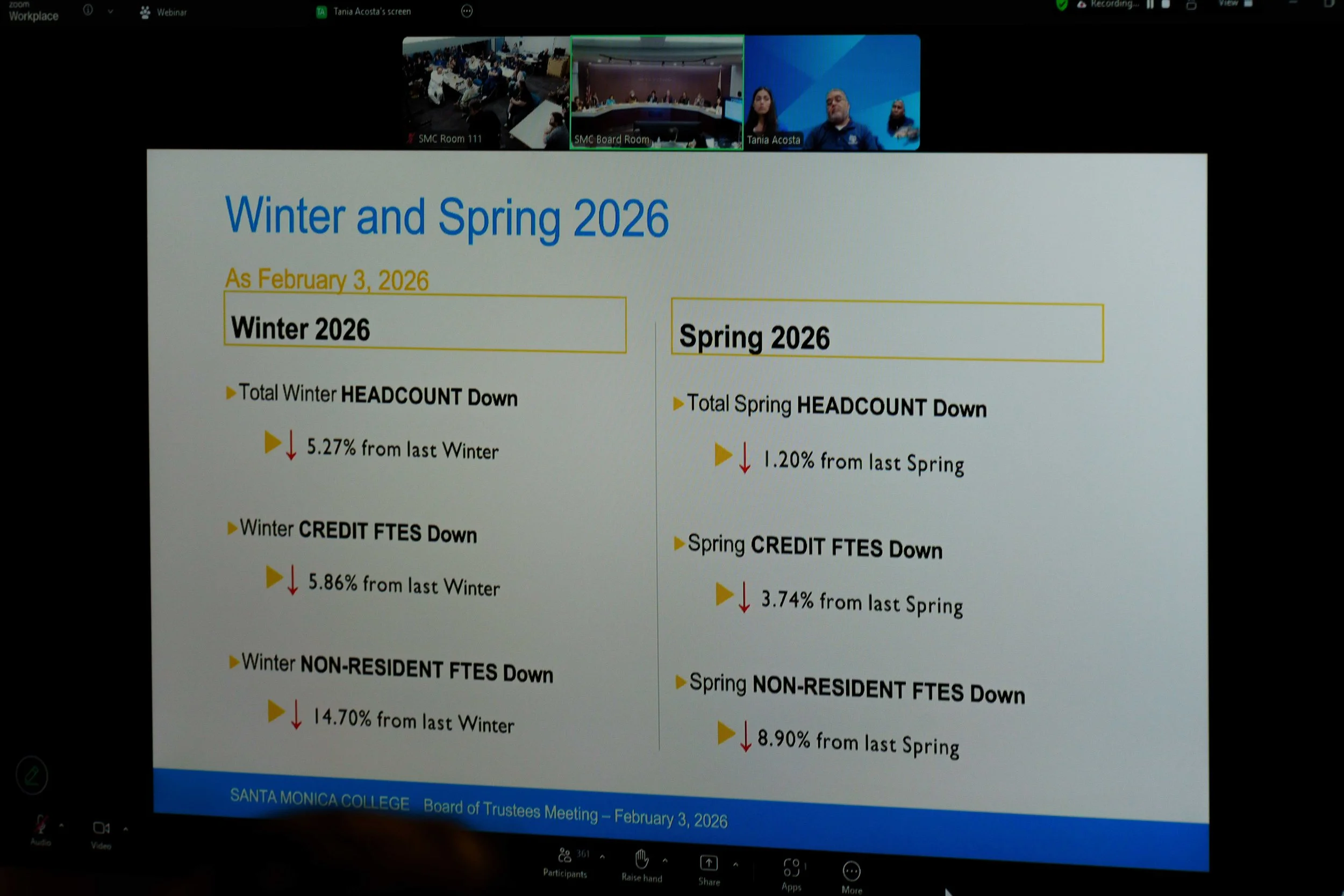
Chris Bonvenuto, Vice President of Business and Administration, said during a quarterly budget presentation at the meeting that SMC is facing a structural deficit of $17.4 million for the 2026-27 year. In a Jan. 29 memo sent to staff and obtained by the Corsair, Jeffery stated that the college isn’t alone; other California Community Colleges are also facing financial pressure caused by revised state and federal funding, as well as enrollment declines.
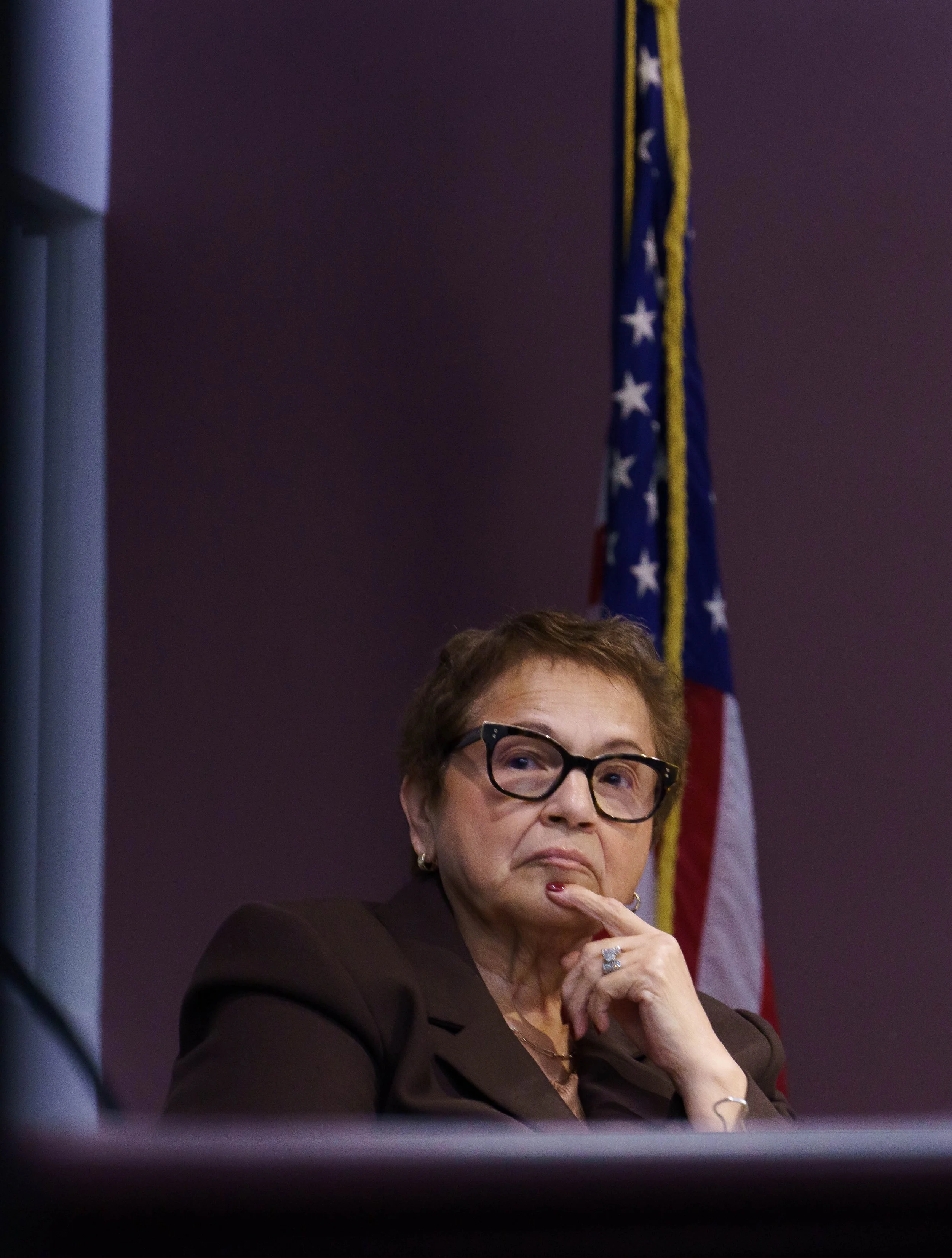
Rader said that the current budget crisis was foreseeable, citing raises given to the administration and a lack of ongoing revenue, with only one-time revenue used to cover ongoing expenses.
“I wish I’d been more, frankly, obnoxious about having this position earlier on,” said Rader. “This is a slow-moving train, and there’s plenty of blame for all of us to accept — but we must come together now.”
Other board members said at the meeting that they were sad about the cuts, but added that they thought they were necessary.
Cindy Ordaz, chief negotiator and president of California School Employees Association Chapter 36, which represents classified staff at SMC, raised concerns during public comment about SMC’s manner of fixing the budget. She criticized how the college did not address staffing concerns leading up to the current deficit.
“The (Strategic Enrollment Management) plan acknowledges that resident credit FTES (Full Time Equivalent Students) has dropped 19%. Non-resident FTES has declined 42%, and that recovery remains uncertain even across the five-year horizon,” she said. “Yet, during that same period, and I have documented this repeatedly, we saw no meaningful restructuring.”
Ordaz said structural concerns noted by staff included the college’s dependence on estimated future growth and lack of a staffing plan aligned with enrollment realities, while the college simultaneously expanded management. “That’s not fiscal strategy, that is risk deferral, whereas some might say just kicking the can down the road,” Ordaz said.
To remedy the crisis, the board is pursuing cost-reduction measures through negotiations, salary reductions, and furloughs, the Jan. 29 memo states.
Many of the jobs eliminated by the board are maintenance and student support jobs, according to the agenda.
“The proposal to lay off 57 classified professionals compared to only four managers is deeply inequitable, especially when classified employees, particularly custodians and grounds workers, are among the lowest paid in the district,” said Kennisha Green, a CSEA negotiator and the 2nd Vice-President, during public comment.
Green pleaded with the board to reconsider the layoffs and explore alternative solutions. She added that many full-time faculty banked their winter pay to raise money for the budget and asked the board what sacrifices they had made for the college.
“Accountability starts with this board,” Green said. “Approving this resolution does more than signal agreement. It cosigns a decision made without fully exploring all options. Let’s do the right thing, instead of cosigning an agreement and exploring all options.”
Among the eliminated positions were student and faculty favorites Ann Marie Leahy and Daniel Rocha, a career advisor and math tutor, respectively. Multiple students — many from the Adelante Program and Black Collegians — spoke in defense of Rocha during public comment. They expressed gratitude towards him and concern for their fellow students and SMC maintaining its status as the No. 1 transfer college to the University of California system.
Students around the school shared concerns about potentially losing the Maximizing Achievement in STEM Program, the effect releasing tutors would have on their education and how the losses might hurt disadvantaged students.
“It would affect not only me, but certainly a lot of disadvantaged college students that come here,” said Massimo Keyes, a freshman at SMC. “If it wasn’t for Daniel I’d probably — I don’t know how I would have made it this far in business calculus.”
The college notified Leahy, who has worked for SMC for a decade, that she will be released through email as part of the layoff plan, prior to the board passing the resolution, Leahy said during a public comment.
“We are driven by student needs. We work for them, show up for them and continue to grow professionally for them,” said Amanda Garcia, a counselor at the Center for Media and Design. “A person like Annmarie cannot simply be replaced.”
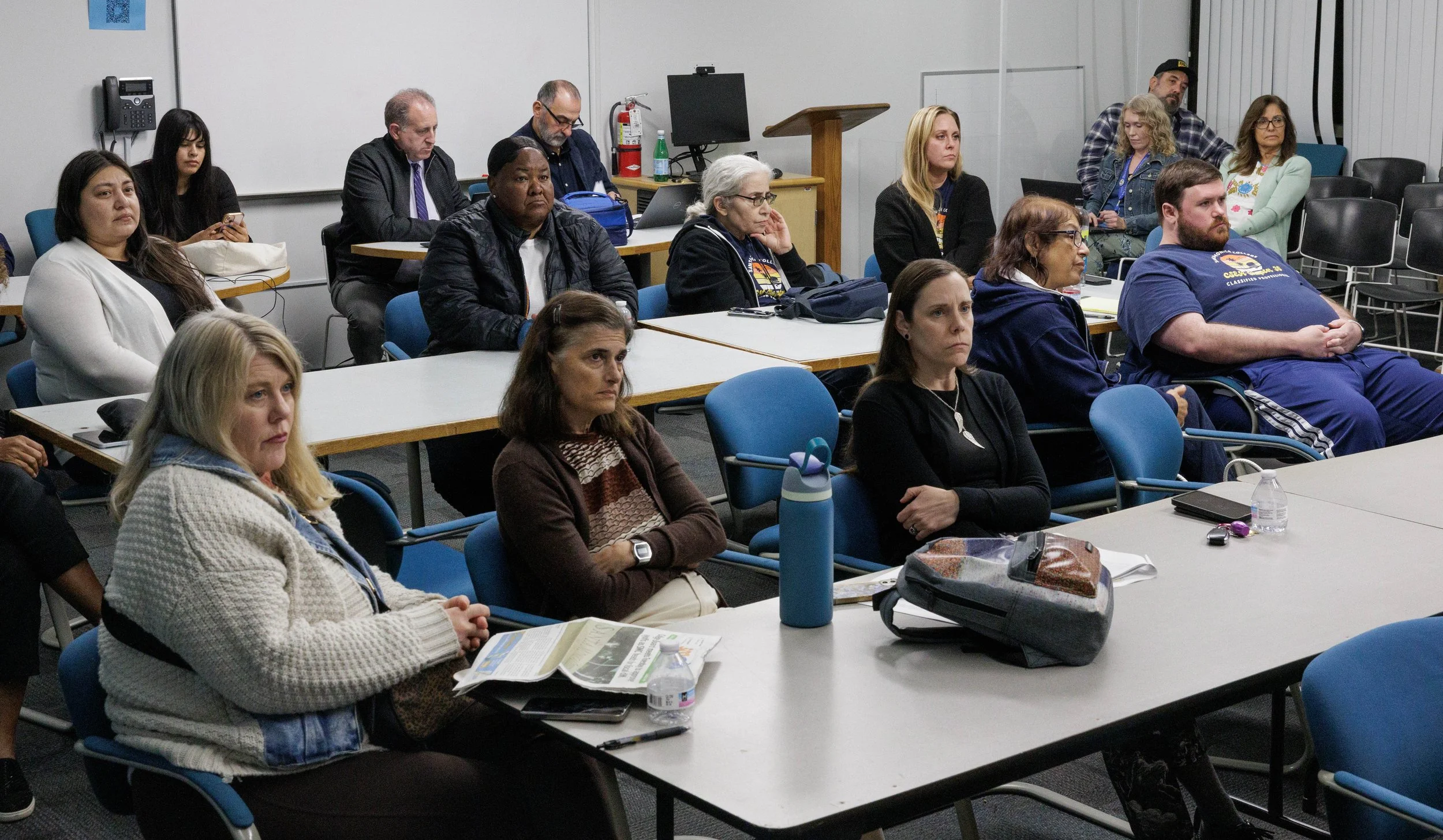
After public commenters spoke about Leahy or Rocha, attendees in the meeting’s overflow room would cheer, bang on the wall or stomp their feet. Many went over their two-minute time limit, advocating for their colleagues and voicing grievances. Erica Adams, an administrative assistant in the photography and fashion department, spoke for over a minute after being told her time was up by security.
Adams voiced her disapproval about the staff not receiving raises at the same rate as management and spoke in defense of Leahy.
During her comment, she said, “I’ve watched executive boards time and time again hand themselves and their little buddies in management handsome raises, and then finance what I can only describe as some kind of greed, with cost-cutting measures that are as swift and violent as the guillotine.”
“Earlier this year, my fellow union members and I were asked to accept a raise in contract negotiations that I wouldn’t even call measly, because at least when you get the measles, you get something, okay?” Adams said. “Offering us something that little and then blindsiding us with these layoffs on top of it — it’s terrible. I’m asking all of you (trustees) to not just walk around with your heads hanging low, looking like kicked dogs.”
Before the board voted on the resolution eliminating classified staff, Roy spoke about the public commenters, saying, “Many people came up here eloquently showing us… these aren’t numbers on a piece of paper. These are people, these are people who live in our community, people who are our neighbors, people who have their own families that rely on them.”
“When pay raises were given (in the past)… ‘kicking the can down the road’ is probably the right way to think about it, because it’s not a can, it’s people and families,” Roy said.
“Since I’ve been on the board, we haven’t come to this point, this unfortunate point, and there’s nothing positive to be said about the decisions that are being contemplated, that are being made. There’s nothing positive for any of the lives that are being affected, whether it’s classified staff, whether it’s the students that are affected, or the whole campus community,” Roy said. “I’m sorry that it’s come to this point.”
The Corsair reached out to Jeffery for an interview after the board meeting and was told to email SMC’s Public Information Officer, Grace Smith, with questions about the resolutions. The Corsair emailed Smith about the process and data used for furlough selection, and how the college plans to retain students with reductions in class schedule, faculty and student support. Smith responded by referring the Corsair to Jeffery’s emailed memo to the campus community sent on Feb. 4.
The Feb. 4 memo claims that affected employees will receive an official notice outlining the process and “providing an array of resources.”
“SMC has to take the necessary steps to safeguard our fiscal viability and ensure that the College’s life-changing mission can continue to be made real, for years to come. Difficult conversations lie ahead, and our students will continue to remain at the center of every conversation related to our fiscal challenges,” the memo states.
“The upcoming months will, without a doubt, be one of the most excruciating chapters in the history of this institution. Beyond the impact to the College, we are painfully aware of the personal, human impact on our colleagues and their loved ones. Every effort will be made to keep you informed and to assist everyone affected in the days ahead.”