
A Pleading Petition to End Unruly Petitioners on Campus
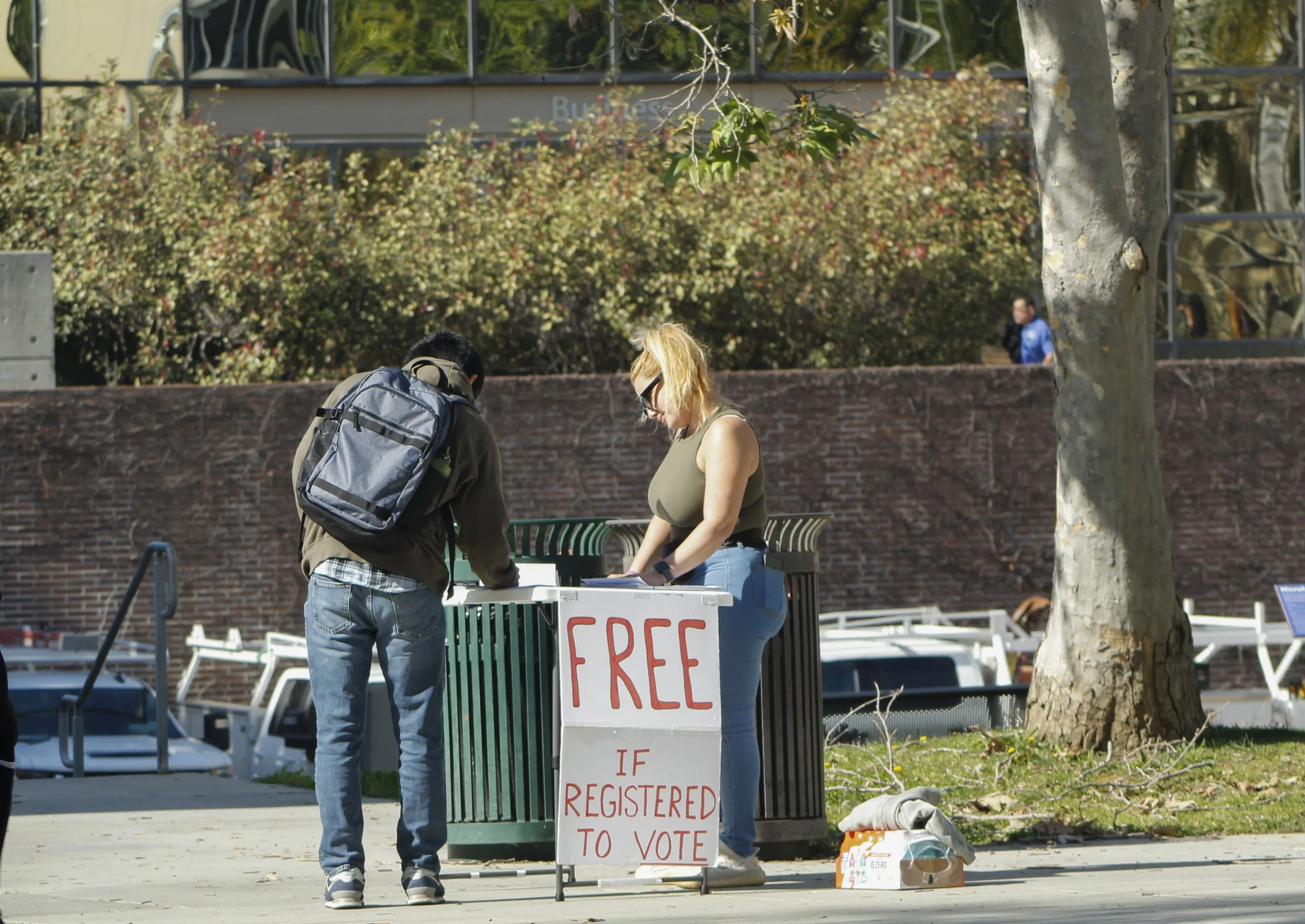
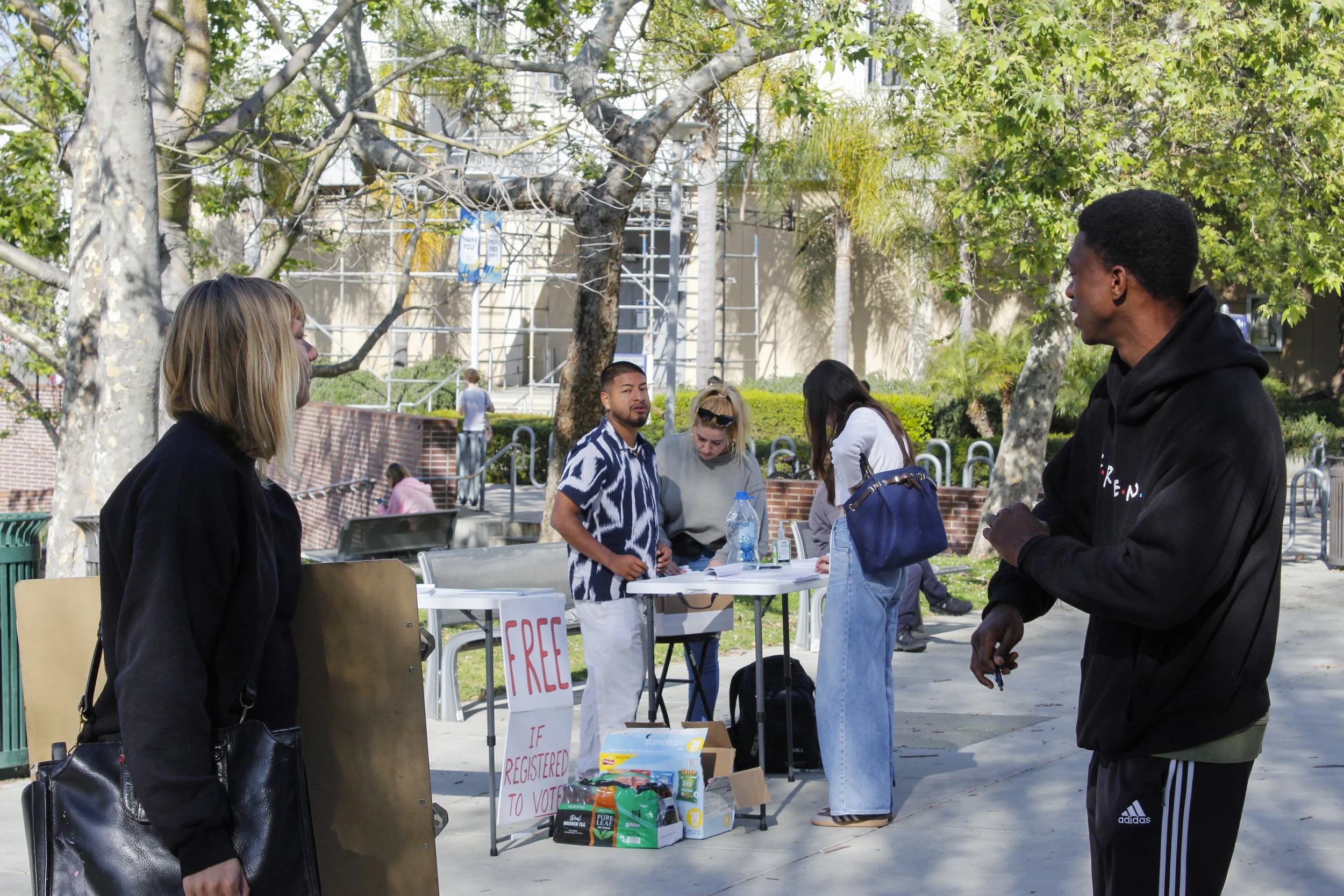
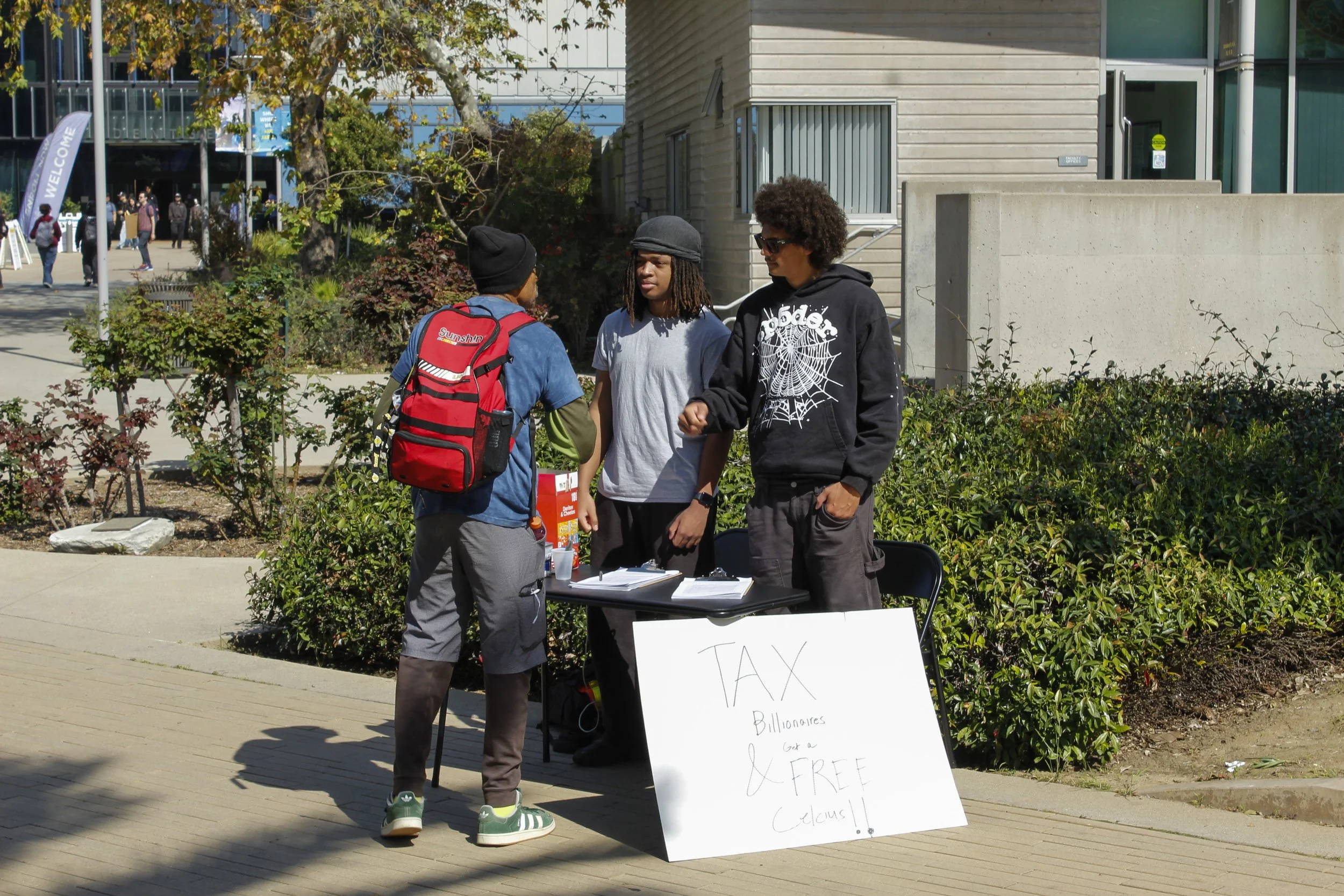
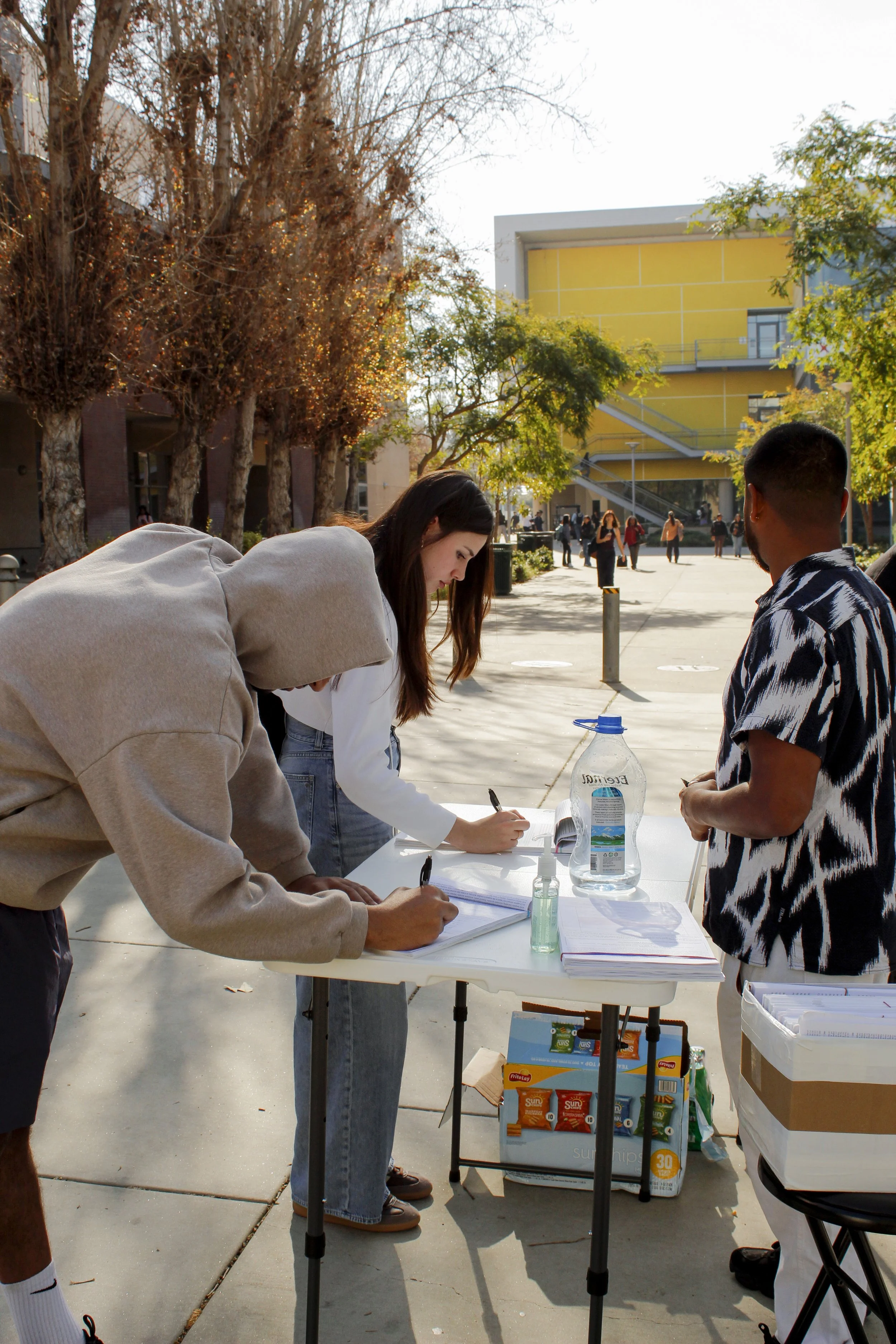
It’s an interaction that is inevitable for many Santa Monica College students — encountering a petitioner asking you for a signature to support a cause, whether you personally care for it or not. On campus, petitioners often display signs advocating for social justice on tables, have representatives speak with uninterested students who just want to go to class, and sometimes, they offer free snacks or drinks. As annoying and persistent as some petitioners may be, they are undoubtedly exercising their right to free speech.
The First Amendment guarantees us the freedom of speech, press, religion, assembly and petition. It also protects against censorship of content. Although petitioners are not explicitly permitted to petition on campuses, they have the right to be there under free speech protections, provided they follow campus policies and guidelines. Public college campuses are a common target due to their high populations, where foot traffic enables the circulation of petitions. So no, it’s not just SMC that experiences the influx of tables being set up. But if there are so many on our campus — presumably from the same organization that primarily asks for signatures rather than donations — then who funds them?
Upon closer inspection, the majority of organizations that have set up tables on campus are nonpartisan, meaning they have neither endorsed a current political candidate nor focused on the issues of a specific political party, but rather on policy issues such as voting rights. As mentioned by the California Association of Nonprofits, nonpartisan organizations receive a mix of funds from government grants, donations and fundraisers so they can operate inside and outside of college campuses. Because California statewide initiatives require hundreds of thousands of signatures — often more than 1 million valid signatures — organizations will hire circulators to gather them.
As confirmed by John Paul, one of the petition circulators encountered on the main campus, petitioners are paid based on the number of signatures they collect — which is no surprise given how many go out of their way to solicit signatures from students.
“We get paid $40 a page,” Paul said.
Another observation worth noting is that a small number of tables set up by these organizations have offered students free snacks such as bags of chips and energy drinks while requesting signatures — which might initially appear like bribery. However, the explanation is more straightforward.
“Even though we come to campus to ask people to sign at the tables and give them snacks, the city doesn’t recommend us to bribe people for signatures in exchange for food,” Paul said.
Under the California Elections Code Section 18603, any petitioner who offers or gives anything of value to another in exchange for signing an initiative petition is guilty of a misdemeanor, punishable by up to 364 days in county jail and more than $1,000 in fines or probation. So in reality most — if not all — boxes of snacks and refreshments at the tables are not contingent on signing a petition, but are free to take at any time. At some tables observed on campus, the snacks were complimentary as long as students were registered to vote.
However, not every organization operating on campus runs the same way. One student encountered on campus, first-year philosophy student Joshua Mahmoudiuni, interacted with a table raising awareness about malaria and donated some of his money to the organization so that they could fund a mosquito net. The exchange between Mahmoudiuni and the circulator wasn’t as aggressive as previous student and petitioner interactions, but more relaxed.
“They just asked me if I could donate. I just got a random amount, and there were only ones and fives,” Mahmoundiuni said.
Although some students may oppose petitioners and prefer to be left alone, they have the right to petition just as student-led protests do. If petitioners were less aggressive in seeking signatures, more students might actually be willing to engage with political issues instead of avoiding them.
According to the nonpartisan civic-focused research organization CIRCLE, a 2025 study found that 76% of college students in the United States were registered to vote in the 2024 presidential election with a turnout of 70%.
This demonstrates that students genuinely care about fulfilling their civic duties. Still, in smaller scenarios such as petitioning, they prefer not to be pressured and instead use their autonomy when deciding whether to sign or donate. In the end, even though these organizations are expressing their right to petition, students shouldn’t feel obligated to interact with them.
To learn more about California’s 2026 statewide initiative process, visit the California Secretary of State’s guide here.