
‘My Father’s Shadow’ Introduces Us To The People of Our Dreams
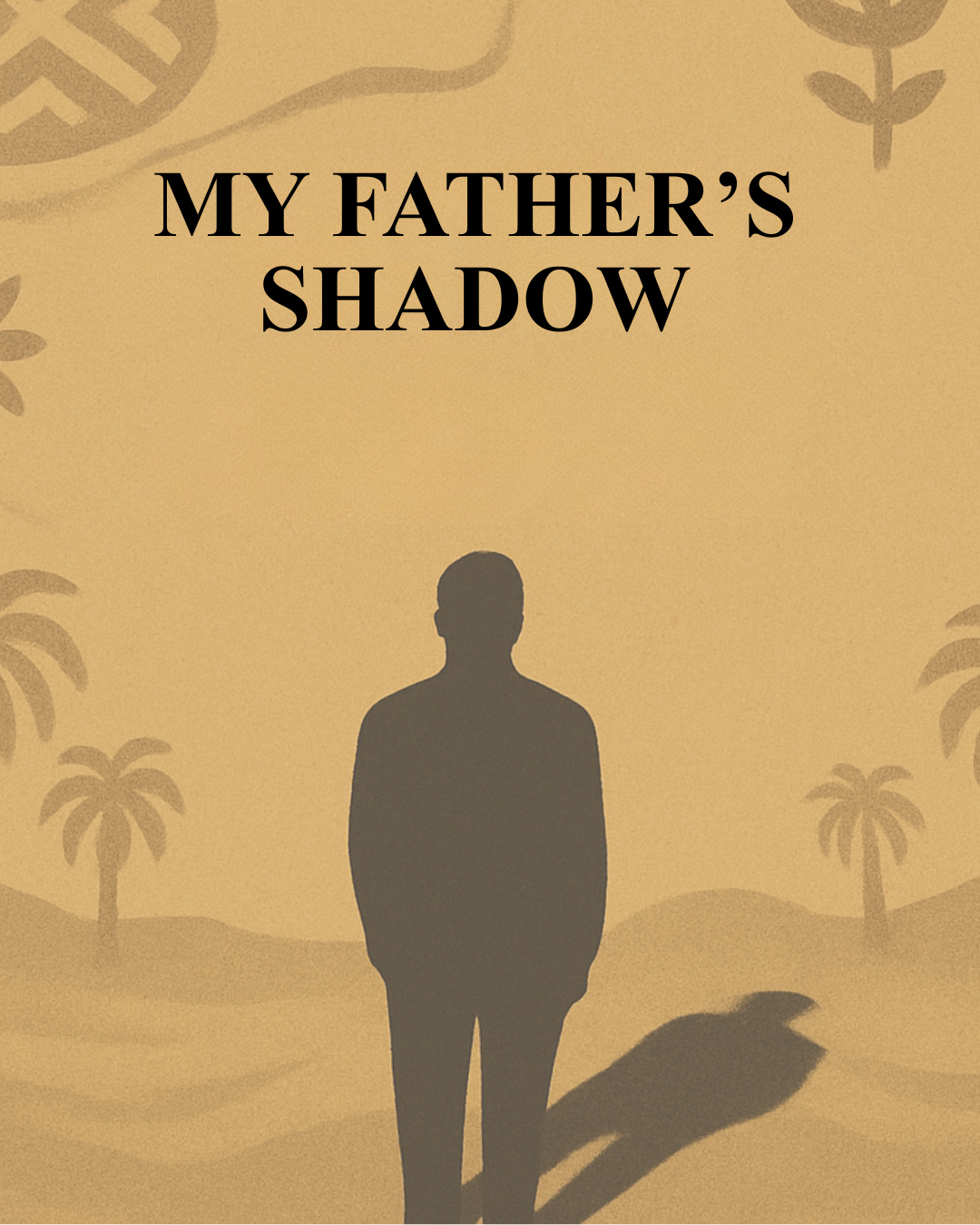
Graphic by Donnisha Mukes
Political unrest crawls underneath the skin of a people desperate and paranoid. A father firmly holds his two boys’ hands as they traverse a capital swollen with discontent, primed to burst. Akinola Davies Jr.’s semi-autobiographical directorial debut, “My Father’s Shadow,” is a psychopomp. We are guided through an era of turmoil and radical change into the daunting uncertainty of its smoking aftermath.
Recently awarded the BAFTA for Outstanding Debut by a British Writer, Director or Producer, it has the additional distinction of being the first Nigerian film chosen for the Cannes Film Festival’s Official Selection. Taking place during the 1993 Nigerian presidential election, the backdrop of “My Father’s Shadow” is a nation attempting to shear a military dictatorship in favor of democratic freedom.
Breaking from their ho-hum village, brothers, 8-year-old Aki and 11-year-old Remi, accompany their elusive father, Folarin, to his job in Lagos. What greets them upon their arrival in the city is a revelatory summer day choked with laughter and ash.
While elegiac, “My Father’s Shadow” is less a lament than it is the sigh taken upon the recollection of threadbare, grief-dyed memory. In that exhalation: acceptance that finally allows one the strength to travail past the threshold and safety of muted ache.
The film bleeds, fuzzy with that warm celluloid crackle, as ink spilled onto a blank page, blotting into heady hues. Cinematographer Jermaine Canute Bradley Edwards’ work here has a defined, phantasmagoric vibrance.
The camera lingers and stalls — toying with depth and clarity. During montages, we take the time to focus on the people of Lagos. On occasion, a chosen subject will point-blank regard the audience with a discerning look.
There is a documentarian-elan that dictates the motion and preoccupations of the lens. Intimate close-ups capture the divots, creases, pimples and chin hairs of the Nigerian populace. Sweat. Ocean water. Blood. Rolling down faces in rivulets. It results in a visceral texture. There is an ever-present awareness of life’s fragility in these small reminders of flesh.
Ominous sirens and disembodied wails fill the score, presaging a nebulous “coming.” Imagery of rot and decay, ravens circling overhead, and the scowls of a passing convoy of soldiers all appear at what feels like timed intervals. Yet again, reminders of mortality. Threats even. It is the heightening of a voltage that is inevitably set to trip.
“The memories that pain you when someone leaves are the same ones that comfort you later,” says Folarin, dispensing wisdom to his eldest, “There is a reason God placed us together.”
This picture proceeds with a dreamlike ellipticity. Eidetic yet cursed with tantalizing brevity. You do not want to “wake up” because there is clearly so much more to be said. But no dream could contain a lifetime of words, especially those that have gone unspoken. We bury that with our dead. We are left with what we remember of those precious to us who have passed.
The voyage through childhood unfurls in much the same way — swept along by forces we are hopeless to comprehend, as is dream logic.
Folarin admits, “Nigeria is hard.” The eruption of dissent that besieges Lagos upon the annulment of the election is clamorous. We think of the boys earlier that day in the cradle of their village, from sibling bickering and playtime to ducking for cover amidst the bedlam of insurrection.
The proverbial loss of innocence incited by the pandemonium is cemented by the passing of their father. They do not lose him to the belligerent soldier who threatens him at gunpoint. Throughout, we’ve seen Folarin suffer these periodic nosebleeds, offhandedly wiping away the discharge.
The film is declaring the insuperability of decay: You have a body susceptible to the elements of this world. Whether it be by a bullet, the sea, disease or hate, death stakes its claim.
It will happen. It had happened. But beyond is the future, a repository for the present. The past need not be forsaken, but reborn.
There’s a photojournalistic quality to the cinematography and direction that envelops the film in an overwhelming sense of authenticity. It is through this that “My Father’s Shadow” achieves a fidelity to memory as a medium and means of preservation. Dreams, like movies, are a kind of memory. A recomposition of reality, synthesized by the consciousness.
Folarin tells Remi, whom we learn is the namesake of his elder brother who drowned when Folarin was a boy, “Everything is sacrifice.” Bartering and bargaining are a necessity of survival. A synonym of sacrifice is “offering.” As restitution for the chasm of confusion and loss hewed by its passage, the past offers parts of itself to the new generation, who may use those materials for the construction of a so-called better path forward.
The title, “My Father’s Shadow”, most obviously refers to the looming presence of Folarin in Aki and Remi’s lives — the sudden vacuum of a paternal figure. But a shadow is also what we leave behind.