
Iran’s War Cup
The 2026 FIFA World Cup, the largest in history and the first to be hosted by three countries, has been marked by controversy on several fronts. Dynamic ticket pricing, visa restrictions and environmental concerns are just a few issues that have fueled debate, stirring emotions among fans, teams and participating nations.
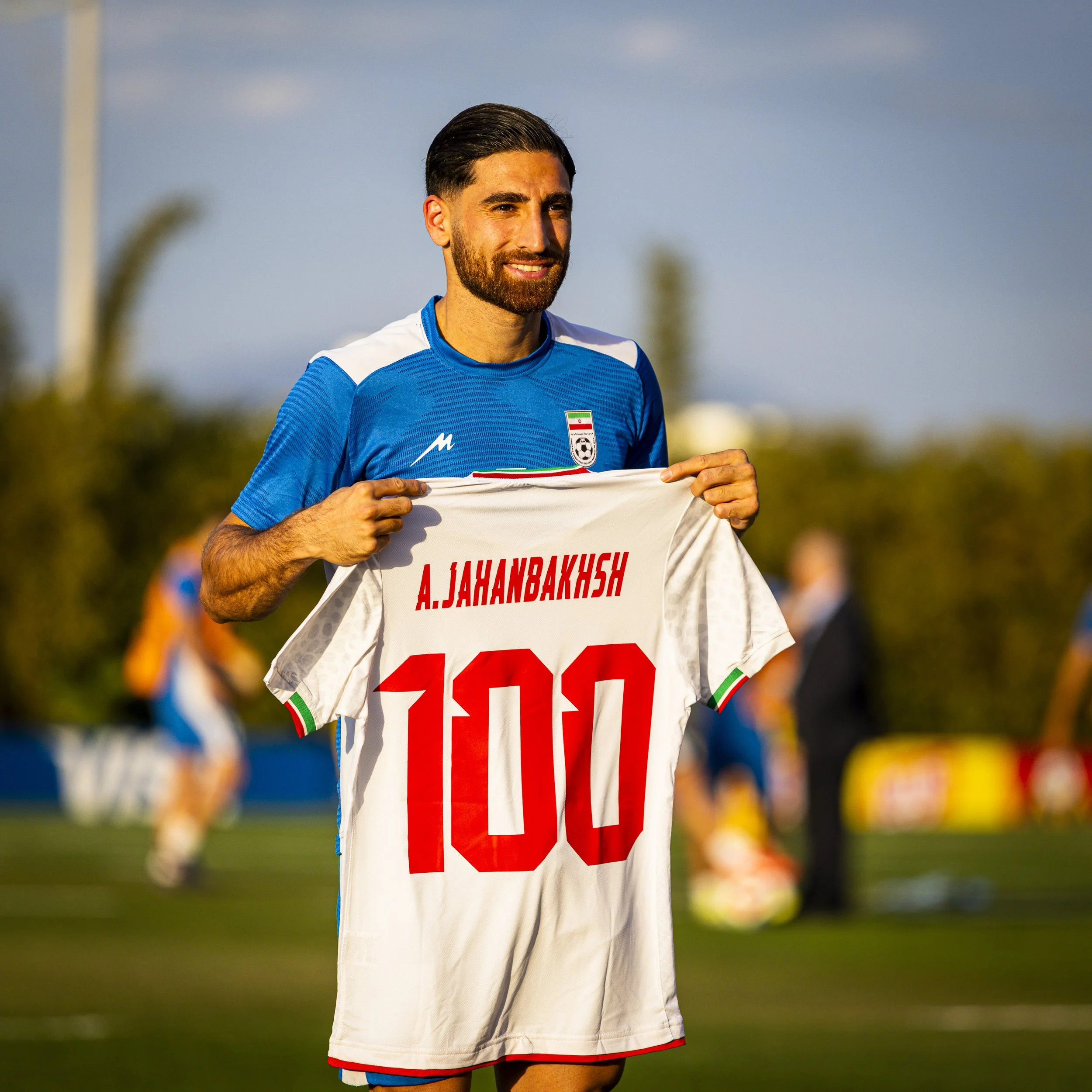
But when Team Melli, Iran’s national soccer team, landed in Tijuana immediately after a hard-earned draw in their first World Cup game, they weren’t just following a normal travel itinerary. Instead, they found themselves in a tournament shaped by political tensions and the reality that one of the hosting nations was at war with their country.
FIFA’s World Cup tournaments aren’t foreign to political controversies. In 1934, the World Cup took place in Italy under Benito Mussolini’s dictatorship. Argentina hosted in 1978 under the crimes of the military junta, an authoritarian regime. Most recently, Qatar’s 2022 tournament faced accusations of migrant labor and human rights violations.
Since the conflict between the U.S., Israel and Iran started in February, Iran’s participation in this year’s World Cup had been in doubt. The Iranian Premier League, where most of the players play, was suspended midway through the season on Feb. 28. The lack of competitive matches in the months leading up to the World Cup led to a decline in players’ fitness and altered the team’s preparation for the tournament.
Then, on March 12, after a meeting with FIFA president Gianni Infantino, President Donald Trump said on a post on social media that while Iran was welcome to play on U.S. soil, he didn’t think it "appropriate that they be there, for their own life and safety.”
As the tournament approached, Iran’s head coach Amir Ghalenoei left out one of its star players, forward Sardar Azmoun, from the squad based on “technical reasons.” His omission prompted speculation. Azmoun has often spoken out against the Islamic regime in Iran and when the war started, he had posted a photo of himself with Mohammed bin Rashid al-Maktoum, ruler of Dubai, vice president and prime minister of the United Arab Emirates, an adversary of Iran.
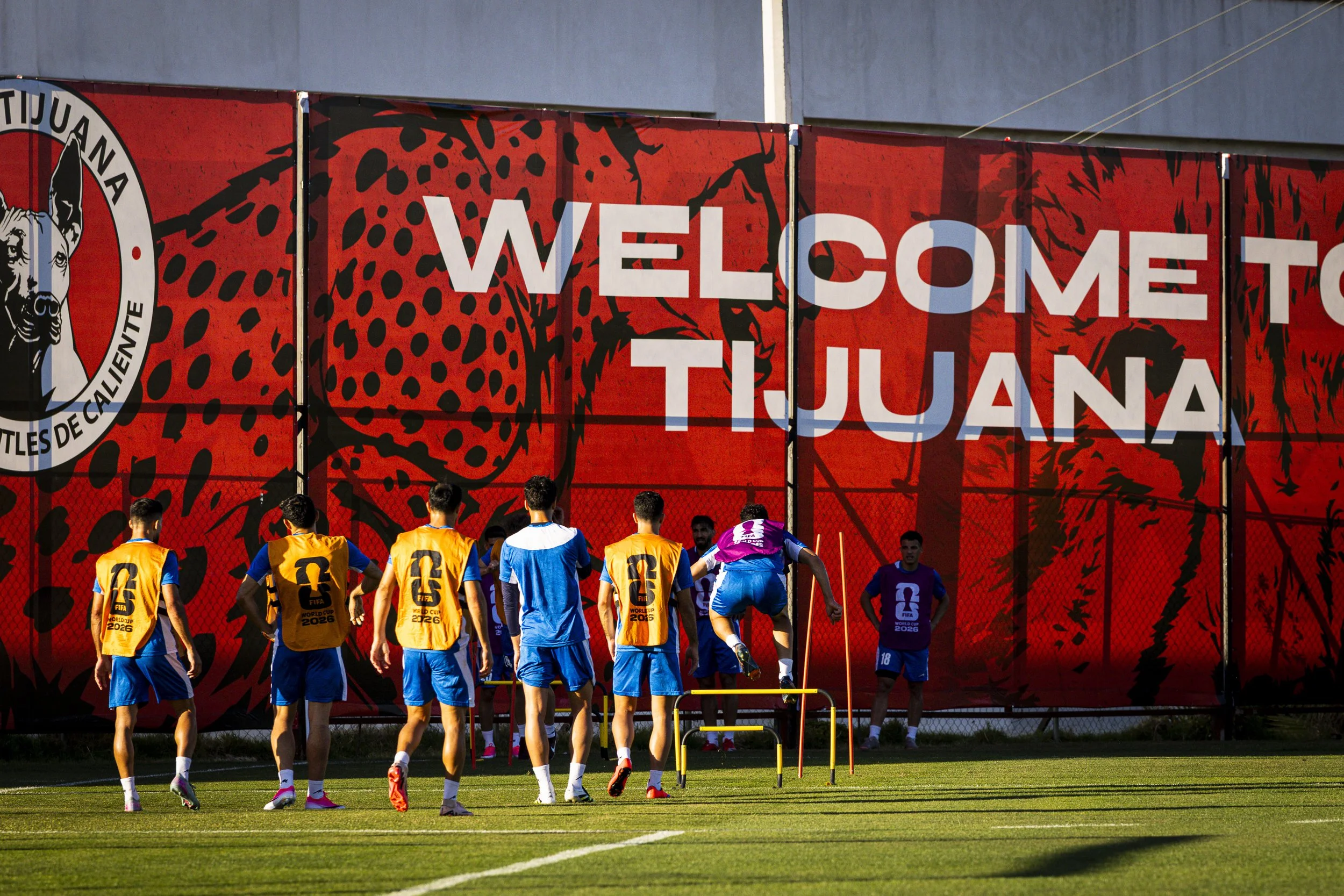
As tensions escalated, the team was forced to move its World Cup base camp from Tucson, Arizona, to Tijuana, Mexico, due to security concerns by the Iranians and visa restrictions. Players received visas to enter the U.S. just 10 days before their first match against New Zealand in Los Angeles, but several staff members didn’t obtain visas under allegations of links to the Islamic Revolutionary Guard Corps, which the U.S. and Canada consider a terrorist organization. This decision, according to a statement from the Islamic Republic of Iran Football Federation, “effectively denied the Iranian national team the opportunity for a level playing field and a competition free from discrimination.”
Throughout the tournament, visa issues kept hindering the team’s participation. Winger Mahdi Torabi required a new visa after his initial entry, while several staff members were unable to travel altogether. Most importantly, and unlike other teams in the World Cup, the Department of Homeland Security (DHS) told them they had to fly back to Tijuana right after their matches ended.
"After the game today, they said to us, 'You have to leave immediately.' It's very important for us to have time for recovery, but we are asked to get on a plane and return to our camp in Tijuana, and we are really troubled by that,” Ghalenoei said through an interpreter in a postgame news conference following their draw against New Zealand. "They delayed our arrivals, and they are forcing us to go back early without time for recovery. They are making the situation more and more difficult, facing us with more hurdles, but we're not going to let that stop us from doing our best.”
In an interview on CBS News, Andrew Giuliani, head of the White House’s World Cup Task Force, said, “They’ll be asked to leave the day that the match wraps up, so the evening of the match.”
Not being allowed to stay overnight meant the journey back to their hotel in Tijuana would extend into the early hours of the following morning, causing significant delays in the players’ recovery, as Ghalenoei suggested.
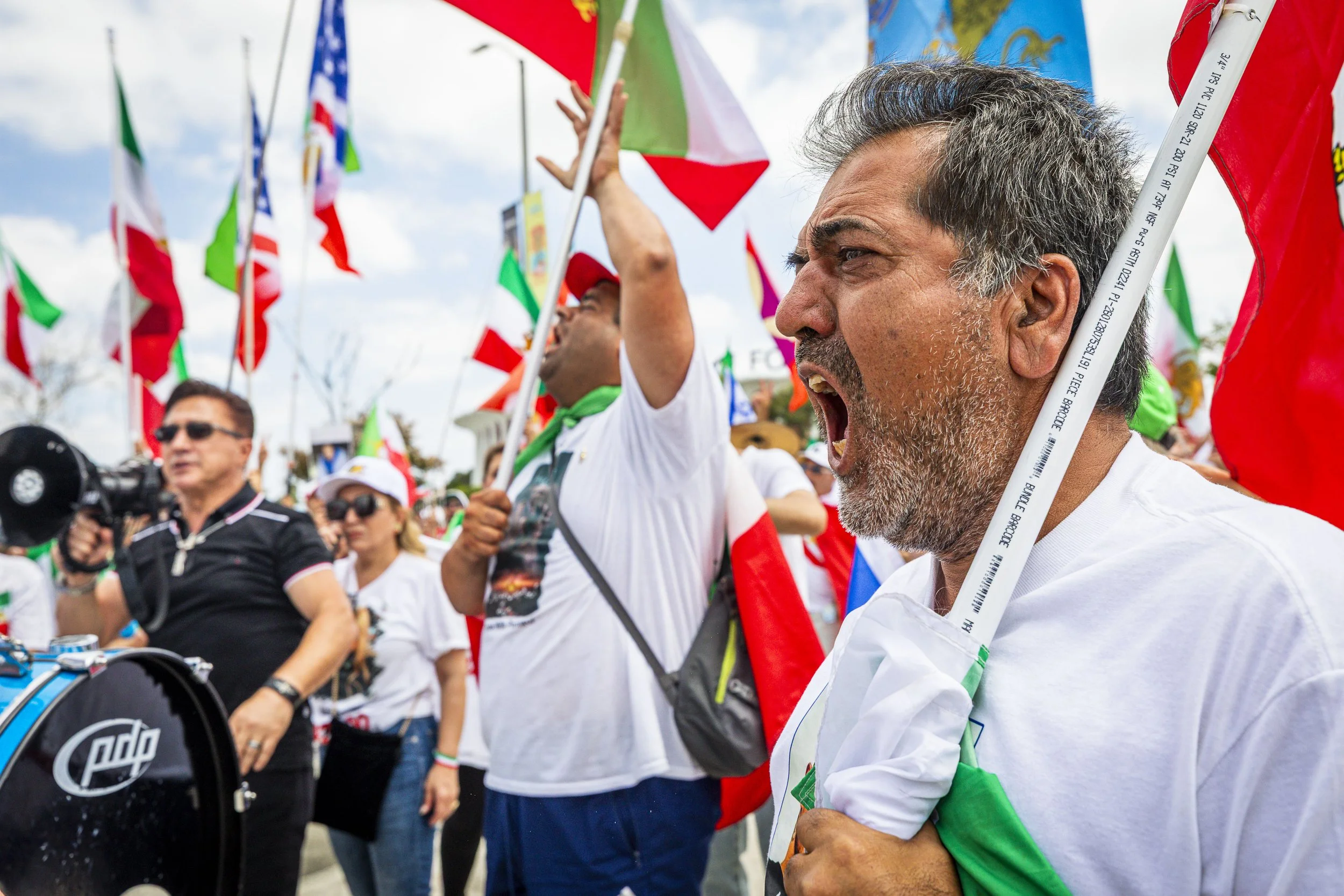
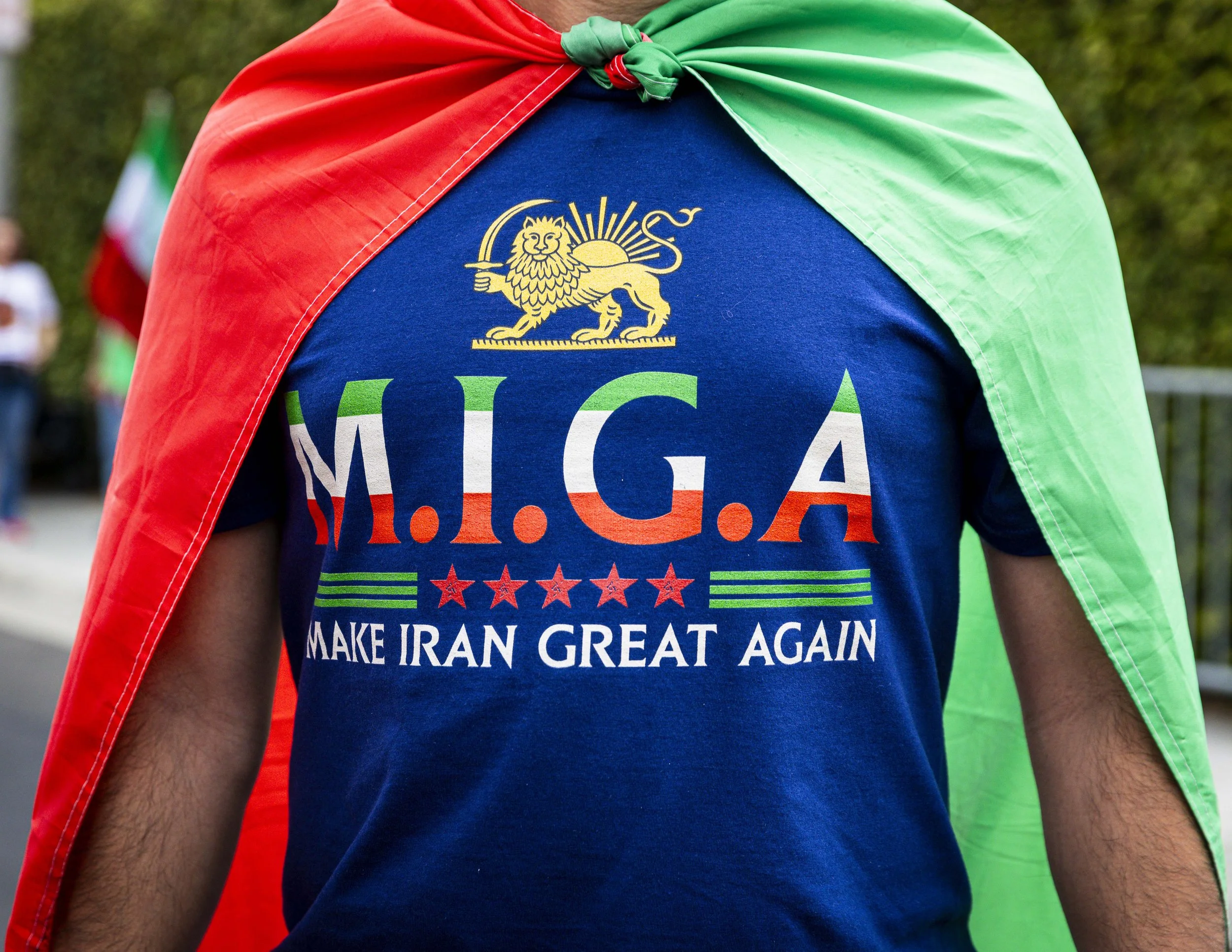
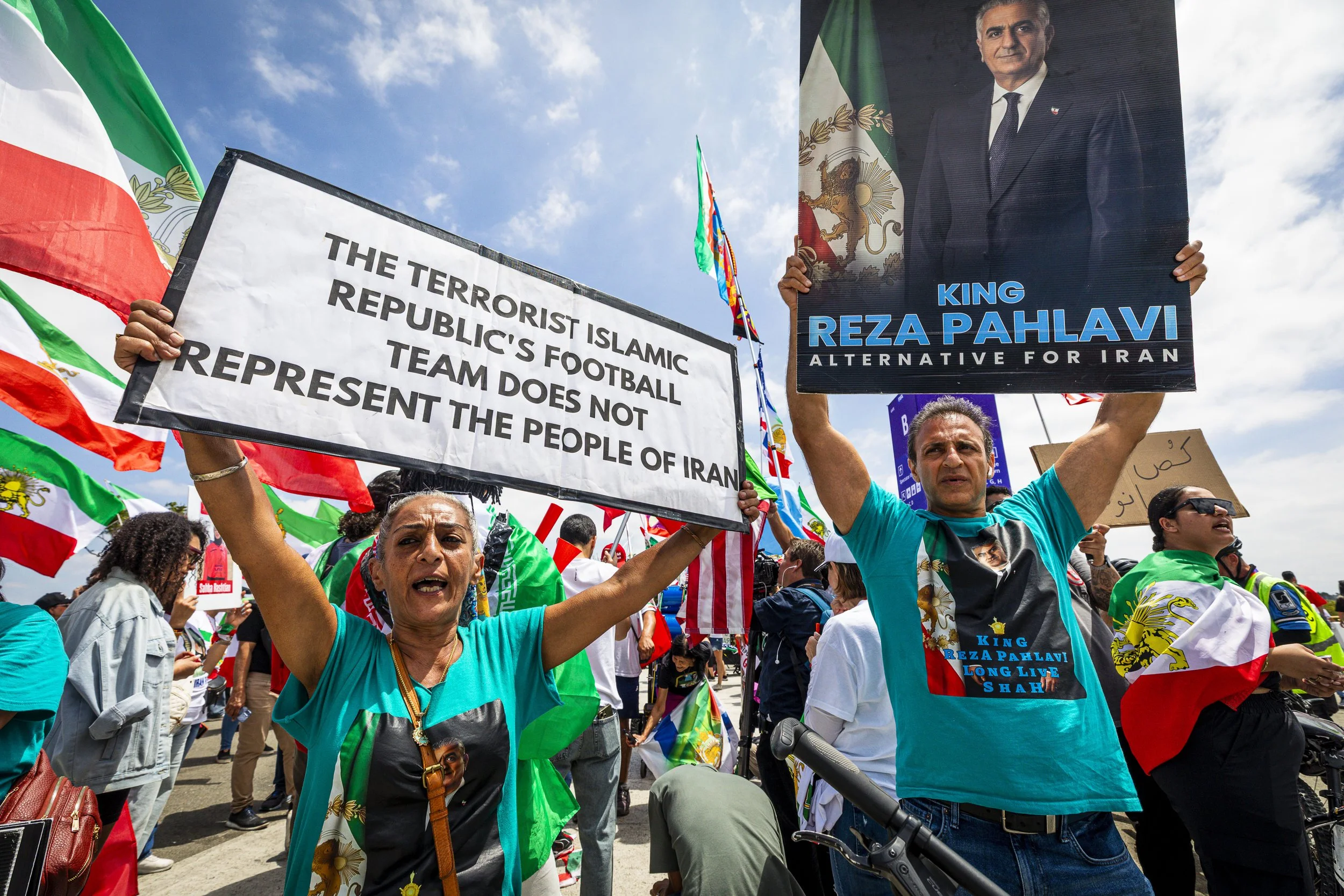
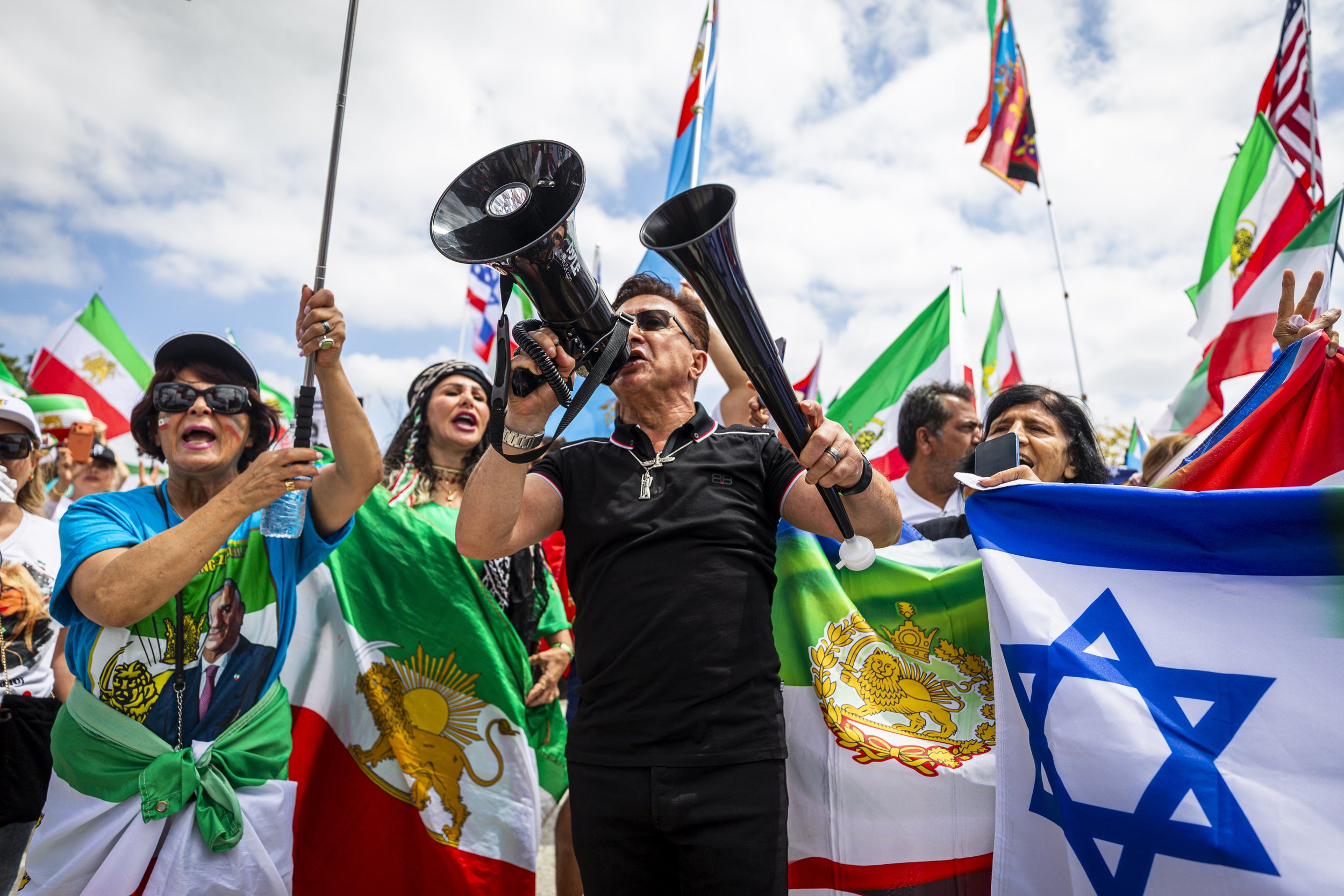
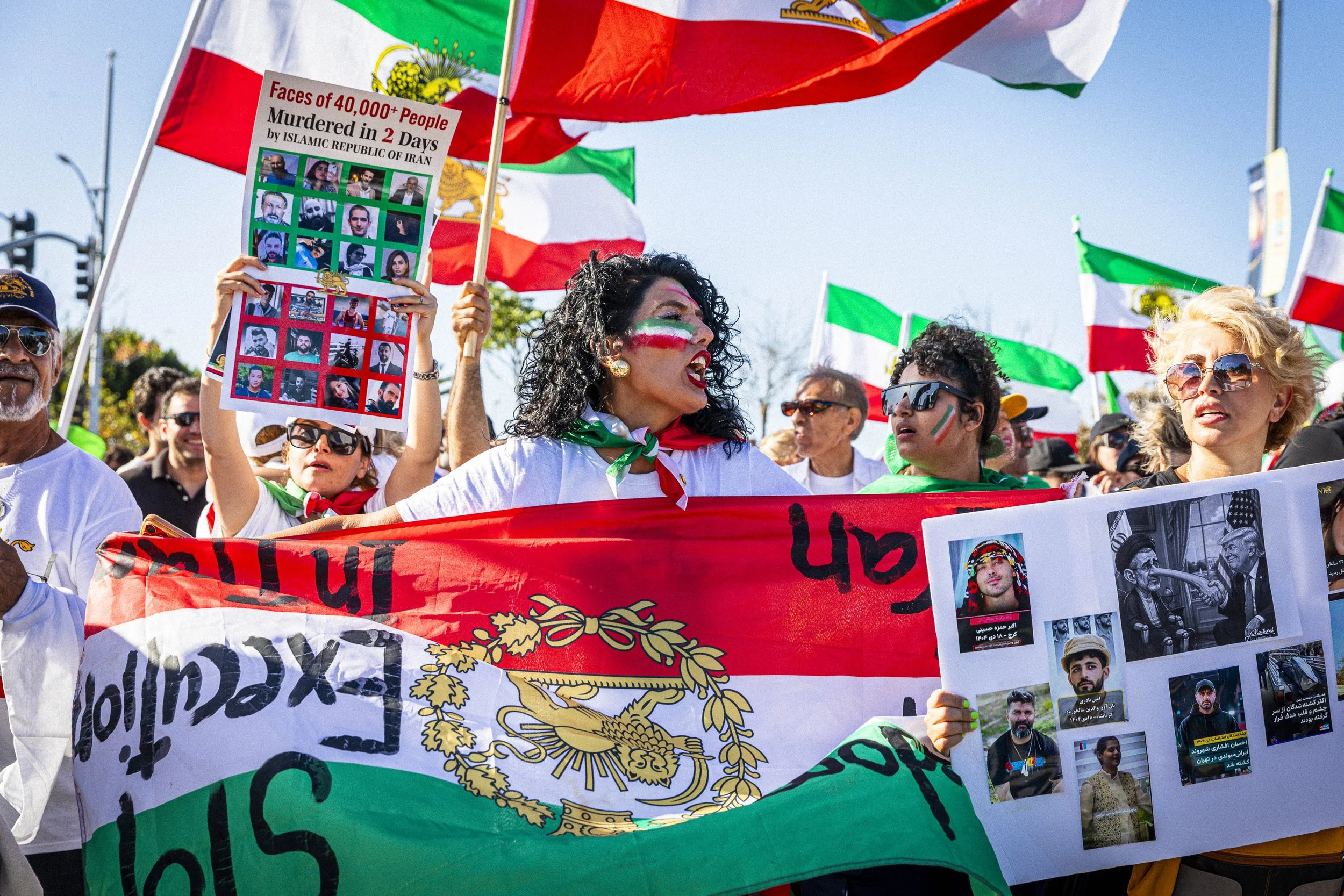
Their matches on U.S. soil also brought more pressure on the team. The Iranian diaspora community in Los Angeles, the largest outside Iran, saw Iranian Jews protest before the first two matches against New Zealand and Belgium in Los Angeles. Carrying the pre-1979 revolutionary flag with the Lion and Sun emblem, protesters voiced their opposition to the Islamic regime and their support for the U.S. and Israel in the war. Portraits of Reza Pahlavi, the former Crown Prince of the Pahlavi monarchy, were also abundant.
Protesters considered Team Melli to be the Iranian regime’s team.
“We see them as representatives of the Islamic regime, and what has the Islamic regime done, especially on January 8 and 9,” said Jupin Jamin, one of the protesters. “It's completely a massacre. There’s no way that we can just ignore it, so we are using every opportunity to show our position against the Islamic regime in Iran and against IRGC terrorists.”
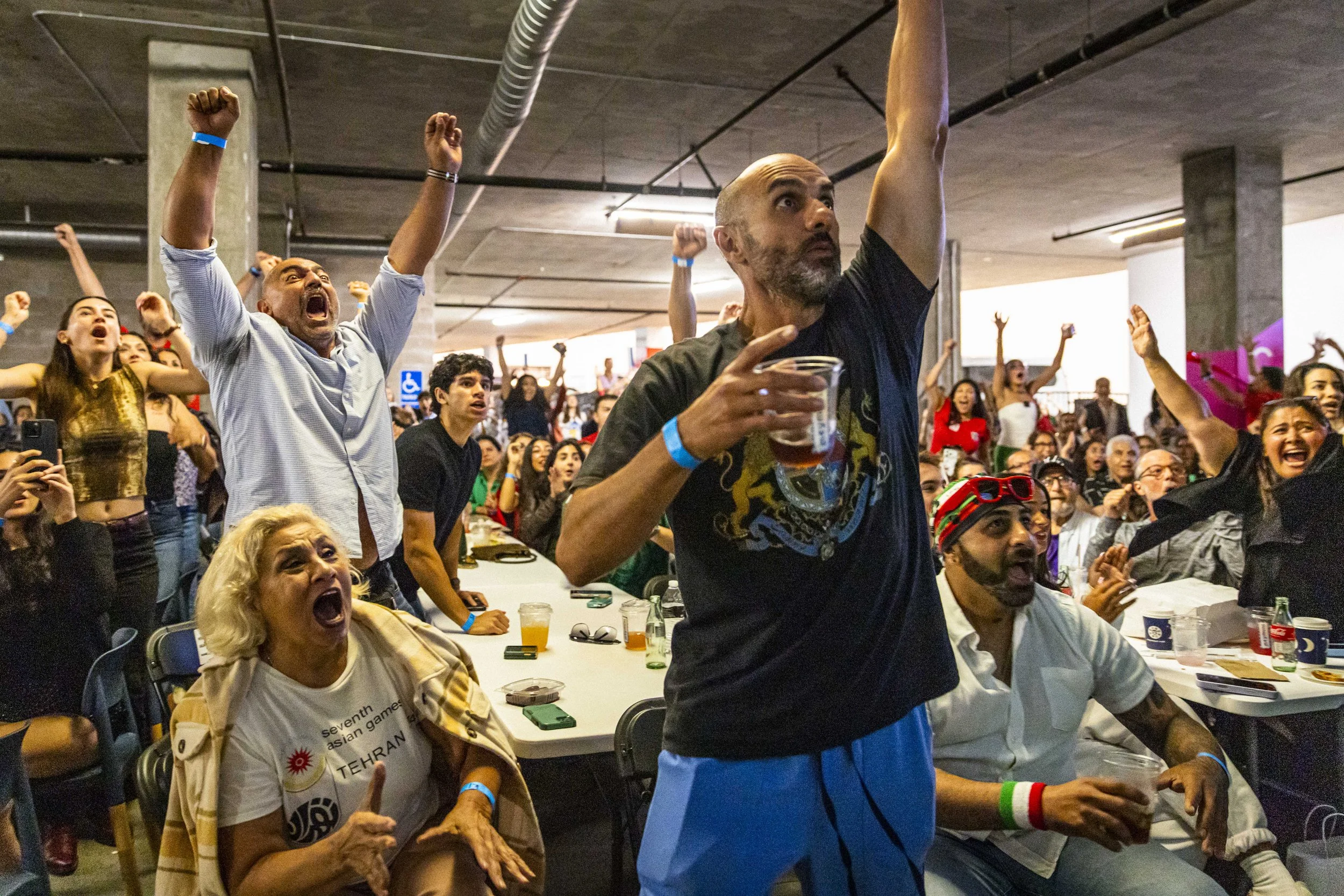
There were minor altercations between protesters and people who went into the stadium to support the team, particularly those carrying the official Iranian flag. Most of those fans wanted to separate politics from soccer and simply cheer for their team.
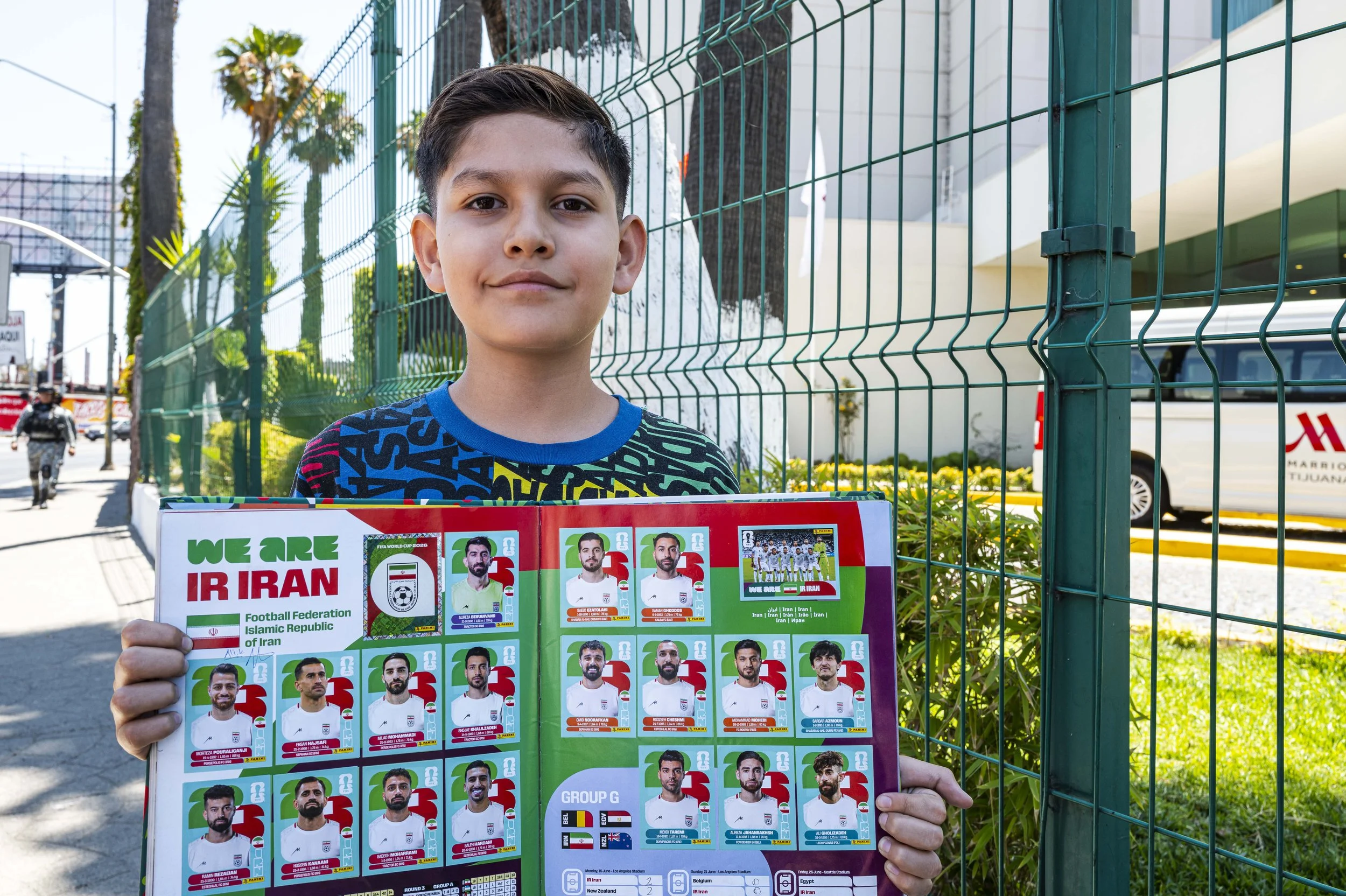
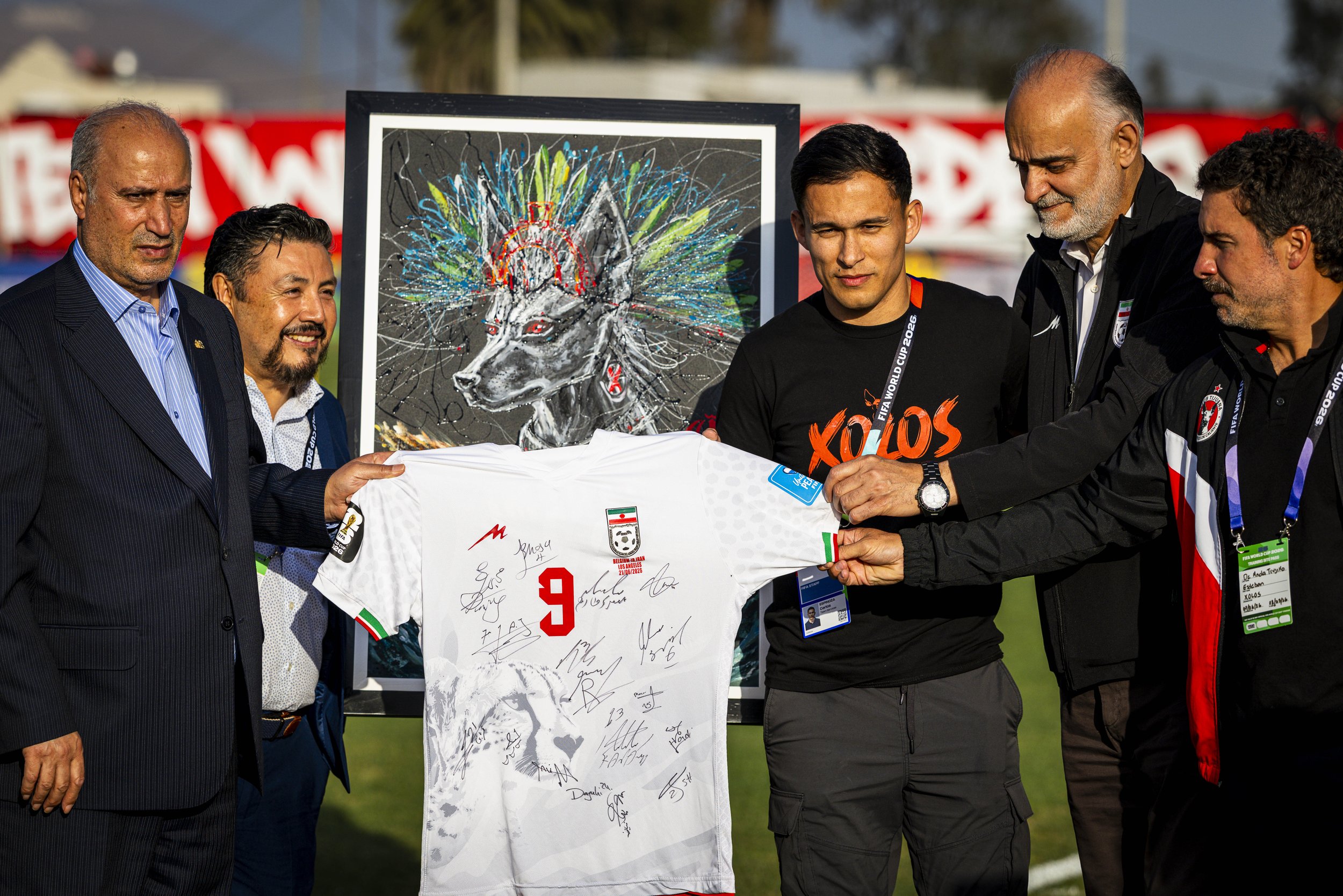
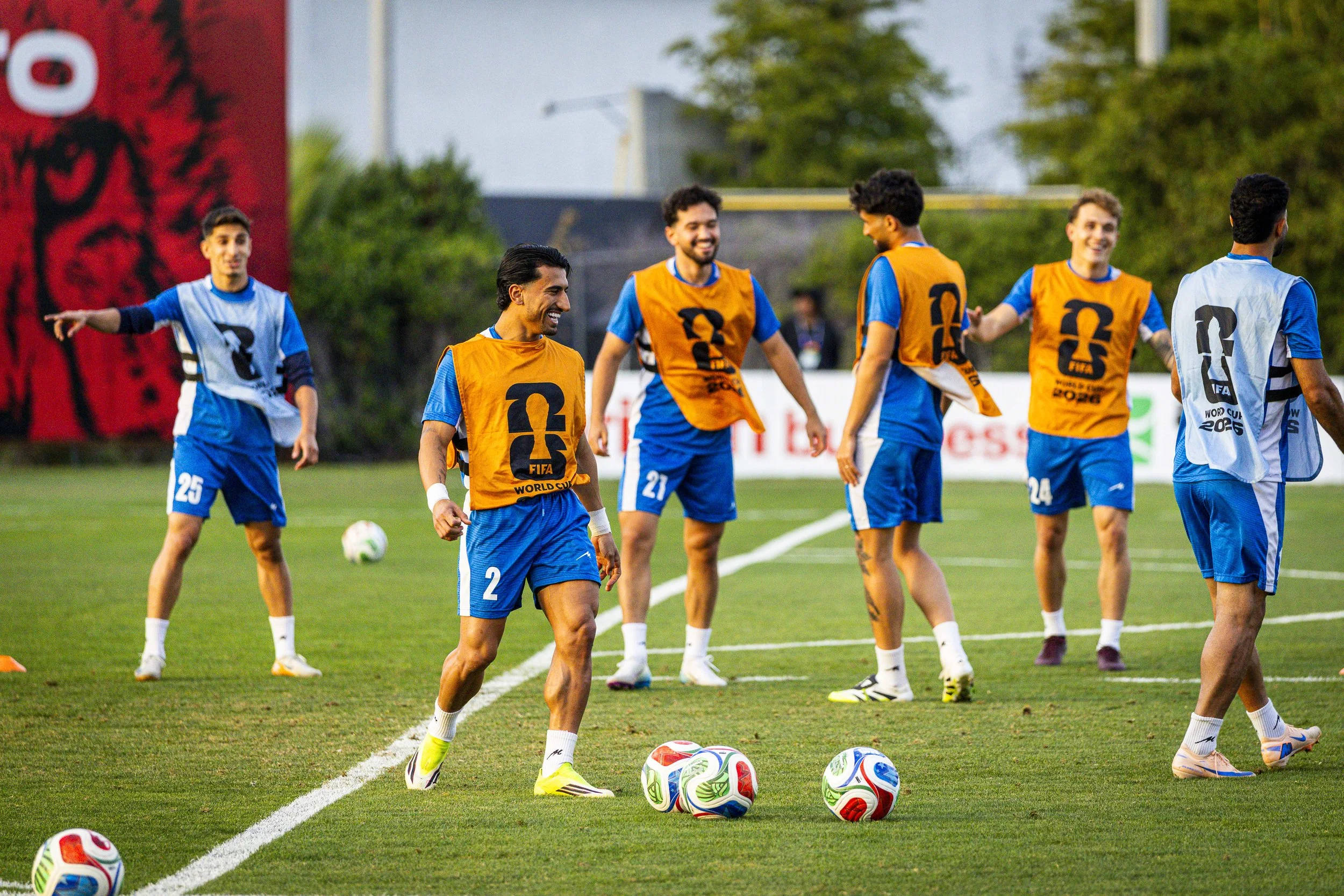
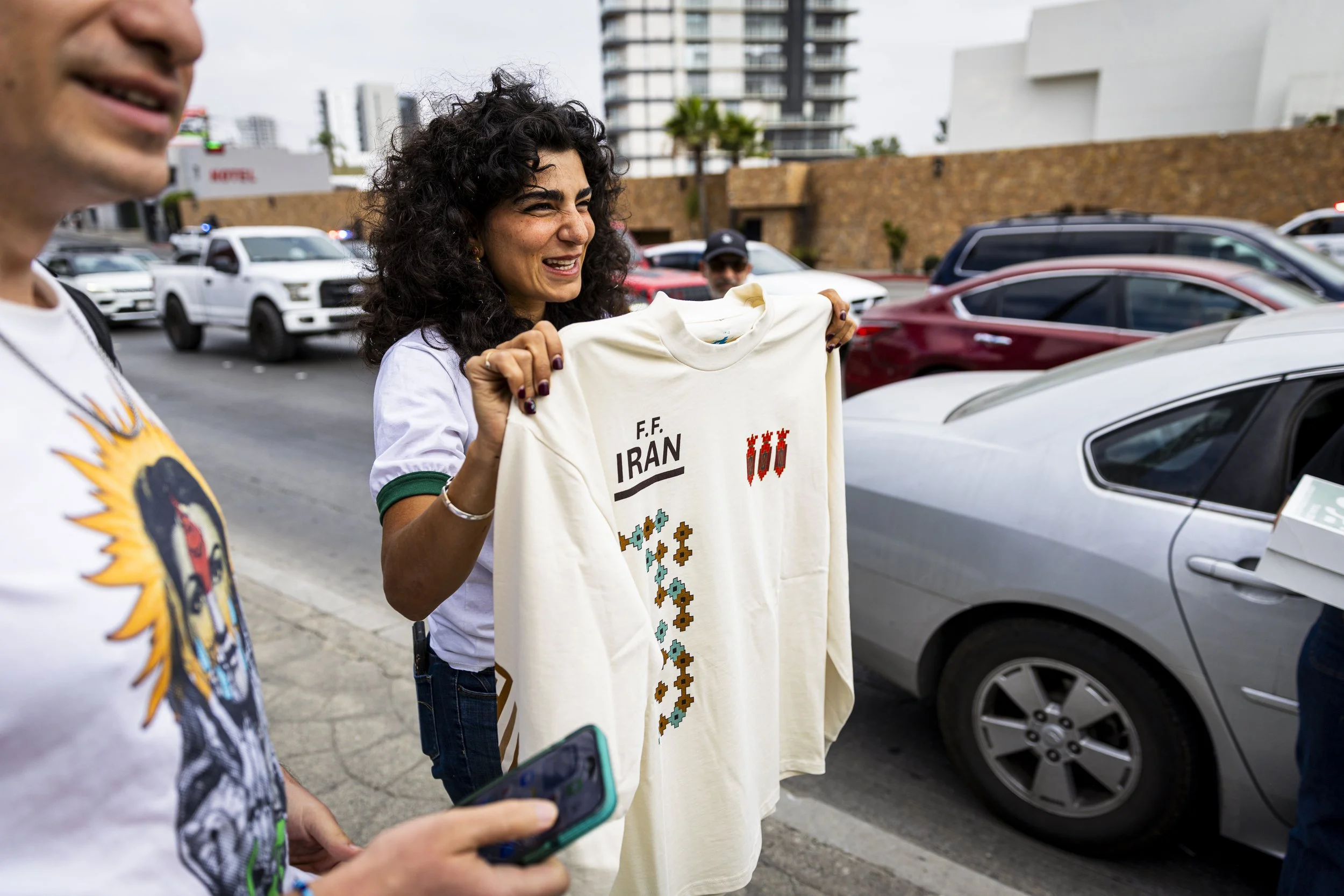
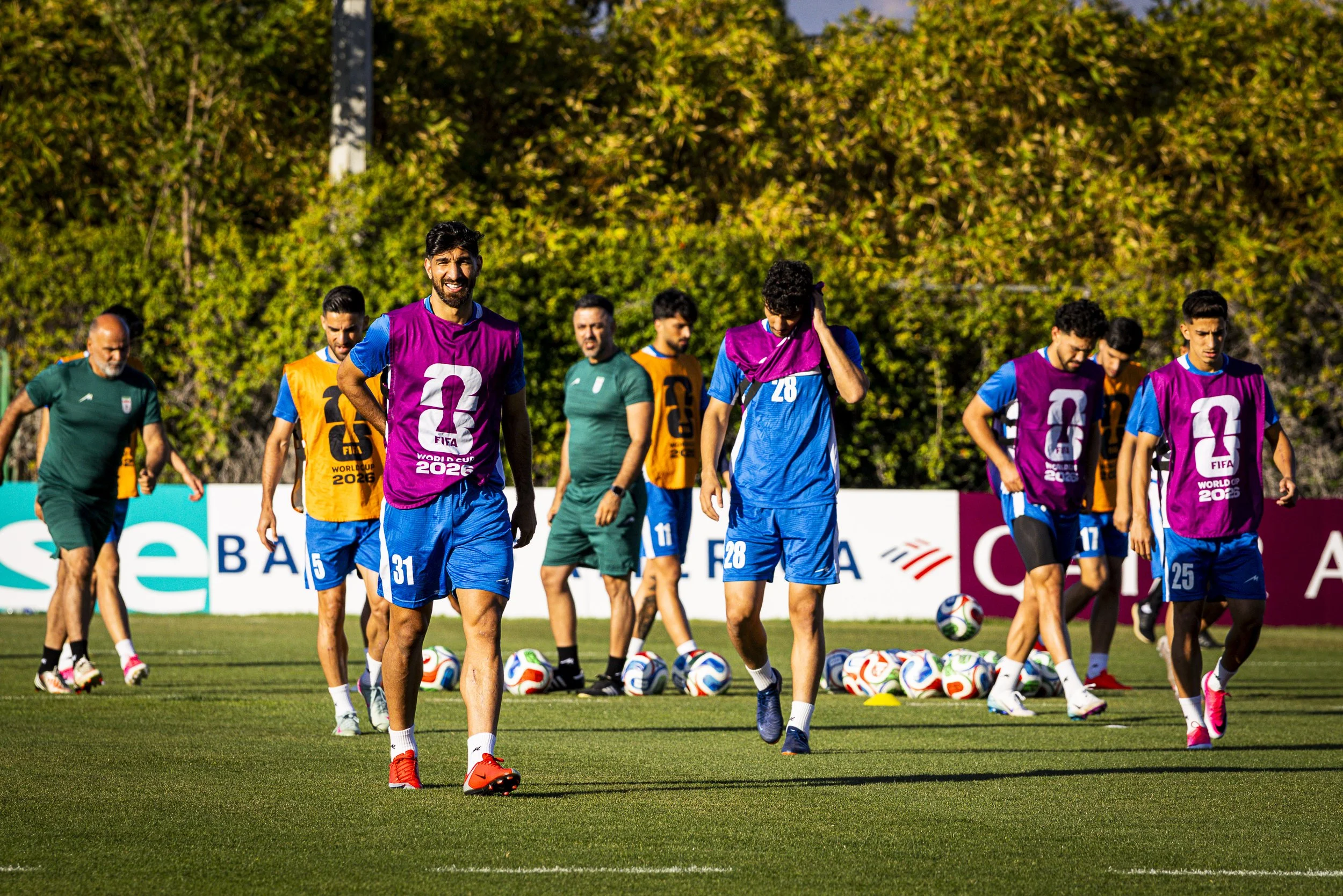
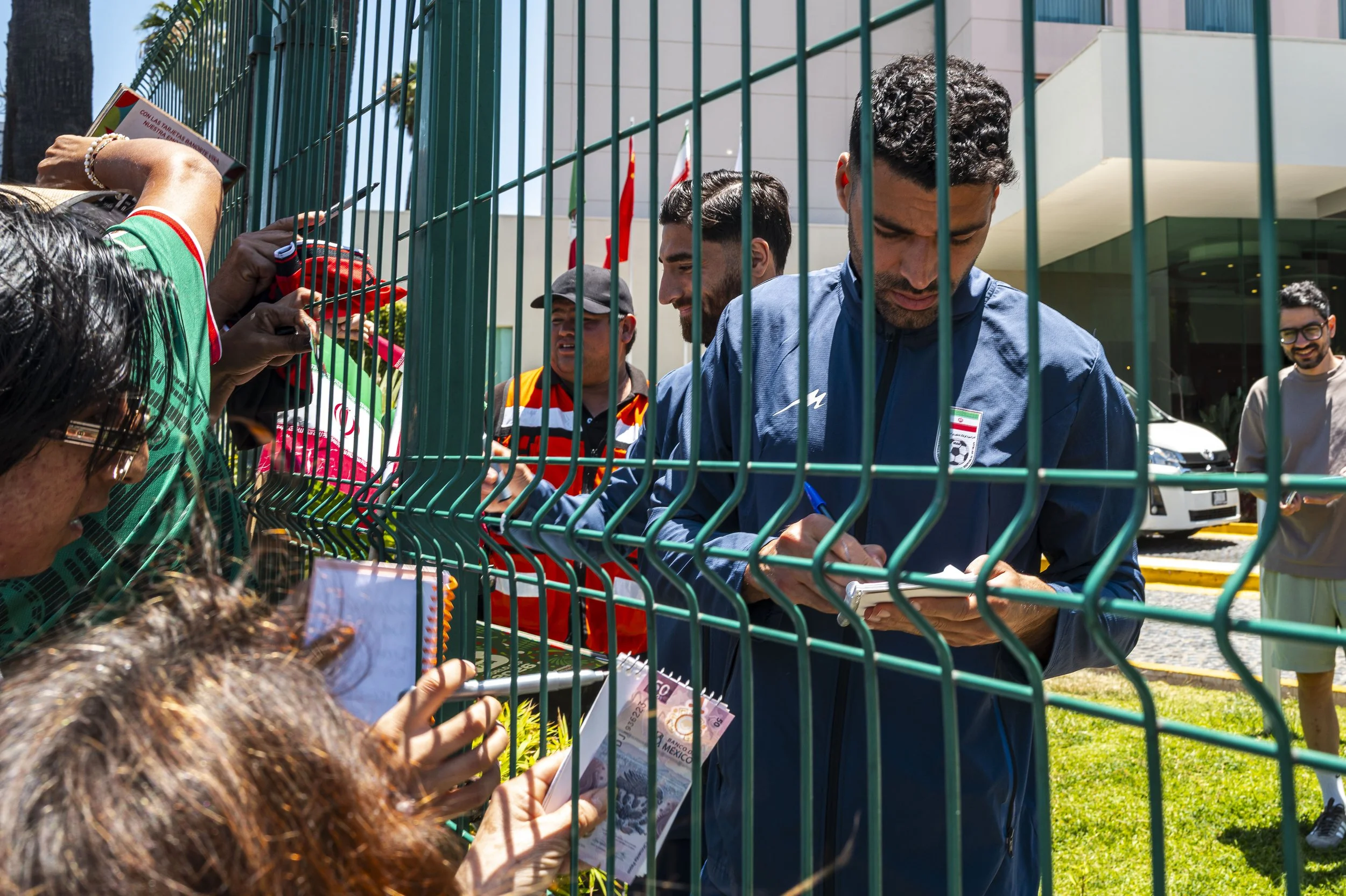
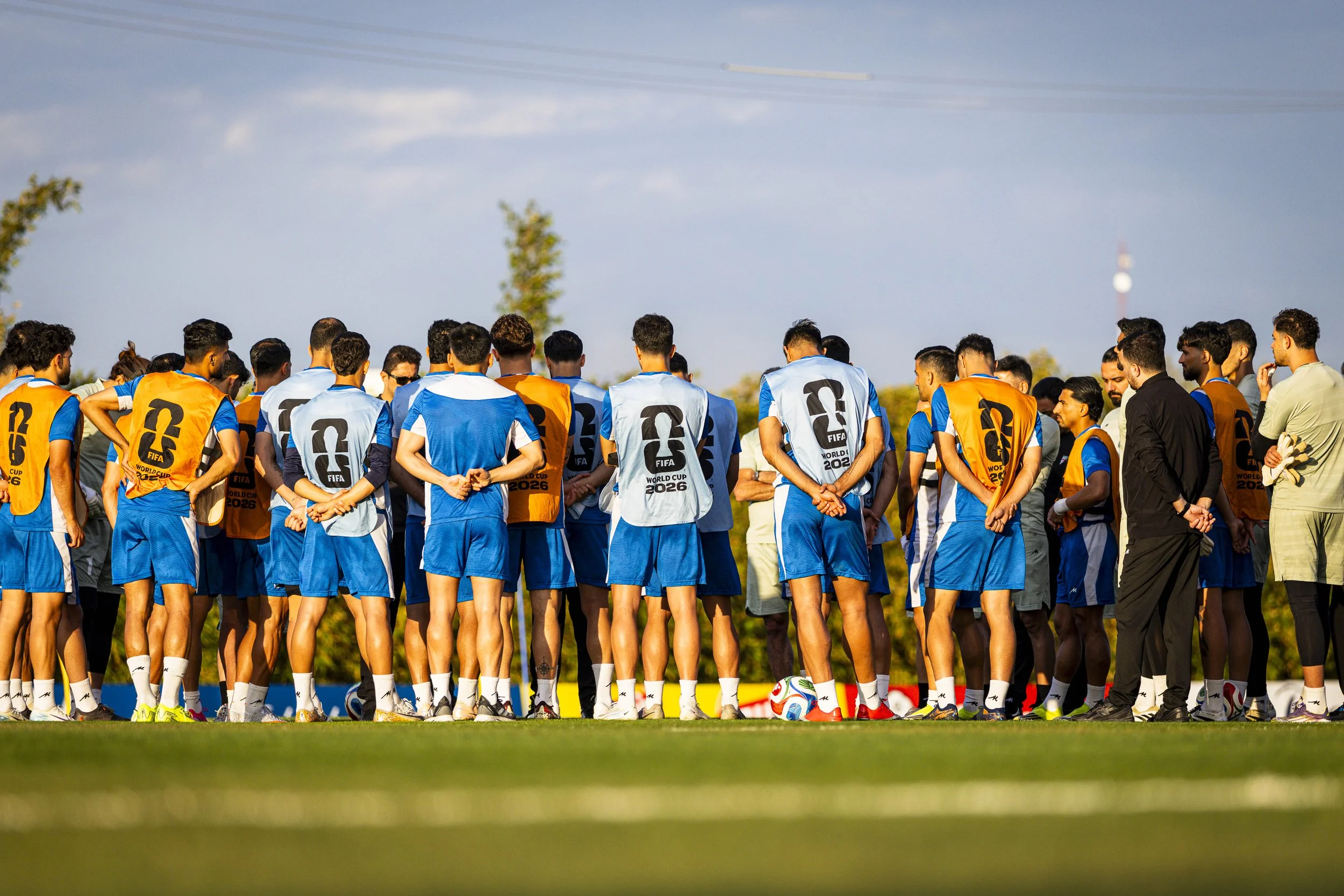
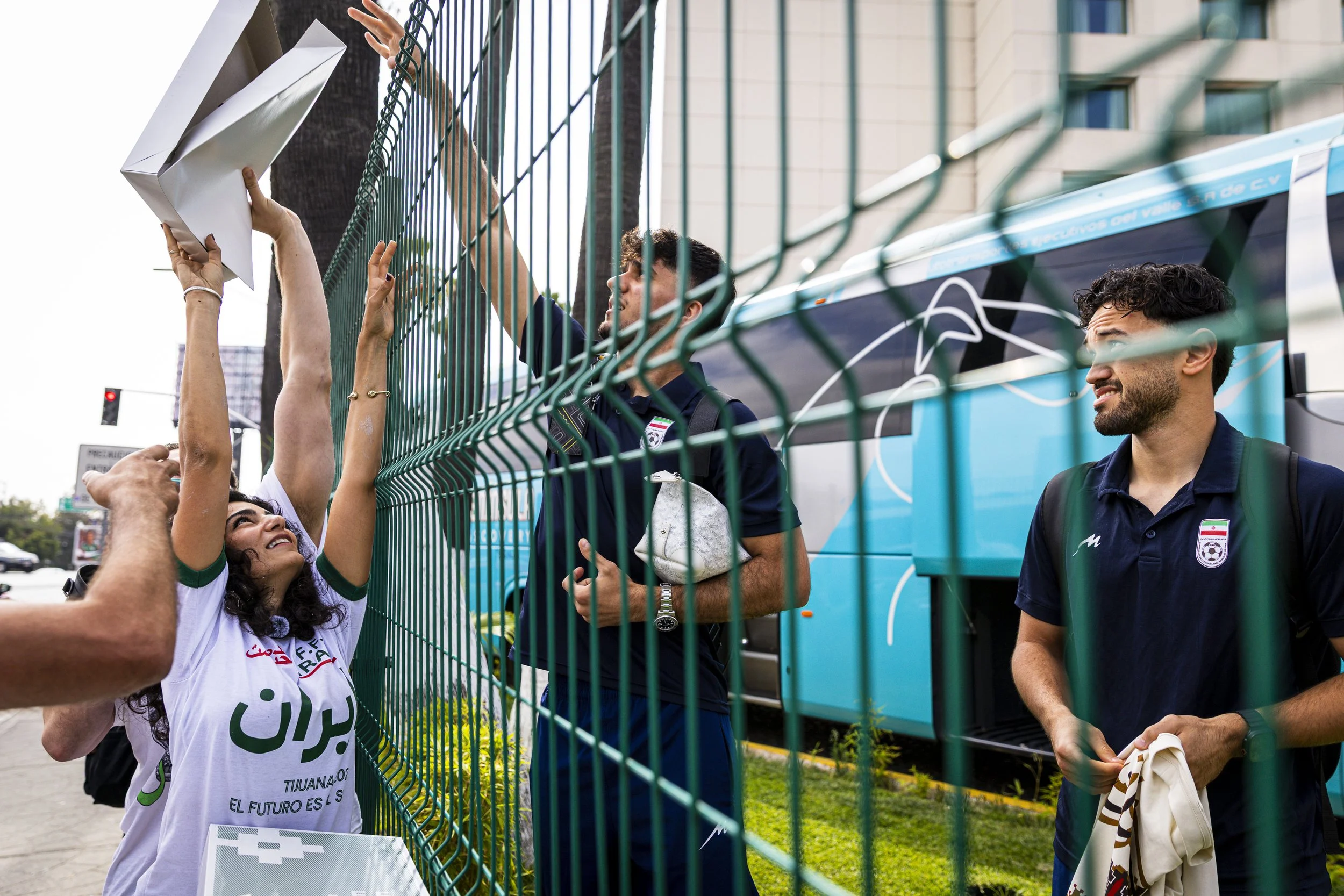
Between matches, Iran kept training in Tijuana. In Mexico they found support from local residents as they kept navigating the stress of the biggest soccer tournament in the world and the issues derived from the war. Outside the Tijuana Marriott Hotel, where the team was staying, several Mexican fans would congregate daily looking for autographs, photos and to express their sympathies for the team.
Rubén Juárez Hirales, a retired Mexican Post Office worker, said he was on the side of the Iranians, even if it was just to “callarle la boca a Trump” (to “shut Trump’s mouth”).
“A ningún equipo se le debe humillar. Todos somos seres humanos. No importa si hay guerra,” (No team should be humiliated. We are all human beings. It doesn’t matter if there’s a war) Hirales said.
After two ties in their first two games, Iran had to win their last game against Egypt in Seattle to secure a spot in the knockout rounds without depending on other teams’ results. This time, they were allowed to enter the U.S. 48 hours in advance, as opposed to the 24 hours they had for the first two games.
Iran drew Egypt 0-0 after a dramatic ending that included a winning goal in stoppage time that was later ruled offside by FIFA’s Video Assistant Referee. Results of the other groups’ games didn’t keep Iran among the top eight third-place teams, making their appearance in Seattle their last of the tournament.
When Team Melli left Los Angeles after their second game, they had left a note in the dressing room thanking the city for its hospitality and wishing “peace, respect and friendship prevail among all nations.” The note also included the hashtag #168, in reference to the children who died during the Minab school attack on the first day of the war, a symbol the Iranian soccer media team had been using since their arrival at the World Cup.
Upon departure from Seattle, the team left another note. Within, the note stated, “Perhaps points can be won in many ways, but respect cannot. Perhaps a team can advance from a group, but only through fairness and honour can one stand tall before history.”